Rainwater damaged luxury car, insurer denied claim; owner wins ₹2.02 lakh in compensation — here’s what happened
A vehicle insurance claim can lead to a dispute when the insurer and policyholder differ over what is covered under the policy. In one such case involving a luxury car, the dispute centered on rainwater damage after the owner inadvertently left a window partially open, allowing water to seep inside.
The matter eventually reached the Chhattisgarh District Consumer Disputes Redressal Commission, which ruled in the car owner’s favour, according to a recent report by the The Indian Express.
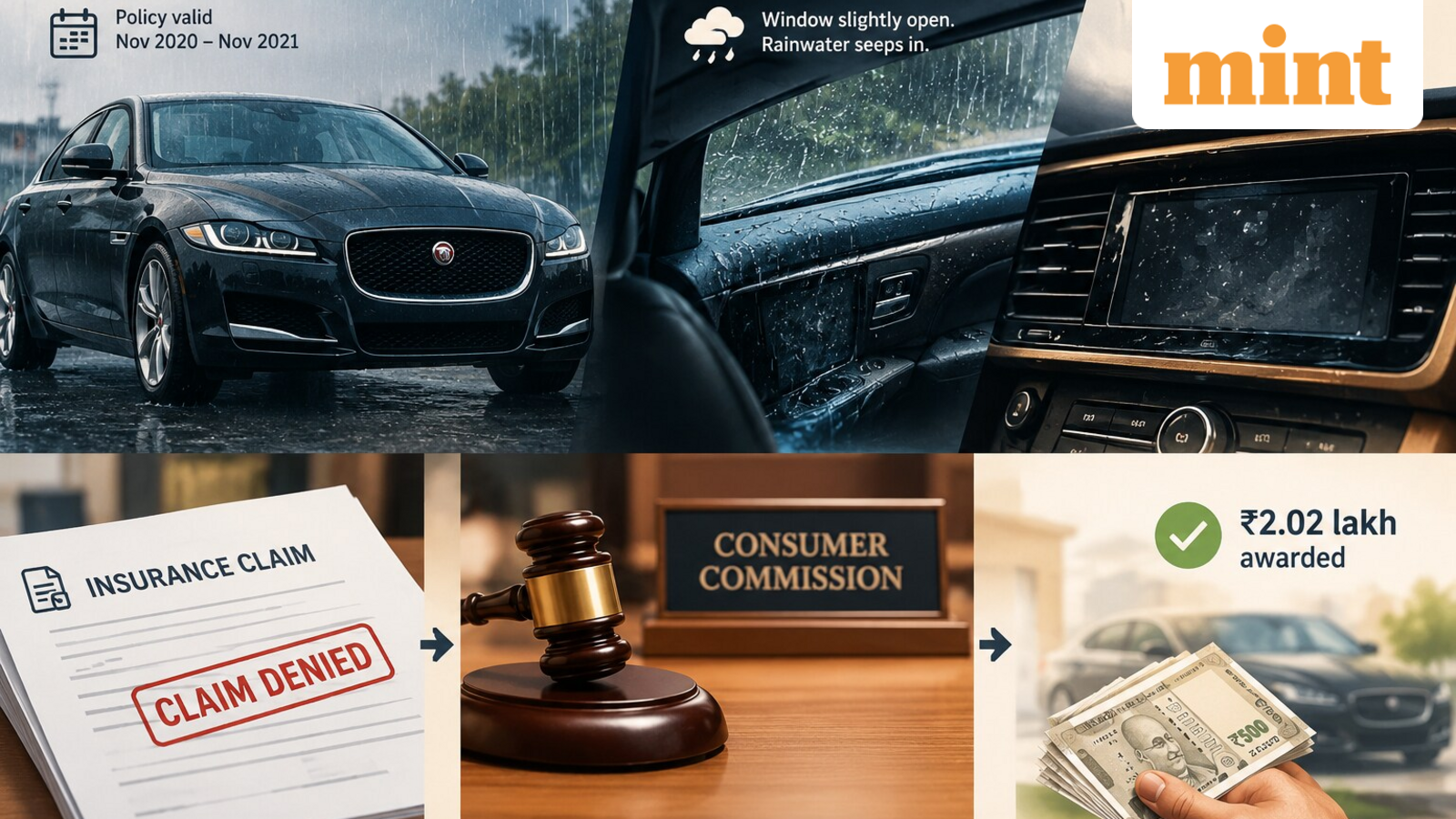
In an order passed on August 24, the insurer was directed to pay ₹1.75 lakh towards the claim. The car owner was also awarded ₹20,000 for mental agony and ₹7,000 as litigation costs, taking the total relief to ₹2.02 lakh.
Why did insurer reject damage claim?
The Jaguar was covered under a private car insurance policy that was valid from November 29, 2020 to November 28, 2021.
In August 2021, rainwater entered the vehicle after the driver-side window was left slightly open, damaging the infotainment system and some other components. The owner, who is a man, subsequently filed an insurance claim.
While the insurer’s surveyor assessed the damage at ₹1.98 lakh, the owner stated that he had spent ₹2.73 lakh on repairs.
The insurer eventually turned down the claim on February 4, 2022, stating that the policy did not cover damage caused by rainwater. It also noted that leaving the car’s window open amounted to gross negligence and violated the conditions of the insurance contract.
Aggrieved by the decision, the car owner approached the consumer commission and filed a complaint. He alleged deficiency in service and unfair trade practice and also argued that the insurer had not provided the complete policy terms and conditions when the car policy was issued, and therefore could not later rely on exclusion clauses to reject his claim.
Insurer could not enforce undisclosed exclusions
The commission noted that the policy supplied to the owner comprised four pages, while the insurer later produced six pages of terms and conditions.
Since these additional terms were not part of the original policy, the commission held that they could not be relied upon to reject the claim. It also noted that the insurer had submitted only three of the four policy pages, and that the exclusions cited for rejecting the claim were not provided to the owner.
Therefore, the consumer commission held that undisclosed exclusions were not binding on the policyholder. It found that rejecting the claim based on these exclusions was unjustified and amounted to deficiency in service and an unfair trade practice, according to the news report.
““Since the opposite party had not provided the complainant with a copy of the policy’s terms, conditions, and exclusions along with the insurance policy, those terms and conditions were not binding on the complainant. Therefore, it held that the opposite party could not have rejected the complainant’s insurance claim by relying on the exclusion clauses of the policy,” the ruling read, according to The Indian Express report.
The ruling serves as an important reminder for policyholders to read and retain the complete policy documents, including schedules, endorsements and exclusions, before buying insurance. Because, if later a dispute arises, these documents can serve as evidence before consumer commissions.