Mamdani’s Public Toilet Pilot May Offer Developers Relief

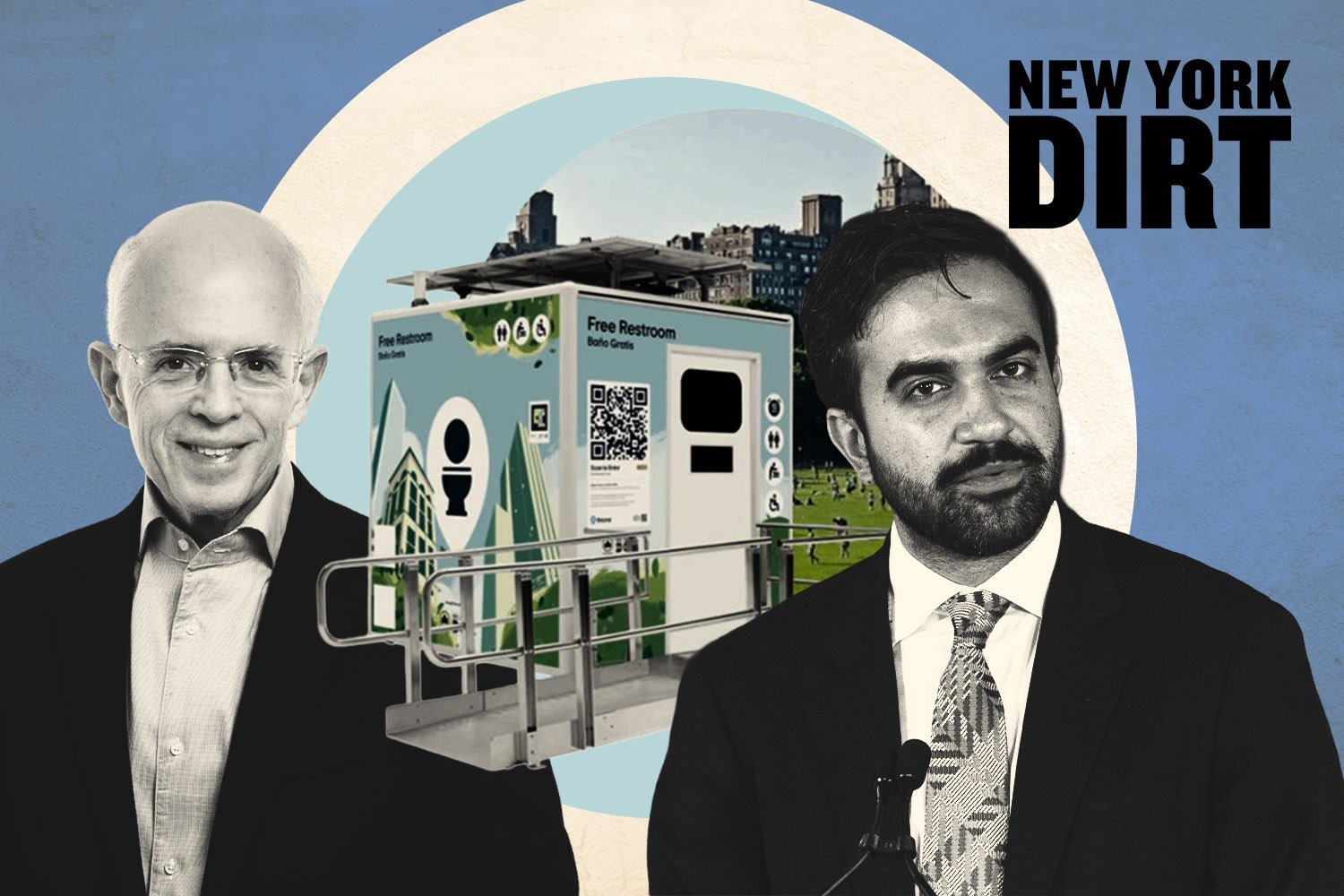
Mayor Zohran Mamdani’s public restroom pilot won’t exactly make New York City flush with new facilities, adding just 17 bathrooms across the five boroughs in its initial rollout.
But a modular solution may alleviate pressure to pursue costly permanent construction projects or reliance on the few developer-run restrooms in buildings’ public spaces.
A new partnership with Throne Labs to install and maintain modular bathrooms offers a fix imported from smaller U.S. cities, while public restroom locations across the five boroughs remain in disrepair.
Some of the city’s best-kept secrets in the realm of tolerable public bathrooms are operated in partnership with park nonprofits, developers or building owners offering restrooms in their privately owned public spaces (POPS).
The Bryant Park Corporation is in charge of upkeep for its busy bathrooms, renowned for floral arrangements and immaculate cleanliness, while Lincoln Center maintains somewhat hidden public bathrooms in its David Rubenstein Atrium and Boston Properties is responsible for the facilities in its POPS atrium at 601 Lexington Avenue. Just 14 of the city’s nearly 600 POPS offer restrooms, mostly clustered around Midtown, while many facilities run by the Parks Department are chronically out of order.
The mayor touted the $4 million pilot as a cheaper option than new permanent facilities, lamenting the high price of construction and integration with city infrastructure.
“Seventeen of these cost about what one public restroom has historically cost in New York City and that’s part of why we have not built that many, because we’ve seen the cost of these restrooms just escalate year after year,” Mamdani said at a press conference Wednesday.
Throne’s modular facilities are set to be installed on city sites, including public plazas and high-traffic locations like Yankee Stadium, Cooper Square, Malcolm X Plaza and Staten Island’s North Shore Esplanade. An app or tap card will be required to unlock the bathroom door, and those who need to go will be on a 10-minute time limit, enforced by prerecorded warnings, flashing lights and the automatic opening of the door. Cleaning staff, who are also trained to administer Narcan for opioid overdoses, are expected to refresh the stalls an average of once every 15 uses.
It remains to be seen whether a partnership with Throne and its modular approach, which has already set up networks in cities like Washington, D.C and Los Angeles, will prove to play a larger role in Mamdani’s “sewer socialism.”
What we’re thinking about: Do you think modular, free-standing public restrooms are the model to expand access across the city, or will other private partnerships better deliver on the 2,100 goal? Let me know if you think Throne will miss the mark at ben.miller@therealdeal.com.
A thing we’ve learned: Japan has its own 17-stall success story, The Tokyo Toilet. The redesign of public restrooms in the Shibuya district was funded by a collaboration between local government, a major philanthropic organization and corporate partners including UNIQLO parent company director Koji Yanai and toilet brand TOTO. Tokyo’s architecturally striking facilities were immortalized in the 2023 Wim Wenders film Perfect Days, which depicts the daily life of a public toilet cleaner.
Elsewhere…
— Tony Shorris, the new head of the Economic Development Corporation, warned of “unbridled growth” in his first public speech at a City & State summit this week. He told the crowd that growth shouldn’t come “at the expense of communities or opportunities or equity,” pointing to the EDC’s role in rolling out Mamdani’s city-backed grocery stores and its goals to strengthen workforce development programs.
— New York Attorney General Letitia James intervened in a pending foreclosure sale of an Elmhurst parking lot that sits on top of an African burial ground, filing a motion for a court order Friday that declares any purchaser “knows who is buried there and is aware of their legal obligation to protect them.” Queens Borough President Donovan Richards Jr. and other city officials demanded that the city purchase the property and turn it into a memorial for the enslaved and freed people buried there, according to The City Reporter.
— NYC’s controversial tax lien sale process may be entering the autumn of its years, as the city moves closer to standing up a land bank run by big names including Mayor’s Office to Protect Tenants director Cea Weaver, Housing Commissioner Dina Levy, Finance Commissioner Richard Lee and Lisa Garcia, commissioner of the Department of Environmental Protection. The new system to acquire tax and water liens would allow the city to work on payment plans with homeowners so they can more easily hold onto their homes, or otherwise take control of buildings, Gothamist reports. The city’s goal is to transfer some of those seized properties to nonprofit partners and turn them into affordable housing.
Closing time
Residential: The most expensive residential sale recorded Friday was $27.5 million for 555 West 22nd Street, PH24W. The new development condo unit at The Cortland in Chelsea is 6,300 square feet. The Corcoran Group’s in-house Cortland Sales Office, Noble Black, Steven Cohen and Lara Goldstein had the listing.
Commercial: The most expensive commercial transaction was $21.5 million for 130 Beard Street. The Red Hook facilities cover a lot area of 23,400 square feet.
New to the Market: The highest price for a residential property hitting the market is $35 million for 1040 Fifth Avenue, Unit 16. The Upper East Side co-op is co-listed with Sotheby’s International Realty’s Serena Boardman and Compass’ Alexa Lambert, Marc Achilles and Georgeana Leontiou.
— Joseph Jungermann