Fed staff should have known Silicon Valley Bank was vulnerable: report

An outside review of the Federal Reserve’s oversight of the failure of Silicon Valley Bank in 2023 has found the Fed’s staff “knew, or should have known,” that the bank was vulnerable prior to the crisis, Fed Vice Chair for Supervision Michelle Bowman said Friday.
Bowman’s announcement of the report’s findings immediately escalated political tensions around the Fed. The White House said the report implicated Fed Governor Michael Barr, who was appointed by President Joe Biden in 2022 and held Bowman’s job as the Fed’s top bank regulator during the banking crisis in 2023 that led to Silicon Valley Bank’s failure.
Trump said this week the Fed’s board is “hostile” after Chairman Kevin Warsh joined a unanimous vote of the Federal Open Market Committee to raise interest rates. Some in the Fed community have worried the report, which was being publicly undertaken, would be used as a pretext to push Barr off the board. Neither Trump nor Warsh made any immediate announcements to that effect.
The Fed’s Board of Governors declined to comment on the report, beyond Bowman’s comments. She announced the initial results of the review, by the consulting firm Starling Advisory Group, in a speech in London.
Starling didn’t immediately respond to questions about whether it would release the full report. Bowman described the consulting firm’s work as an initial report, but didn’t say when or whether the public might see the full results of the inquiry.
Silicon Valley Bank experienced a run in March 2023 after the bank announced it had sold securities at a $1.8 billion loss and needed to raise more capital. The bank’s large holdings of U.S. Treasurys had lost value after the Fed began raising interest rates.
The bank’s customers included tech startups and venture capital firms. Many kept large sums on deposit at the bank, above the $250,000 threshold for deposit insurance. When the bank showed signs of strain, customers immediately sought to withdraw their funds, prompting a dramatic, fast-moving run on the bank.
The bank’s deposits were “94 percent uninsured and concentrated in venture capital–backed technology companies,” Bowman said the review found.
After the run, the heads of the Fed, the Federal Deposit Insurance Corporation and the Treasury Department issued a joint statement saying they would insure all deposits in the bank, even those above the FDIC’s $250,000 limit.
Barr was assigned to review of the episode in April 2023. The Fed’s staff conducted an investigation that found its bank supervisors were overcautious in responding to the episode.
The new review largely concurs, according to Bowman’s description. The outside firm found Fed supervisors knew, or should have known, about the risks in advance, Bowman said. The report does not identify Barr by name and instead attributes the failures to supervisory staff.
Barr stepped down from the supervisory position in February 2025 to allow President Donald Trump to select a new top regulator for the Fed. The president picked Bowman, who was confirmed by the Senate for that role.
Barr told the newsletter Capitol Account in July that he had agreed to cooperate with the new review.
White House spokesman Kush Desai charged that Barr “failed to do his job throughout this debacle, and then put out a report widely regarded as politicized and self-serving absolving himself of any blame. Everyday Americans, investors, and financial markets deserve competence and accountability in a Federal Reserve that keeps its eye on the ball.”
A spokesperson for the Fed did not immediately respond to an email seeking a response to Bowman’s comments and whether the Fed might release the Starling report itself.
Barr’s review in 2023 had found the Fed had shifted its regulatory standards following a 2018 law. That change effectively reduced the Fed’s standards, Barr said, and prompted “a less assertive supervisory approach.”
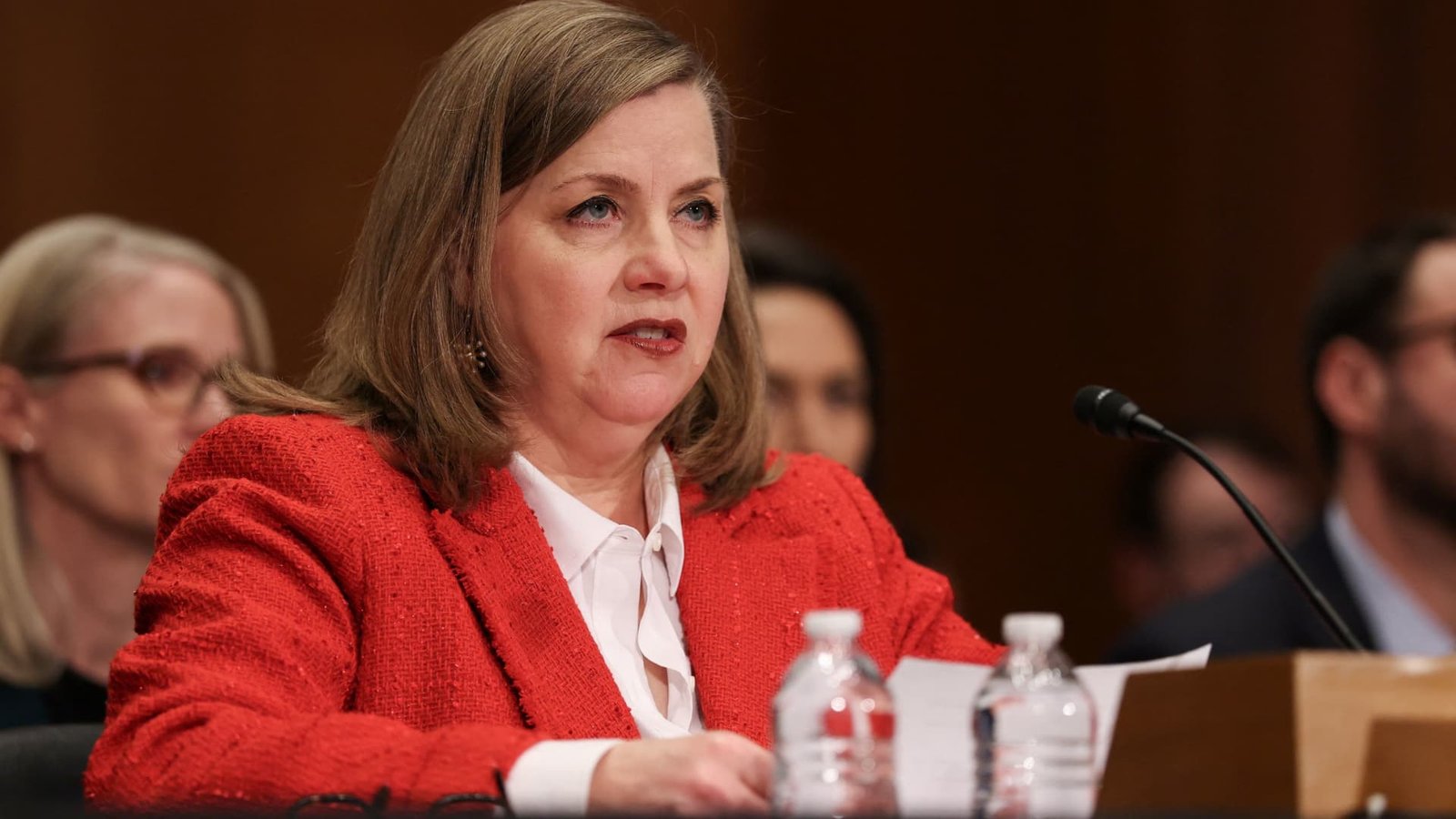
U.S. Federal Reserve Board Vice Chair Michelle Bowman testifies during a Senate Banking, Housing, and Urban Affairs Committee hearing on an update from the Prudential regulators, on Capitol Hill in Washington, D.C., U.S., Feb. 26, 2026.
Kylie Cooper | Reuters
The new outside review disagreed, Bowman said. “The delays in supervisory action were not caused by the regulatory tailoring mandate,” she said.
Bowman has already begun a sweeping overhaul of the Fed’s bank-oversight practices. She has said she plans to reduce the ranks of the Fed’s supervision and regulation division by about 30%. An update to the Fed’s staff page showed a dozen senior staff had left the division by early September, though some new staff had been added and others may be hired going forward.
The new review was a waste of taxpayer money, Sen. Elizabeth Warren, of Massachusetts, who is the ranking Democrat on the Senate banking committee, said in a statement following Bowman’s comments.
“It’s an embarrassing attempt to re-write history designed to pave the way for more dangerous deregulation that will lead to the next Silicon Valley Bank disaster,” Warren said.
— Megan Cassella and Jeff Cox contributed to this report.