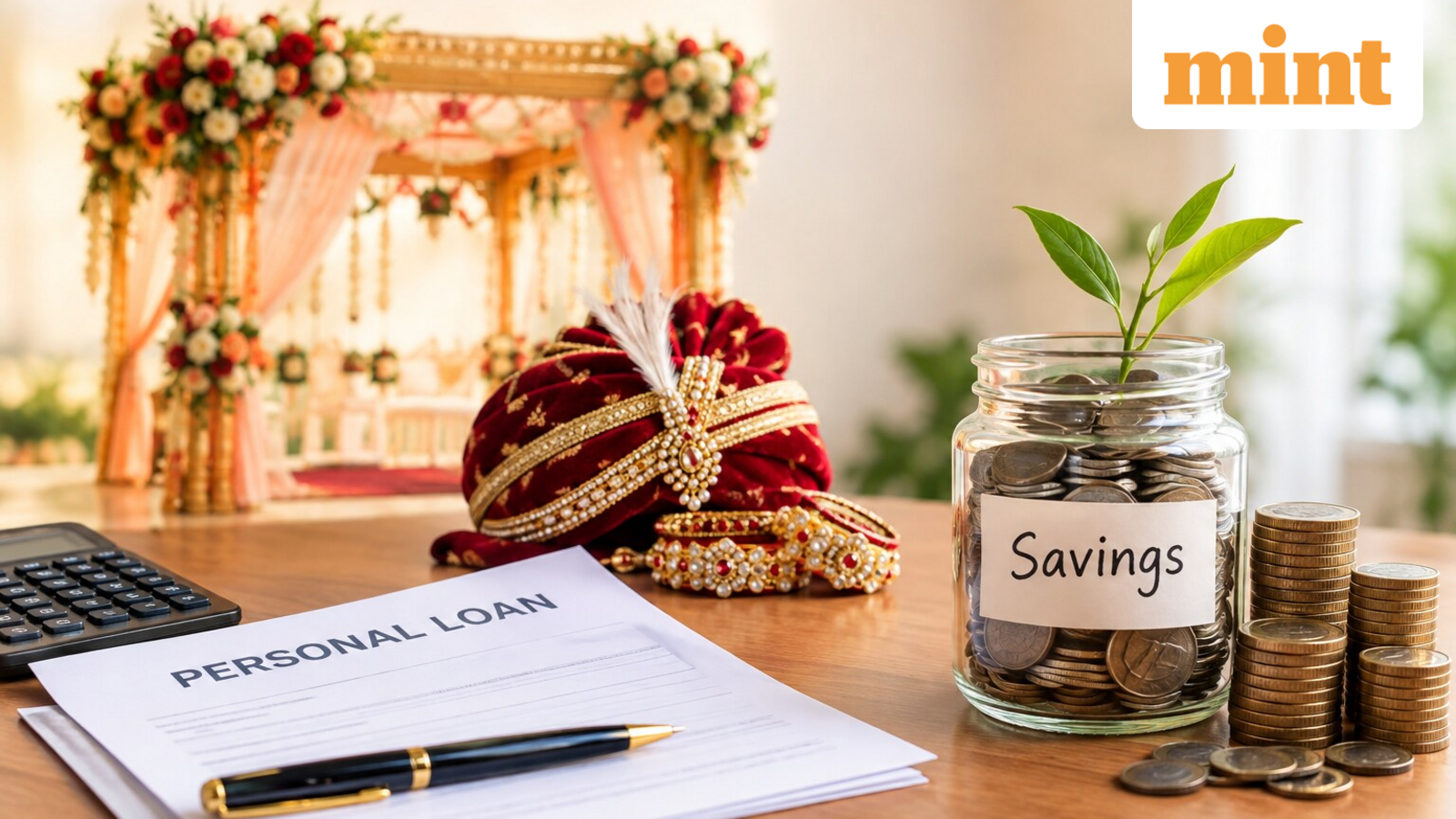
Should you take a personal loan for your wedding or use savings? Experts explain the smarter money choice
A wedding is clearly a major life event for an individual. Still, while gearing up for celebrations is extremely important, so is the financial planning behind the entire wedding event.
This is critical because paying for a wedding should not leave an individual or their family struggling with personal loan EMIs or debt-related stress later on for years. This raises several important questions, such as: If you have savings, should you use them to cover wedding-related expenses or take out a new personal loan to preserve your liquid cash?
This write-up is dedicated to discussing these aspects in detail, as financial experts explain the pros and cons of both, along with their subsequent trade-offs.
Personal loan vs savings: What should you consider?
Using savings avoids interest costs and monthly repayments. A personal loan, on the other hand, allows you to spread wedding expenses over several years, but increases the overall cost of the event.
The right choice depends on your savings, income, emergency fund and other financial goals. Furthermore, it can vary from one individual to another, depending on their long-term economic objectives and current financial realities.
Personal loan vs savings for wedding expenses: How each option affects your finances
|
Factor |
Using savings |
Taking a personal loan |
|---|---|---|
| Interest cost | No borrowing cost | Interest costs on a personal loan increases total expense |
| Monthly cash flow | No new EMI or debt stress | With a personal loan regular EMIs will require commitment for 3–5 years. A default or missed EMI will damage credit score and credit profile. |
| Emergency fund | Must retain sufficient buffer. When savings are used for funding wedding expenses this might result in depleting the cash reserves and make managing immediate finances difficult. | Savings remain available to meet other financial requirements, such as medical emergencies, unexpected expenses or future life goals, providing greater financial flexibility and reducing the need for additional borrowing. |
| Future goals | Using savings for weddings avoids an additional debt burden and leaves room for future borrowing, such as a home loan or car loan, helping you meet other major financial goals. | Personal loan EMI, i.e., a wedding loan adds a monthly repayment obligation, which can reduce your borrowing capacity and leave less money for investments. The applicable interest rate on a personal loan can vary from 7.5 to 15% broadly depending on the applicant profile. This may delay other major financial goals, such as buying a home, taking a car loan or building long-term savings. |
Planning ahead can help avoid high-cost wedding loans
Proper planning can help in avoiding last-minute high-interest loans, thus easing the entire experience of preparing for a wedding. A strategic approach can hence ensure that an individual is not exposed to unwanted or forced borrowing.
Yudhajit Baul, Founder of Yudhajit Financial Services Pvt Ltd, explained this in detail, stating, “It is important to plan for life events mentally and financially. Lack of financial preparation can cause stress in the family. We always tell our young single clients to plan in advance for their wedding. Start investing towards that life goal early through SIP in equity mutual funds. An investment of ₹10,000 through sip in equity mutual funds for wedding expenses expected to grow at an expected CAGR of 12.62% can become 8.23 lakhs in 10 years.”
Such a strategy can be utilised by young parents in order to accumulate enough money for their children’s weddings. For example, if a child is about 10-11 years of age, planned monthly investments can be made for a decade or so in a reputable mutual fund that can compound the corpus and help in creating meaningful wealth when the child is of marriagable age.
He further added, “Lack of proper planning and investing may lead to borrowing at a high interest rate, which will only lead to a delay in fulfilling other financial goals. Interest rates charged by banks and NBFCs vary from 10% to 17%, imagine if 30% of your income is consumed in servicing these high-cost loans, then how will you save and invest for other life events like family planning, retirement, emergency corpus, etc.”
When is a wedding loan worth considering?
Kapil Makhija, COO, MinEMI, touched upon the aspect when a wedding loan can be actually worth it, stating, “If savings exist, use them. A wedding is one day; a personal loan for it runs three to five years, and we regularly meet borrowers still paying EMIs for an event long over, which then blocks the home loan that matters more. If borrowing is unavoidable, cap the EMI within 10 to 15 percent of monthly income, borrow from a bank or established NBFC at 11 to 16 percent, and stay away from app loans quoting anything above 20.”
The bottom line
Hence, you should utilise savings for wedding expenses if you can do so without exhausting your emergency fund and can manage the expenses properly. On the other hand, if borrowing is unavoidable, do not hesitate to seek guidance from a certified financial advisor for proper financial planning.
Furthermore, keep the loan small, compare interest rates and ensure the EMI does not derail essential financial goals. A memorable wedding should not become a long-term financial burden.
Disclaimer: This article is for informational purposes only and does not constitute financial advice. Readers should assess their financial situation and consult a qualified financial adviser before making borrowing or investment decisions.