Trade war pressures mount on Canada’s mortgage and housing market
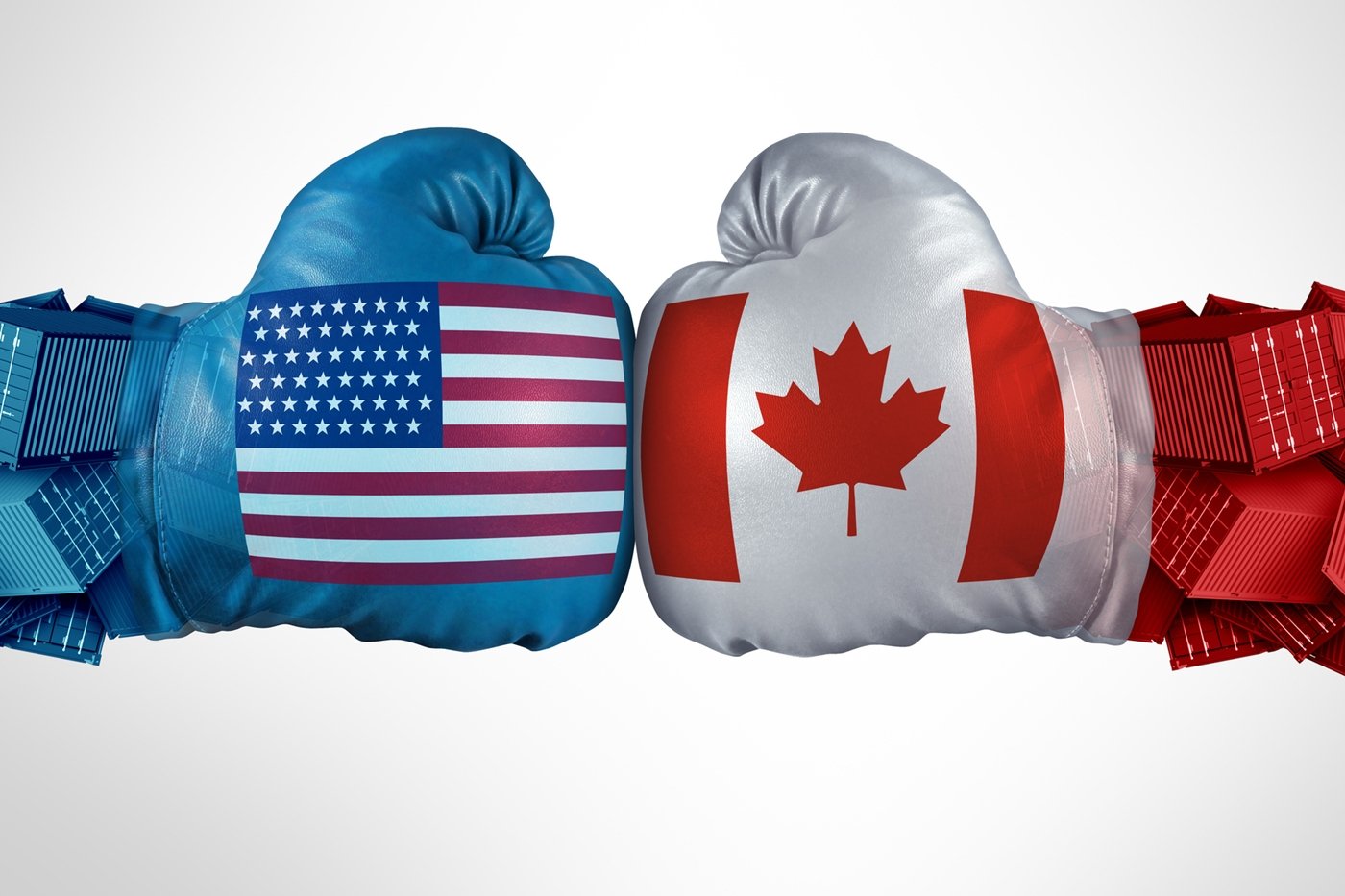
The ongoing trade war between Canada and the United States is adding new pressure to the economy, with the effects increasingly reaching the country’s housing and mortgage sector.
Since trade talks were suspended in late August the two nations have been engaged in an economic tit-for-tat, with leaders from both sides exchanging harsh words and high tariffs on select sectors.
According to a study by University of Calgary economics professor Trevor Tombe, the 50% tariffs imposed on selected Canadian exports could result in nearly 90,000 job losses — primarily in Ontario and Quebec, and to a lesser extent British Columbia and Alberta. That number is also expected to expand along with the scale and scope of the trade war.

The impacts of the impasse, however, will extend well beyond those directly in the line of fire. Existing and prospective homeowners could also see the trade war hit home in the form of higher borrowing costs, higher material and construction costs, weaker near-term housing demand and slower long-term housing supply growth.
Goldman Sachs projects the latest round of tariffs will reduce Canadian GDP by 0.3% and increase inflation by about the same proportion. The combined effect, the bank suggests, will likely keep the Bank of Canada from adjusting interest rates “for the foreseeable future.”
“When tariffs are announced it usually comes with a list of industries, and if we don’t see our name on it, we just assume that we’re safe, but the list is just telling us who’s going to get hit first, not who’s going to get hit,” says Neil Drepaul of Canadian Mortgage Services. “Trade-exposed money runs through the local economy and all local businesses, so in one way, shape, or form, we’re all impacted.”
Could tariff-affected workers have a harder time accessing credit?
Drepaul says he’s paying particularly close attention to how Canada’s major banks react to the latest set of economic challenges, both in the short term and in the long run.
BMO tightened mortgage requirements for some self-employed borrowers in tariff-affected industries during the previous trade dispute with the United States. While none have moved in that direction yet, it wouldn’t be unprecedented.
“During the pandemic there was a lot more scrutiny around certain sectors and industries that were most impacted by furloughed workers, layoffs, or businesses shutting down, so we’ve seen it happen before,” Drepaul says. “Will there be more scrutiny around applications? Technically, yes.”
“We’re all used to getting those pre-approval letters in the mail when it’s not even on our radar, but when that rainy day comes all of a sudden you have to go apply and qualify for that increase,” he says. “There’s no harder time to get access to credit than when you need it.”
Drepaul says homeowners in need of a short-term financial solution may consider accessing equity in their home.
“We’re already — on a daily basis — seeing people that are looking for access to equity, people that are looking to consolidate debt through their mortgages, people that are looking for second mortgages,” he says. “We’re probably going to see those numbers grow, regardless of what happens in the job market.”
How tariffs impact mortgage rates
In the Bank of Canada’s recent interest rate announcement, in which officials held the overnight rate at 2.25%, Governor Tiff Macklem noted the economy’s resilience, but warned “uncertainty about the sustainability of the rebound has increased with new U.S. trade actions.”
Government bond yields have also risen sharply in recent weeks, pushing fixed mortgage rates higher while a growing share of borrowers have turned to shorter-term and variable-rate mortgages.
“You’ve got tariffs that are inflationary that put upward pressure on our bond yields in conjunction with the Iran-U.S. war causing oil prices to skyrocket,” says RMG Mortgages’ vice-president of national sales and a longtime bond-market commentator Bruno Valko. “A negative pull on GDP with a boost to inflation makes me think of a very nasty word: stagflation.”
Stagflation, which combines elevated inflation with weak economic growth and often higher unemployment, can leave central banks facing a difficult trade-off: higher rates can restrain inflation but further weaken growth, while lower rates risk adding to price pressures. Even if Canada avoids significant and persistent stagflation, Valko says the trade war poses “a very, very negative situation” for the economy.
Valko says prolonged trade uncertainty could also continue to weigh on the housing market.
“If you’re in an industry with a high reliance on trade with the U.S., you might not make the biggest financial decision in your life and buy a house because you’re not 100% certain about your position with your job and your future income,” Valko says.
How tariffs impact construction costs
Canadian counter-tariffs affecting steel and aluminum are expected to drive up domestic home construction costs and slow new home construction in Canada.

“This doesn’t help a problem that already existed, which is the cost of construction to build a house, which has already been a challenge. Now it’s even worse,” Valko says. “You’ve got a conundrum where it’s too expensive to build, and the prices could get to a level where it’s too expensive for your average homeowner to purchase.”
Higher construction costs could also impact homeowners looking to fix up their existing properties, but Valko remains hopeful that Canada’s new trade partnerships will help soften the blow.
“Any trade agreements we can put together would be positive to offset the losses that we see in trade with the United States,” he says. “The problem is we’re so heavily reliant on the United States, it’s virtually impossible to avoid the negative implications.”
As the economic landscape gets more complicated, however, Valko says that puts a greater premium on the advice mortgage brokers offer.
“The best thing that any homeowner can do is contact a mortgage professional to go through your potential options,” he says. “They can help smooth out some of those bumps — with co-signers, with Purchase Plus Improvement programs, with rental suite income, with 30-year amortizations — and different things that make them, in my opinion, the optimal choice for a homeowner right now.”
Visited 9 times, 9 visit(s) today
Bruno Valko Donald Trump mortgage market mortgage market trends Neil Drepaul real estate market stagflation tariffs trade war
Last modified: September 17, 2026