Breaking Down the City’s Third-Party Transfer Settlement

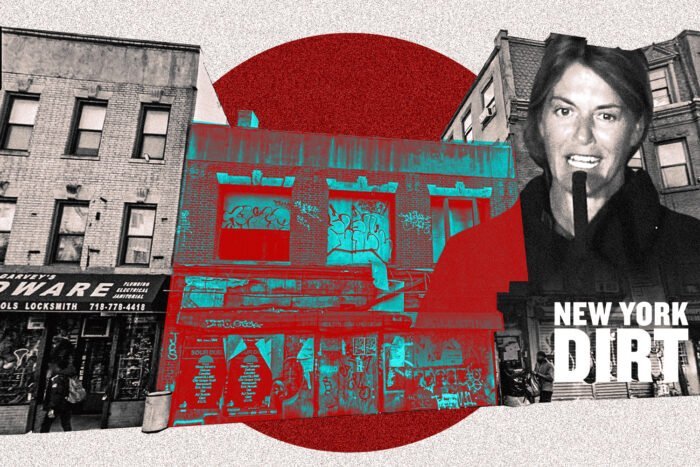
The city is looking to settle claims about its third-party transfer program to the tune of $60 million.
The program started in 1996 and allowed the city to foreclose on properties with tax and other municipal arrears. The idea was that these properties would be transferred to a nonprofit intermediary and eventually to another sponsor to be rehabilitated while being preserved as affordable housing.
The value of the properties often eclipsed the value of their tax arrears. The city would also then transfer buildings for a nominal fee, according to the initial federal complaint.
Plaintiffs in the federal suit dating back to 2019 said the city’s seizure of their property was unlawful. Though the city did not concede that property owners’ rights were violated, it did this week agree to a settlement.
The proposed settlement, which still needs to be approved by a federal judge, would only apply to those affected by the tenth and final round of transfers. It would provide an average of $937,500 per property. The news of the settlement was first reported by the New York Times.
Claims for prior rounds are still being litigated as part of the same case. Settlement negotiations began in June 2025, during the Eric Adams administration, according to court documents.
The third-party transfer program was criticized not only by property owners, but by civil rights advocates, who said the program disproportionately affected Black and brown property owners.
A substantial proportion of the properties taken by the city were HDFCs (Housing Development Fund Corporations). These are income-restricted affordable housing buildings, many of which were the result of prior rounds of municipal foreclosure.
The city foreclosed on more than 500 properties, totaling more than 7,000 housing units, over 11 years. In the final round of the program, the city transferred 64 properties, 30 of which were HDFCs.
HDFCs have been excluded from the city’s tax lien sale, which made Third Party Transfer the only tax enforcement mechanism for those properties, according to city council testimony from de Blasio’s housing commissioner, Louise Carroll.
Carroll told the Council in 2019 that, in that most recent round of transfers, 25 HDFCs owed more than $30 million, accounting for more than half of the funds owed from transferred properties.
The city launched a working group on the third-party transfer program that same year. It found that HDFC rental and co-op buildings dominated the top ten percent of properties by water and tax arrears per unit. HDFC co-op buildings in the top 10 percent typically owed $80,000-$120,000 per unit in arrears, compared to less than $40,000 per unit for the worst rental buildings.
In 2023, the Urban Homesteading Assistance Board estimated that roughly 20 percent of New York’s HDFC co-ops are in distress.
What we’re thinking about: Have thoughts about the HDFC model? Share them at lilah.burke@therealdeal.com.
A thing we learned: The city said 2025 was the safest on record in terms of traffic deaths, which were down more than 30 percent since 2014, when then-Mayor Bill de Blasio launched the Vision Zero program.
Elsewhere..
— Gov. Kathy Hochul Tuesday announced an enrollment drive for the state’s Energy Affordability Program, which provides discounts on utility bills. The state estimates that 2.5 million households are eligible for the program but not yet enrolled.
— Hochul also announced Tuesday a roadmap to help municipal governments in New York negotiate with data center developers. The guidance suggests developers pay $1 million per megawatt into local community funds, ABC News 10 reported.
— Mayor Zohran Mamdani announced a new street safety plan. Among the policy plans, the mayor’s office said it would expand “proven safety interventions such as pedestrian-priority zones, protected bicycle networks, traffic-calmed corridors.
Closing time
Residential: The most expensive residential sale recorded Tuesday was $7.4 million for a 2,787-square-foot sponsor-sale condominium at 2102 East 1st Street in Gravesend. RedHoek+Partners is the developer of the 12-unit project. Jake Indursky wrote about the development of Gravesend in July.
Commercial: The most expensive commercial transaction was $4.7 million for a 6,225-square-foot commercial space at 38-25 Main Street in Flushing.
New to the Market: The highest price for a residential property hitting the market is $50 million for a 14,125-square-foot townhouse at 18 East 80th Street on the Upper East Side. Zeve Salman and Eric Brown with Compass have the listing. The property last traded for $37.5 million in June of 2008.
Breaking Ground: The largest new building permit filed was for a proposed 392,319-square-foot, 340-unit residential project at 200 West 97th Street on the Upper West Side. Frank Fusaro with Handel Architects filed the permit on behalf of Tishman Speyer.
— Matthew Elo