UPI MDR debate intensifies: What MobiKwik’s Upasana Taku, BharatPe’s Ashneer Grover and PhonePe’s Sameer Nigam said
The debate over whether Unified Payments Interface (UPI) transactions would remain free for customers has resurfaced, with industry leaders weighing in on the future of the country’s digital payments ecosystem.
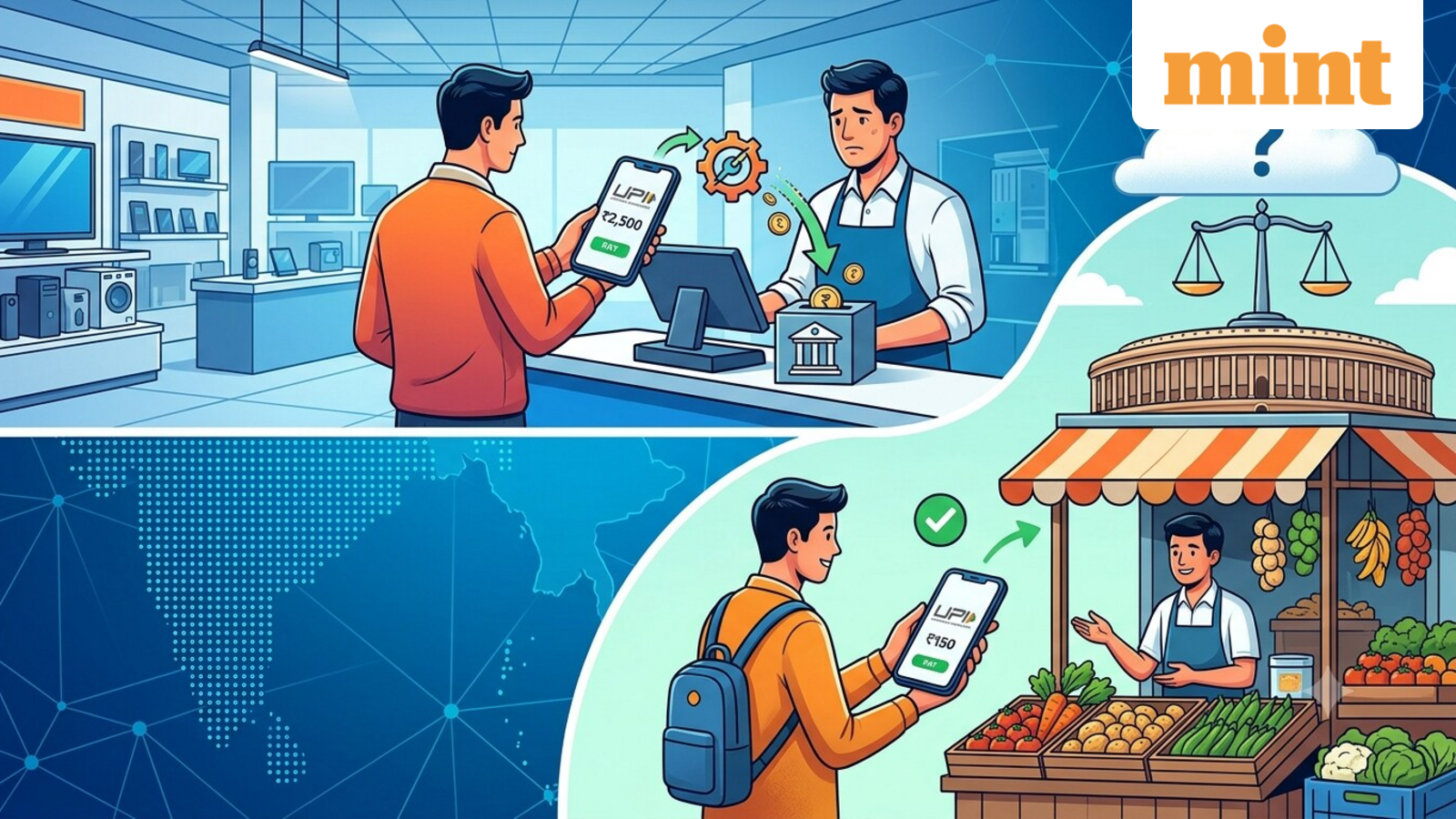
This was fueled by the government’s recent announcement of a merchant charge on certain UPI transactions above ₹2,000.
While Union Finance Minister Nirmala Sitharaman had earlier clarified that consumers would continue to use UPI free of charge, the government reiterated the same in its latest announcement. However, some social media users and industry leaders have expressed a different view.
The revised framework, published on its official website on Tuesday, will come into effect on October 15.
BharatPe’s Ashneer Grover calls UPI MDR ‘tax’
Following the issuance of the revised framework of UPI merchant discount rate (MDR), former BharatPe co-founder Ashneer Grover questioned the move to impose a fee on merchants accepting UPI payments above ₹2,000.
Speaking in a TV interview with Times Now, he argued that any levy imposed with respect to UPI payments should clearly be called a “tax”.
When asked about the argument that only those who can “afford” the fee are being asked to pay it, he said that the centre should refer to it as tax. “Why are you calling it a ‘charge’, ‘MDR’, or claiming that it won’t affect the customer?”.
Citing an example, Grover asked if an individual would be willing to pay ₹500 every month for breathing just because they can “afford” it. “Is there any logic to it?,” he asked. His interview video went viral on social media platforms.
Later in an X (formerly Twitter) post, he also listed some figures to question the move of imposing the merchant fee. Without specifying the period to which the figures related, Grover claimed that the RBI surplus to the government stood at ₹2.87 lakh crore, while total listed bank profits stood at ₹4.11 lakh crore.
He also said that National Payments Corporation of India (NPCI), which is the operator of UPI, reported a pre-tax surplus of ₹1,888 crore.
“So, who is facing any loss from UPI and which subsidy is the government paying on UPI?” Grover asked in his X post. He also questioned the rationale for the move by highlighting the high cost of running ATMs and managing cash logistics, suggesting that shutting them down and promoting UPI could be an alternative.
MobiKwik co-founder takes dig at UPI MDR critics
MobiKwik co-founder Upasana Taku criticised those opposing UPI MDR and hailed the move as a “very positive step” that will help make the payments ecosystem more sustainable as rising infrastructure costs have put pressure on banks and payment companies.
“There is no confusion; I want to clarify that everyone in our fintech industry unanimously supports UPI MDR. There are a few individuals who have become very famous but whom we no longer consider fintech founders—their business has shifted focus, and they are mostly engaged in personal branding and self-promotion. What they are saying makes no sense to me; it looks like paid propaganda,” she told news agency ANI in an interview.
PhonePe leader welcomes UPI MDR
Meanwhile, founder and chief executive officer of PhonePe, Sameer Nigam, also welcomed the move, saying the revenue generated from these charges will help the industry recover its operational costs.
“We have consistently raised this issue with the government and the RBI…Digital payment systems operate in more than 200 countries worldwide, yet India was the only country where UPI transactions carried no MDR,” he told ANI.
The top executive also noted that nearly 70–80 crore UPI transactions take place every day. So, now that a limited MDR has been introduced, the industry hopes that it will contribute to the further growth of the UPI ecosystem, he added.
Who will pay extra charges?
A flat MDR of ₹5 will be applicable on certain transactions above ₹2,000. This category includes payments for Indian railways, telecom services, insurance and fuel when the transaction value exceeds the prescribed limit.
Other person-to-merchant (P2M) UPI transactions above the ₹2,000 threshold will attract an MDR of 0.4%, which will be capped at ₹300 per transaction, thereby limiting the fee applicable to higher-value payments.
A separate MDR of 0.02% will apply to capital-market-related UPI payments. This includes transactions involving mutual funds, securities, stock brokers and dealers. In such cases, too, the MDR will also be capped at ₹300 per transaction.