UPI MDR FAQs: What happens to QR payments, AutoPay, SIPs and utility bills? Key things every UPI user must know
The National Payments Corporation of India (NPCI) has introduced a new Merchant Discount Rate (MDR) framework for select UPI transactions, effective 15 October 2026. While the move introduces a 0.4% charge on specified merchant transactions above ₹2,000, NPCI has clarified that consumers will not be charged for making UPI payments.
NPCI stated in the FAQs released with the circular that UPI apps will not charge a platform fee, consumers will not face monthly limits on free UPI transactions and merchants cannot pass the MDR on to buyers.
Here is what the new framework means for consumers.
Will you pay a fee when scanning a QR code at a shop?
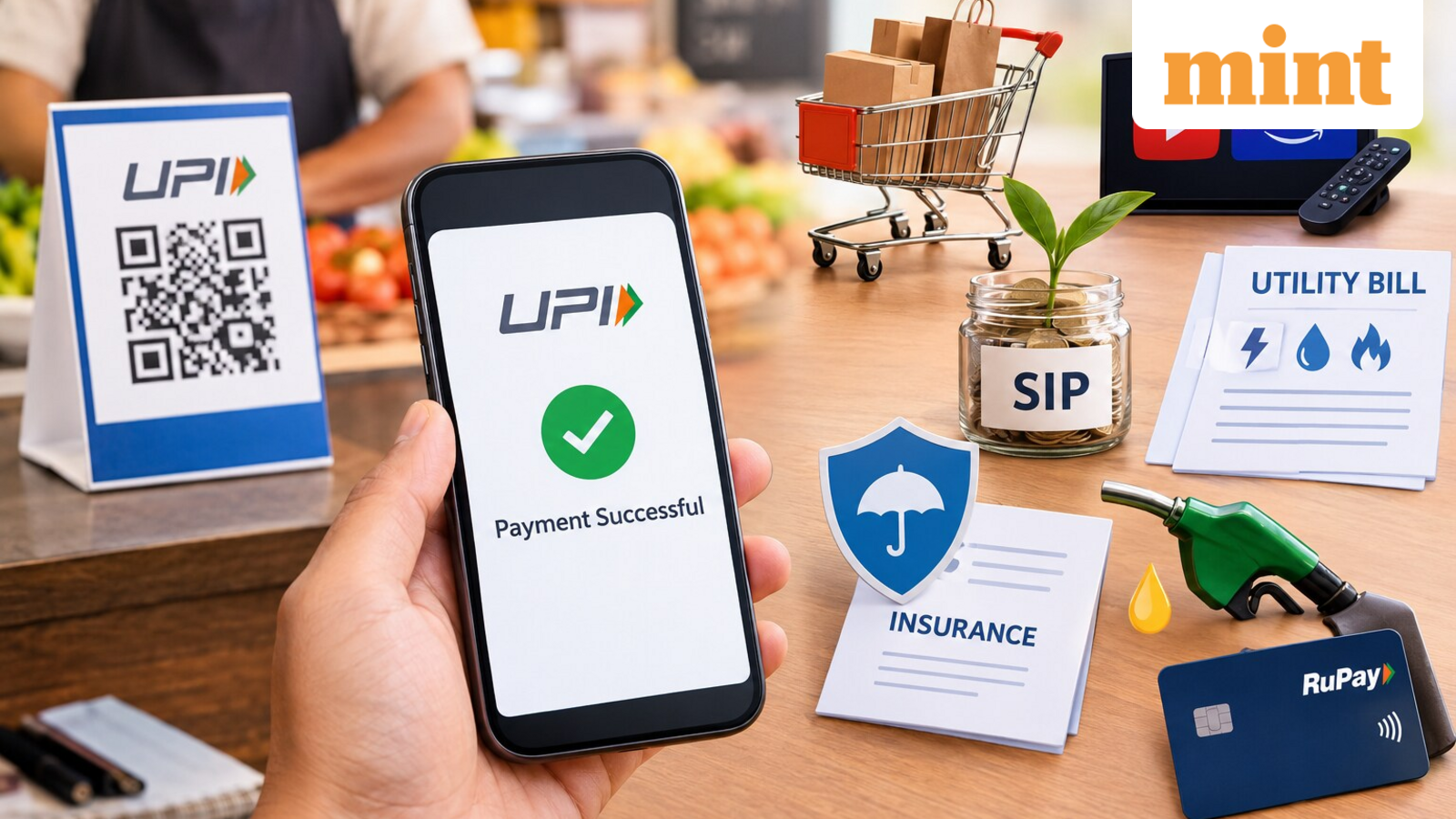
No. NPCI clearly said consumers will not be charged for scanning a QR code and making a UPI payment. This applies to QR payments at local markets, street vendors and small retail shops.
The NPCI document states that the customer-facing side of a QR transaction will have zero fees, regardless of the purchase amount.
The MDR is instead a merchant-side charge. For standard Person-to-Merchant (P2M) UPI transactions above ₹2,000, the MDR will be 0.4%, with a maximum charge of ₹300 for transactions of ₹75,000 and above.
For example, on a ₹3,000 purchase, the merchant-level MDR would be ₹12. On a ₹50,000 transaction, it would be ₹200. For a ₹1 lakh transaction, the 0.4% calculation would be ₹400, but the merchant would pay only the ₹300 cap.
Is there a monthly limit on free UPI transactions?
No. NPCI said individual consumers will not face any monthly quota, volume limit or tiered cap on free UPI transactions.
Users can continue making P2P and P2M UPI payments without reaching a monthly fee threshold. NPCI also clarified that daily transaction limits imposed by banks or NPCI for security and risk management are different from commercial charging limits.
Person-to-person payments will continue to be free, including transfers to family and friends, bill splitting and transfers between a user’s own linked bank accounts.
Will UPI apps start charging a platform fee?
No. NPCI clearly stated that UPI app providers will not charge a platform fee or any other charge for payments made through UPI.
This means the introduction of merchant-side MDR does not create a new platform fee for consumers under the framework.
Can merchants pass the MDR on to customers?
No. NPCI stated that merchants onboarded under the framework cannot pass the MDR charge on to customers when accepting UPI payments.
Consumers are to pay only the posted price for the product or service.
NPCI also stated that merchants absorb nominal digital payment processing costs as part of their operating expenses and that consumers will continue paying the listed price.
The Finance Ministry has separately clarified that MDR is a charge within the merchant payment ecosystem and not a charge on customers making UPI payments.
What happens to UPI AutoPay, SIPs and OTT subscriptions?
This is an important distinction for consumers using recurring payments.
NPCI stated that automated recurring payments through UPI Mandates or AutoPay will not carry the prescribed MDR transaction charge. This includes recurring utility bills, OTT subscriptions and recurring investments.
At the same time, NPCI has created a separate MDR category for capital-market transactions. Payments relating to mutual funds, securities, stockbrokers and dealers will attract an MDR of 0.02%, capped at ₹300 per transaction.
So, according to NPCI’s framework, a recurring mutual fund payment made through UPI AutoPay does not carry the prescribed MDR, while other specified capital-market UPI transactions have a separate rate.
What about insurance, fuel and utility bills?
Some categories have been given a separate flat MDR instead of the standard 0.4% rate.
NPCI stated that categories including railways, telecom, insurance and fuel will attract a flat ₹5 MDR for transactions above ₹2,000.
For insurance premiums above ₹2,000, the flat charge is ₹5 per transaction. Fuel payments above ₹2,000 will also attract ₹5, while fuel payments below ₹2,000 have zero MDR.
For electricity, water and piped natural gas payments, NPCI stated that transactions above ₹2,000 will attract a flat ₹5 MDR, while transactions below ₹2,000 will carry zero MDR.
Does the MDR apply to RuPay credit cards linked to UPI?
NPCI has distinguished credit-linked UPI payments from direct bank-account UPI payments.
It stated that payments through RuPay credit cards linked to UPI and pre-sanctioned bank credit lines operate under separate credit-product rules. The MDR covered by this framework applies specifically to direct user-account-to-merchant-account UPI transactions.
The new MDR framework will take effect from 15 October 2026. For consumers, the key change is therefore not a new UPI transaction fee. NPCI has stated that consumers will continue to use UPI without transaction charges, while specified merchant transactions will carry the new MDR.