‘Inevitable, more competition’: Nithin Kamath backs UPI MDR but flags cost burden for brokers
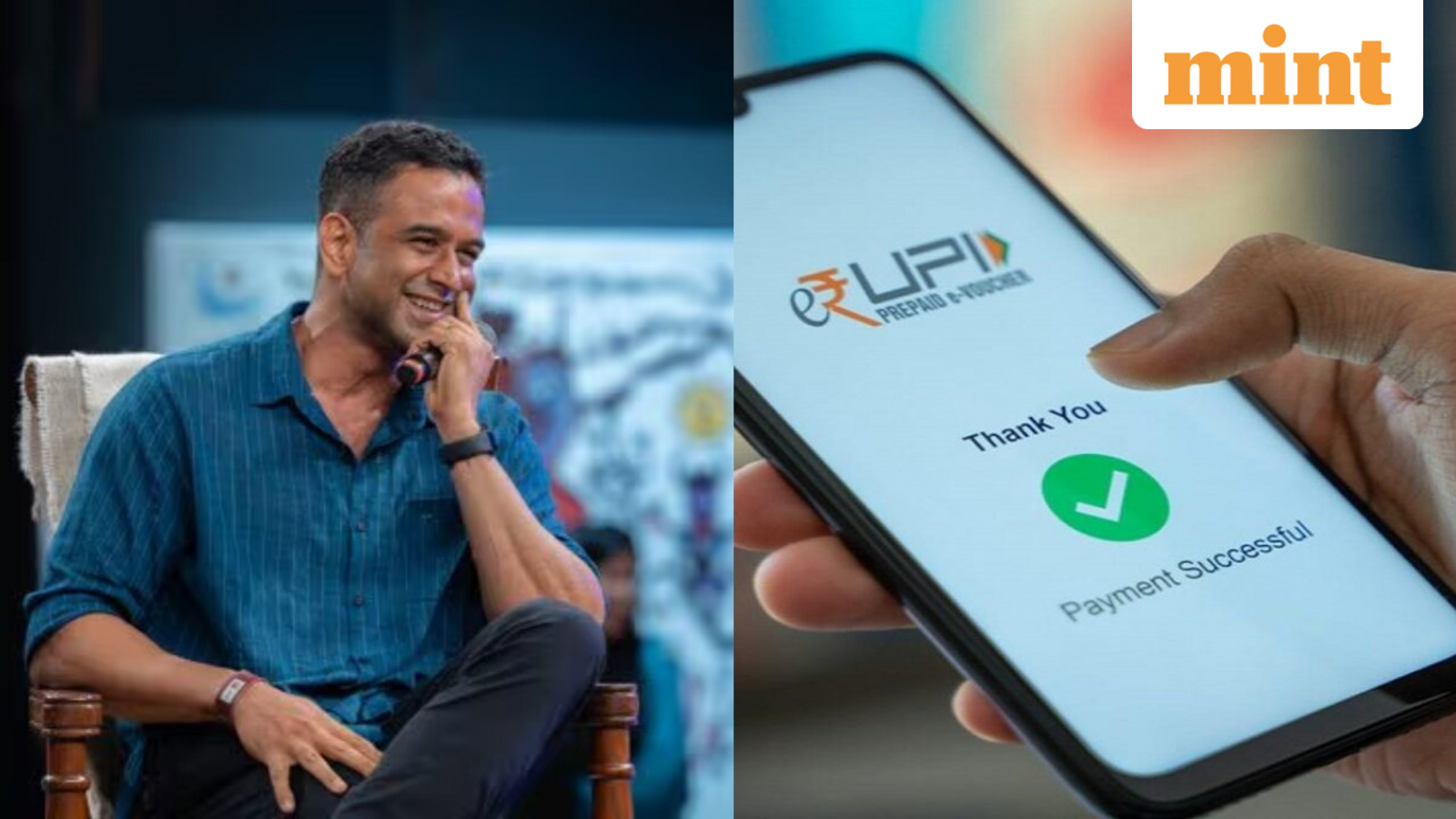
Zerodha co-founder Nithin Kamath said merchant discount rate (MDR) on UPI was “probably inevitable” given the widespread adoption of the payment system.
The National Payments Council of India (NPCI) on Tuesday announced MDR on select UPI transactions conducted from person to merchant. It is likely to come into effect from next month.
In a post on X on Wednesday, Kamath said introducing MDR could also increase competition in the UPI market, where three apps currently account for more than 95% of the market.
However, he said the proposed MDR structure does not make sense for some use cases, including investing and broking.
Kamath flags ‘no limit’ to broker costs
Kamath said the main problem for brokers is that there is no guarantee that money transferred to a broker will eventually result in a transaction.
“As brokers, we can’t force a customer to trade after transferring money,” he said, adding that if brokers cannot pass the UPI charge on to customers, there could be “essentially no limit” to the cost a customer can impose without generating any revenue.
He gave an example of 10,000 customers each making 50 UPI transfers of ₹2 lakh in a month without executing a single trade. At the proposed MDR, Kamath said, this could potentially cost a broker around ₹2 crore without generating any business.
Quarterly settlement adds to the concern
Kamath also pointed to quarterly settlement (QS), a Sebi regulation that requires brokers to return unused funds to clients every month or quarter.
“Most customers then transfer these funds back to their broking accounts, with more than half of these transfers happening through UPI,” he said.
According to Kamath, this means regulation effectively forces the movement of money every month or quarter, while brokers could end up “bearing the cost when the funds return without receiving any incremental benefit or revenue”.
Kamath proposes lower MDR cap
Kamath said Zerodha currently does not charge brokerage on equity delivery trades because the economics allow it to offer them for free.
However, he said the company may not be able to absorb an additional cost on every UPI transfer indefinitely, regardless of whether the customer eventually trades.
“I think having an MDR is okay,” Kamath said, while arguing that it does not resolve the issue of customers transferring money without transacting.
“It still doesn’t solve the problem of customers transferring money without transacting, but something like 0.02% with a cap of ₹5 or ₹10 per transaction seems much more reasonable for broking, instead of a cap as high as ₹300,” he added.
What NPCI said
A statement from NPCI said, “A revised UPI MDR framework has been introduced on select merchant transactions, effective from 15 October 2026, while keeping UPI free for consumers.”
It further mentioned that MDR of 0.4% will be applicable on UPI transactions above ₹2,000. It has been capped at a maximum of ₹300 per transaction.
RBI termed the move an important step towards strengthening the long-term sustainability of India’s digital payments ecosystem. The central bank regulates MDR charges. It added that the initiative will help UPI innovate and serve consumers and businesses.