The AI Company You Haven’t Heard of — But Should Keep on Your Radar
When investors talk about the AI revolution, companies like Nvidia, Amazon, and Alphabet get most of the attention. But somewhere underneath the artificial intelligence (AI) boom sits a company that most investors still barely know.
Bloom Energy Corp (BE -6.78%).
It isn’t an AI model developer. It doesn’t make GPUs. And it doesn’t run a giant cloud platform. Yet Bloom Energy could become an important beneficiary of the AI infrastructure spending boom.
What makes the company interesting isn’t simply the size of the AI opportunity. It’s that Bloom Energy’s business prospects seem to be changing at exactly the moment the AI industry is scaling.
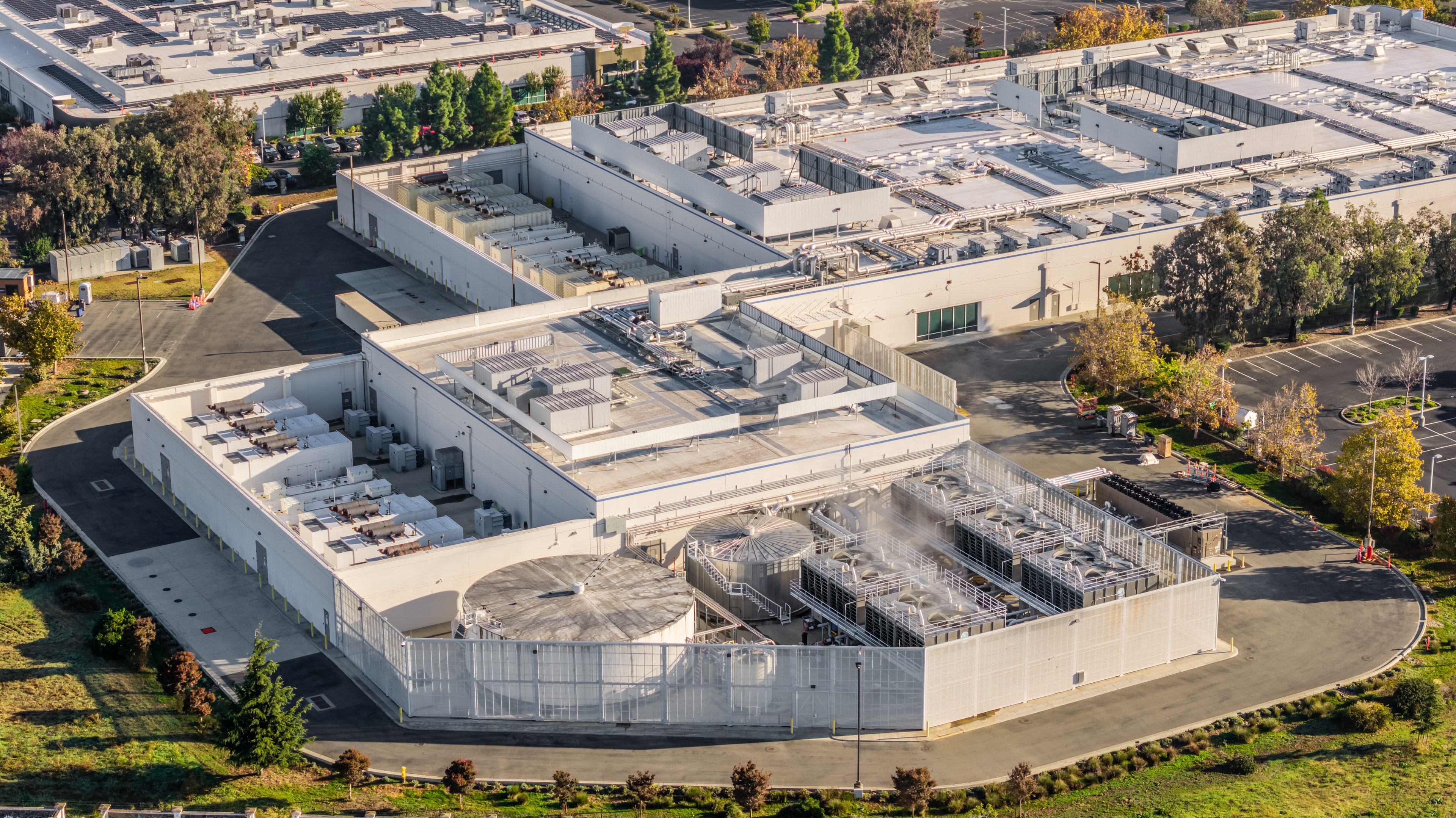
Image source: Getty Images.
From a science project to a real business.
Bloom Energy has been around since 2001. That matters because this isn’t a brand-new AI start-up that appeared overnight with a compelling story and no operating history.
The company spent years developing and commercializing its solid-oxide fuel-cell technology to generate electricity. For much of that history, investors faced an uncomfortable question: When would Bloom Energy’s technology become a truly profitable commercial business? And that’s not without reason. It was unprofitable even until 2025.
But things seem to be changing lately.
After generating $2.2 billion in revenue in 2025, the energy company has seen its growth accelerate dramatically in 2026. For perspective, 2026 second -quarter revenue reached $1.1 billion, up 166% from the prior year. More importantly , it delivered net profit in the first two quarters of 2026, a big turnaround from 2025.
In other words, Bloom Energy isn’t merely an interesting technology company showing promise anymore. It’s a company entering a potentially profitable growth phase.

Today’s Change
(-6.78%) $-18.70
Current Price
$257.05
Key Data Points
Market Cap
Day’s Range
$249.05 – $261.70
52wk Range
$61.37 – $351.28
Volume
191.1K
Avg Vol
15.2M
Gross Margin
31.22%
Enterprise customers are knocking on the door.
One reason investors are taking Bloom Energy more seriously lately is the quality of the customers now signing on with the business.
It has relationships with major technology companies, data center operators, and infrastructure players. Oracle is perhaps the most recognizable company.
Enterprise customers don’t make mission-critical infrastructure decisions because something sounds futuristic. They care about economics, reliability, deployment schedules, and whether the equipment will perform for years to come.
Every successful deployment, therefore, does more than generate revenue. It can provide validation. And validation can lead to even larger orders.
Solving a critical bottleneck of the AI boom.
Bloom Energy’s value proposition to the AI industry is surprisingly simple: it helps data centers get electricity faster.
AI data centers consume enormous amounts of power, but in many locations, the electric grid cannot quickly supply enough new capacity. A company might have its land, buildings, servers, and expensive AI chips ready, only to wait years for a grid connection.
Bloom offers an alternative. Its fuel-cell systems can generate electricity directly at the data center using fuels such as natural gas, reducing dependence on the grid and potentially enabling facilities to come online much sooner. That matters because an idle multibillion-dollar data center can cost its owner enormous amounts of lost revenue.
Now, Bloom’s power may not always be the cheapest option, but it needs to be available when customers need it. Put simply, Bloom isn’t just selling electricity to the AI industry. It’s selling speed — and when billions of dollars of AI infrastructure are waiting for power, speed can be extremely valuable.
The bigger question: how big can this become?
So far, it’s clear that Bloom Energy is benefiting from the expansion of AI data centers.
But investors aren’t merely asking whether Bloom Energy can sell more fuel-cell systems next year. They are asking whether the company can establish itself as a standard part of the rapidly expanding data-center ecosystem.
That’s a very different question.
Consider what happens if Bloom Energy becomes a preferred supplier for a growing group of hyperscalers, AI infrastructure companies, and data-center developers. Each new customer can potentially lead to additional deployments. More deployments can increase manufacturing scale, which in turn leads to operating leverage and higher profitability.
Although any number is likely a guess at this stage, an energy research center predicts that data centers will consume nearly 12% of all U.S. electricity by 2030, nearly six times their pre-AI-boom share in 2018.
If the grid cannot meet this increased demand, data centers must seek alternative power sources. And if Bloom Energy can capture a meaningful share of this surging demand, it could sustain growth for years to come.
Why keep Bloom Energy on the radar?
The most interesting investments often sit at the intersection of a huge trend and a company undergoing a fundamental change.
The AI boom has created an enormous infrastructure build-out, and Bloom Energy is moving from years of technological development toward large-scale commercial adoption.
If the company can continue to increase revenue and boost profitability, it could become a major winner in this AI race.
All said, Bloom Energy deserves a place on investors’ radar.