Fed Meeting Begins Tuesday With Real Possibility of a Rate Hike
The Federal Open Market Committee will open its September meeting Tuesday, with many experts predicting Fed policymakers could vote to raise interest rates because of persistently high inflation.
“The Federal Reserve heads into its September meeting widely expected to raise rates. Stronger August job growth and firmer inflation have sharply increased the pressure to act, while Treasury yields and mortgage rates have climbed as markets price a more restrictive policy path. With much of that adjustment already underway, the bigger question is what the Fed signals about the path ahead,” said First American Senior Economist Sam Williamson.
“Strong job growth and firmer inflation have tilted the Fed toward a September rate hike, with recent data pushing Treasury yields and mortgage rates to one-year highs. For home buyers, the key question is whether Fed action can eventually calm bond yields and open the door to mortgage-rate relief, even if borrowing costs remain elevated for now,” Williamson noted.
The tilt comes after last week’s releases of the Producer Price Index and the Consumer Price Index.
Prices Continue to Rise
Prices for many goods and services continued to rise in August, according to the CPI that was released Friday. The report raised the specter of a Federal Reserve interest rate hike at this week’s FOMC meeting.
According to the report, the consumer price index rose a seasonally adjusted 0.4% for the month, putting the 12-month increase at 3.4%, the Bureau of Labor Statistics said.
Both were in line with the Dow Jones consensus.
CNBC reported, however, that stripping out volatile food and energy prices, the core CPI posted a 0.3% monthly gain, or 0.1 percentage point higher than forecast. The core annual rate was 2.4%, matching the estimate.
The CPI was the final major inflation indicator the Fed will review before its policy meeting, which concludes Wednesday with a vote on its key interest rate.
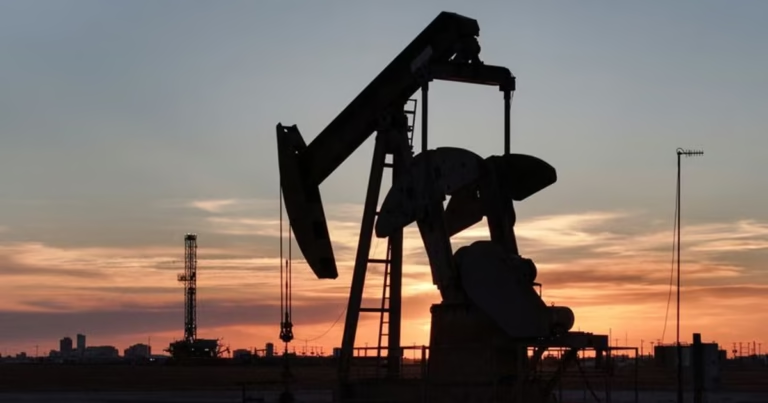
Energy pushed the headline number higher, as gasoline prices jumped 3.9%, accounting for more than one-third of the index’s gain. The energy index broadly rose 2.1% amid pressure from escalating tensions in the Middle East and was up 16.3% from a year ago. Gasoline rose 27.4%, and fuel oil surged 52% on a 12-month basis, according to CNBC.
Food prices edged up 0.1% as food-at-home costs held flat. The food index, however, accelerated 2.7% annually.
Differing Views
CNBC reported that another significant factor was a 0.3% climb in shelter costs, which had moderated over the prior two months.
Views differ on which way the Federal Open Market Committee will tilt, with some speculating the difference could come down to hundredths of a percentage point in the CPI reading.
Fed Chair Kevin Warsh has expressed a commitment to getting inflation back down to the Fed’s 2% target and said recently that if the numbers don’t improve, “we have work to do.” CNBC said Warsh’s comments were widely interpreted as advocating a rate hike, though several key officials over the past few weeks have counseled a more patient approach.
“Chair Warsh and others signaled that interest rates can remain on hold only if disinflation continues and today’s August report did not deliver that,” said Kathy Bostjancic, Chief Economist at Nationwide. “Further, the renewed march higher in oil, gasoline and diesel prices adds to concerns that higher energy prices could spill over to other goods and services and inflation expectations.”