Could SpaceX Really 5X Its Revenue in a Single Year? Surprisingly, the Math Actually Works Out (if Elon Musk Can Do This 1 Big Thing).
Elon Musk is known for making bold claims.
Like when he claimed earlier this year that Space Exploration Technologies Corp. (SPCX -0.72%), or SpaceX, had a $26.5 trillion addressable market for unspecified “artificial intelligence applications.” A lot of people scoffed at that one (myself included).
Then, on the August earnings call, Musk claimed that SpaceX’s annual recurring revenue (ARR) could hit $100 billion by the end of the year. That, too, seemed far-fetched, since the company generated less than $20 billion in total revenue in 2025.
But last week, SpaceX’s CFO, Bret Johnsen, claimed that the company is on track to achieve its $100 billion ARR goal. I couldn’t believe it at first, but when I did the math, I discovered it actually adds up if Musk can pull off this one big thing.
Here’s the surprising truth behind this claim, and my take on whether Musk can actually deliver this impressive 5X growth.

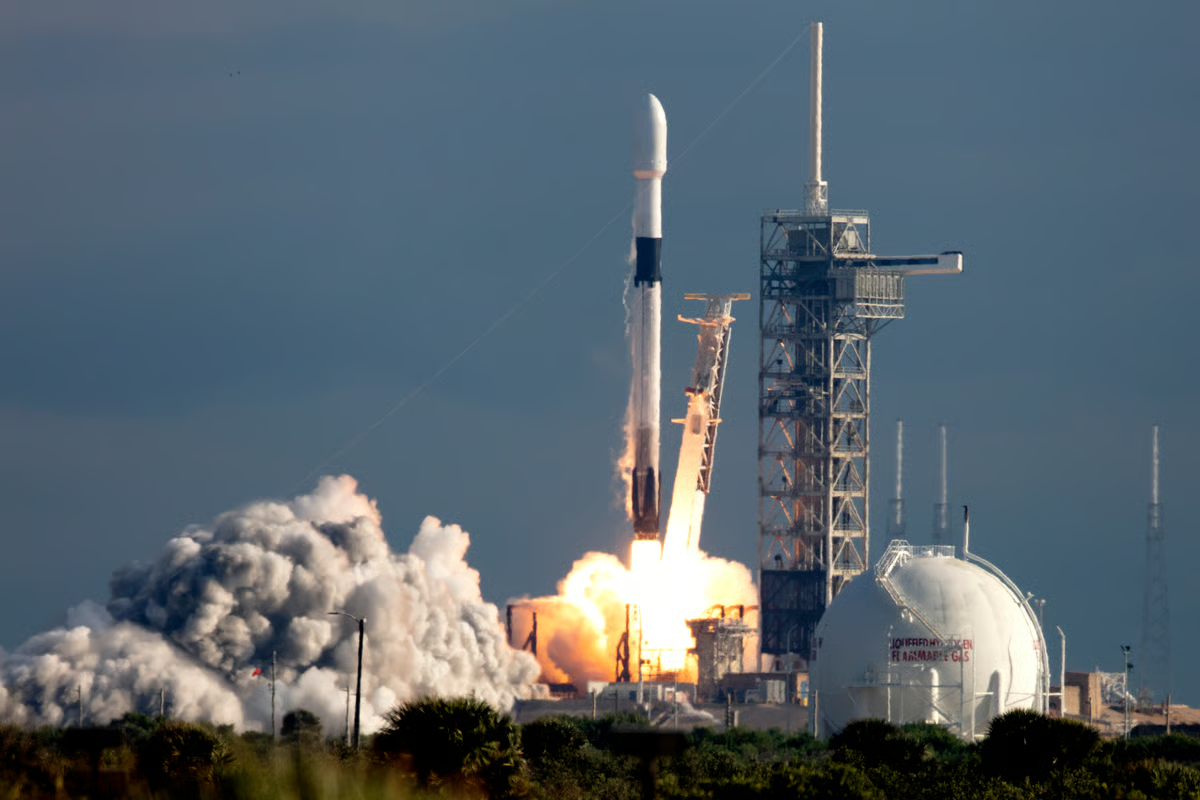
Image source: The White House.
5X revenue growth is unprecedented
According to SpaceX’s S-1 prospectus, the company generated $18.7 billion in revenue in all of 2025. So, for the company to achieve $100 billion in revenue in 2026, it would have to grow total revenue by at least 535%.
Technically, as long as the ARR is contracted by Dec. 31, Musk’s claim would be accurate. In that case, the $100 billion in contracted revenue would actually be recognized in 2027. So the actual revenue growth rate would need to be 535% over two years, not one.
That’s still a very tall order.
In its most recent quarterly earnings release, SpaceX reported that its revenue grew 91.9% year over year (YOY) to $7.8 billion. That’s impressive growth, but it’s nowhere near enough. So what’s changed?
Why build a data center when you can rent?
The current climate of opposition to AI data centers is a very different landscape from the one in which SpaceX’s xAI brought its Colossus AI data center campus online in just 122 days in 2024.
In fact, AI data centers are so unpopular that several approved data center projects have recently had that approval revoked. This makes existing AI compute capacity much more valuable. That’s why SpaceX has been able to make several lucrative deals renting its AI compute capacity to third parties in recent months:
| Deal Announcement Date | Customer | ARR from Deal |
|---|---|---|
| May 6 | Anthropic | $15 billion |
| June 5 | Alphabet | $11 billion |
| Aug. 4 | Undisclosed | $6.7 billion* |
| Sept. 10 | Undisclosed | $13.3 billion |
| Total | $46 billion |
Source: SpaceX. Note: The Aug. 4 annual recurring revenue (ARR) is a 6-month deal.
SpaceX’s ARR from these four deals alone totals $46 billion. That puts it almost halfway to its goal. But can it get the rest of the way there by December?
A question of capacity
In the four months since May’s announcement of the deal with Anthropic, SpaceX has averaged $13.2 billion in AI compute deals per month. With three full months of the year remaining, if SpaceX can continue renting AI compute at that rate, it will yield another $40.2 billion in ARR by December.
But that assumes SpaceX has enough compute capacity to keep making deals of this size. Anthropic is now renting SpaceX’s entire GPU capacity at its Colossus 1 data center. And some recent reports have suggested SpaceX may need to slow its new data center construction to ensure better reliability.
Still, if SpaceX has enough additional capacity to keep renting at this rate, doing so would bring the company’s ARR to $86.2 billion, or very close to its goal.

Space Exploration Technologies
Today’s Change
(-0.72%) $-1.09
Current Price
$150.12
Key Data Points
Market Cap
Day’s Range
$146.60 – $152.56
52wk Range
$104.83 – $225.64
Volume
51.7M
Avg Vol
111.2M
Starlink’s growth comes in clutch
Not all of SpaceX’s ARR comes from selling AI compute.
As I explained recently, SpaceX’s Starlink satellite communications service had 12 million users with an average monthly revenue per user (ARPU) of $66 in Q2. That’s $9.5 billion in annual (presumably recurring) revenue. But the subscriber count grew by 16.5% from Q1 while maintaining the same ARPU of $66. If SpaceX can keep growing its Starlink subscriber base at the same quarterly rate, by the end of the year, it would have 16.3 million subscribers, yielding an ARR of $12.9 billion.
Add that to the $86.2 billion in AI compute ARR, and you get $99.1 billion in ARR. So close!
Lastly, SpaceX’s rocket launch business currently provides $3.8 billion in annualized revenue. We can extrapolate that at least $900 million of that revenue is essentially “recurring,” given SpaceX’s dominance of the global launch market. That $900 million would get SpaceX to the promised $100 billion in ARR by the end of the year.
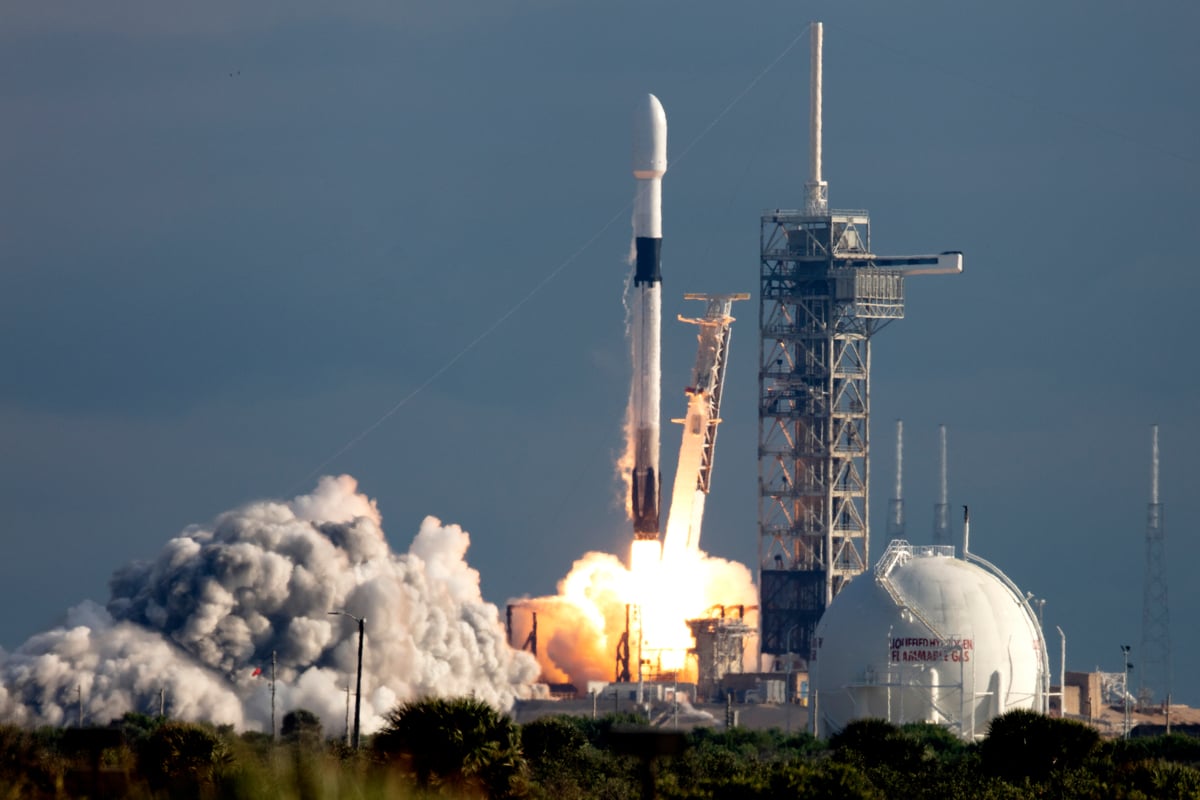
Image source: Getty Images.
But will it actually happen?
Well, we won’t know for a while.
Until SpaceX’s 2026 10-K is released, there’s no way to know if it can maintain its current rate of AI data center rentals or Starlink subscriber growth. If either stalls out, the math gets very unfriendly.
Plus, even if SpaceX signs binding contracts for $100 billion in ARR by Dec. 31, the company’s 2026 revenue won’t reach $100 billion. That’s because so much of this ARR was secured later in the year.
That said, the fact that SpaceX has a plausible path to securing $100 billion in ARR by the end of 2026 is an impressive feat. I still think that its $2 trillion valuation is excessive. But if Musk can keep growing revenue at this breakneck pace, I may have to rethink my position on the stock.