Bengaluru, Chandigarh pip Mumbai, Delhi in average household income: Study | Personal Finance
If you thought Delhi and Mumbai were the country’s richest cities by average household income, think again.
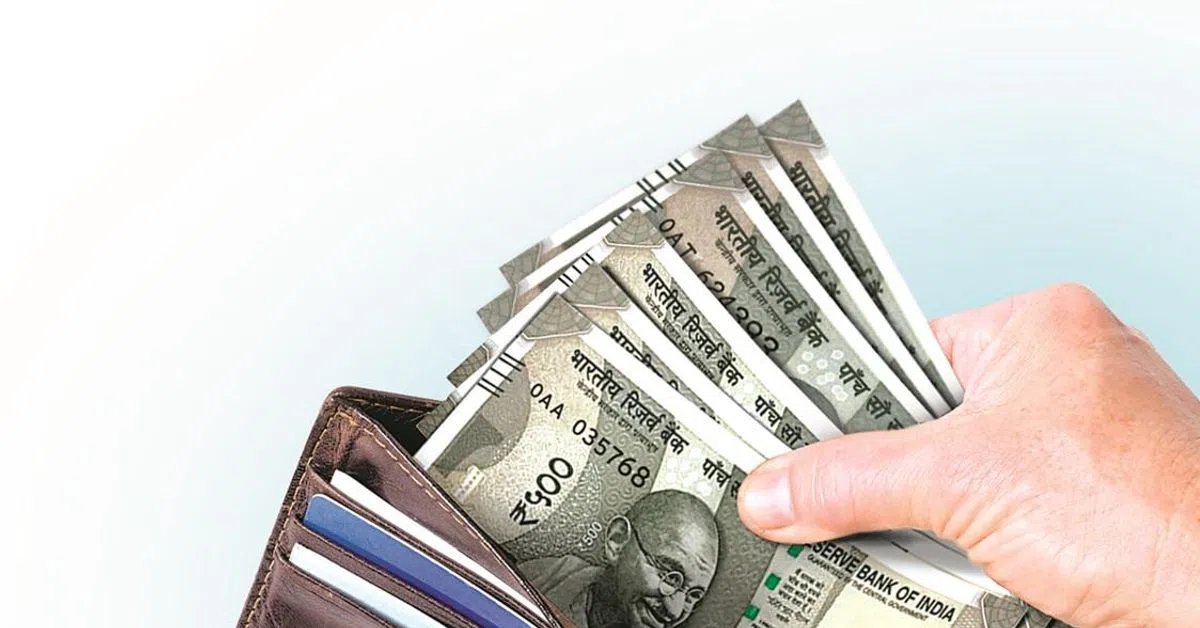
The crown has been clinched by Bengaluru and Chandigarh with an average household income of Rs 28.3 lakh per annum.
Vadodara (with Rs 26 lakh) is also among the top five, ahead of Mumbai (Rs 24.2 lakh), according to a recently-released research by People Research on India’s Consumer Economy (PRICE), in collaboration with Tata Sons Research.
The research busts many myths — for instance, the country’s top-five cities by average household spending are not what one would expect — the top-six big cities, which include Delhi, Mumbai, Bengaluru, Kolkata, Chennai and Hyderabad.
Instead, the top honours based on household consumption go to Chandigarh, followed by Thiruvananthapuram, Vadodara, Tirupur, and Surat (with consumption ranging from around Rs 15-19 lakh per annum).
In contrast, the average consumption in Delhi (at Rs 14.5 lakh), Mumbai (Rs 14 lakh), Bengaluru (Rs 15.3 lakh) and Kolkata (Rs 10 lakh) are far lower.
But the big six cities continue to dominate overall consumption — accounting for 46 per cent of the total among the country’s top-100 cities.
But there is a big twist here too — Delhi-NCR is a big outlier — at $126 billion per annum, its overall consumption spends are nearly touching the scale of Mumbai and Bengaluru combined ($135 billion).
This is of course due to two factors — it has more households (7.5 million compared to 4.6 million in Mumbai). Also, Delhi’s population is 35 million with a higher average consumption per household at nearly Rs 15 lakh compared with Mumbai.
Also, the total consumption in Delhi-NCR on transportation was pegged at $33 billion (FY26), which was more than the entire Pune’s total consumption market size ($28 billion) in the same period.
What consumers spend on dairy in Delhi-NCR ($10 billion) is far higher than the total consumption market of Tirupur ($9 billion).
And, Delhi spends over $22 billion on housing alone, which is more than the total consumption spends in Thiruvananthapuram ($15 billion).
There are two other standout cities, the research points out, and one of them is Bengaluru. It has the highest average household income across 100 cities as well as the highest household savings (Rs 13 lakh per annum).
However, surprisingly, the city’s propensity to spend among the big six is one of the lowest at 54.1 per cent.
In striking contrast, Chennai’s propensity to spend is the highest among the big six cities, at 67 per cent.
Its households, on an average, earn Rs 18.9 lakh per annum, spend two thirds of it, and carry the highest debt exposure (28 per cent of income) among the big six with strong demand for vehicles and housing.
The study is for the period of FY25-26 and projections till FY31 have been drawn from PRICE’s comprehensive ICE 360 Household Surveys.
It is supplemented by NSO Consumption Expenditure Surveys, National Health Survey, National Accounts Statistics and other demographic and economic data sources as well as UN department of Economic and Social Affairs.
The study reveals that India’s top-100 cities account for 19 per cent of the total population. However, they control 35 per cent of the income, 31 per cent of the spending and 47 per cent of the household surplus income.