NY Dirt: Lower Manhattan’s 25-Year Transformation

This week, New York is reflecting on where it has been and where it has come in 25 years.
The occasion is, of course, a somber one. It has been a quarter-century since the September 11 terrorist attacks.
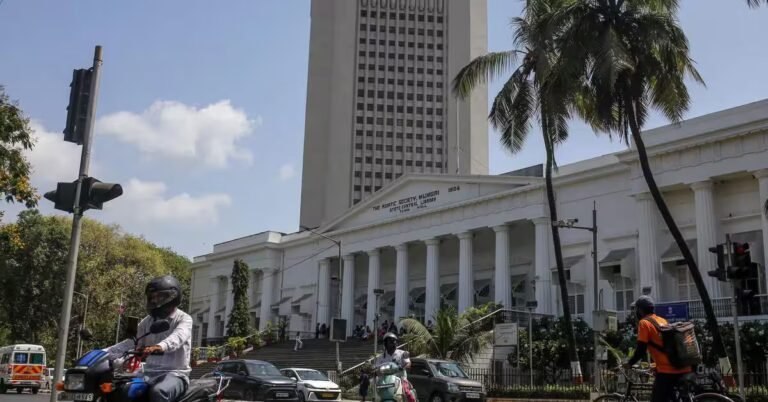
Lower Manhattan has changed tremendously, by necessity.
A report released this week from state Comptroller Thomas DiNapoli underscored some of the economic and physical changes to Lower Manhattan that have taken place in that time.
Lower Manhattan, here defined as the Financial District, Tribeca, City Hall and Battery Park City, has grown. The population of the area has doubled since 2000, according to the comptroller’s office, as has its share of Manhattan residents — up to more than 4 percent.
And all of those people have to live somewhere. The housing stock in Lower Manhattan has similarly more than doubled. The area has added 24,857 residential units since 9/11, up from the 21,337 units that existed in the area in 2002, according to the report.
Overall, Lower Manhattan has changed from a business district to a 24-hour, mixed-use set of neighborhoods.
“The description of Wall Street back then was that the sidewalks rolled up at 5 o’clock at night,” appraiser Jonathan Miller told me.
Housing in the area before the attacks was primarily rental, and the population was relatively transient. But condo development, spurred on by office-to-residential conversions, has helped the neighborhoods evolve into places people can truly live, he said.
Miller was in Manhattan that day and saw the towers burn from his office in Midtown.
“Here I am valuing property for a living and I’m just thinking, ‘Is this the end of Manhattan?’” he told me. But it wasn’t the end, clearly.
“Human beings are really good at forgetting,” he said. “This is one of those things you can’t ever forget.”
What we’re thinking about: Do you have any particular reflections, notes or remembrances of September 11th you would like to share? Feel free to send them to lilah.burke@therealdeal.com.
A thing we learned: From 2000 to 2024, the share of Lower Manhattan jobs in the financial activities sector fell from almost 49 percent to just under 31 percent, while the share of “business services” jobs rose from 25 percent to 30 percent.
Elsewhere…
— City lawmakers introduced a bill Thursday to add regular inspections to the city’s stop work order program. Developers who have been given stop-work orders have been found to be ignoring the orders, Ty Hankerson, the bill’s sponsor, wrote in a memorandum. The bill would require building inspectors to come by every two weeks until the order is lifted, to see that work is indeed stopped.
— The New York City Economic Development Corporation is weighing $92 million in tax benefits for a new Hudson Yards skyscraper, called 99 Hudson Boulevard, from Tishman Speyer, Bloomberg reports.
— Opponents of Mayor Zohran Mamdani’s plan to open city-run grocery stores have filed a federal antitrust lawsuit on the matter, saying the stores would lead to unfair competition, the New York Post reports.
Closing time
Residential: The most expensive residential sale recorded Thursday was $7.7 million for a 2,263-square-foot condominium at 200 East 83rd Street in Yorkville. Lisa Lippman and Scott Moore with Brown Harris Stevens had the listing.
Commercial: The most expensive commercial transaction was $73.1 million for a 145,838-square-foot property at 309 East 94th Street in Yorkville. Taconic Partners sold to LCOR after paying $70 million in 2021.
New to the Market: The highest price for a residential property hitting the market was $68 million for a 19,050-square-foot townhouse at 4 East 79th Street on the Upper East Side. Adam Modlin with The Modlin Group has the listing. The house last sold for $56 million in September 2024.
— Matthew Elo