Fintech a valuable partner in building for future: RBI Governor Malhotra | Finance News
The Reserve Bank of India (RBI) has consistently viewed fintechs as “valuable partners” in building the financial system of the future, Governor Sanjay Malhotra said on Tuesday, highlighting the sector’s role in expanding financial inclusion, improving customer experience, and enabling faster and more efficient credit delivery.
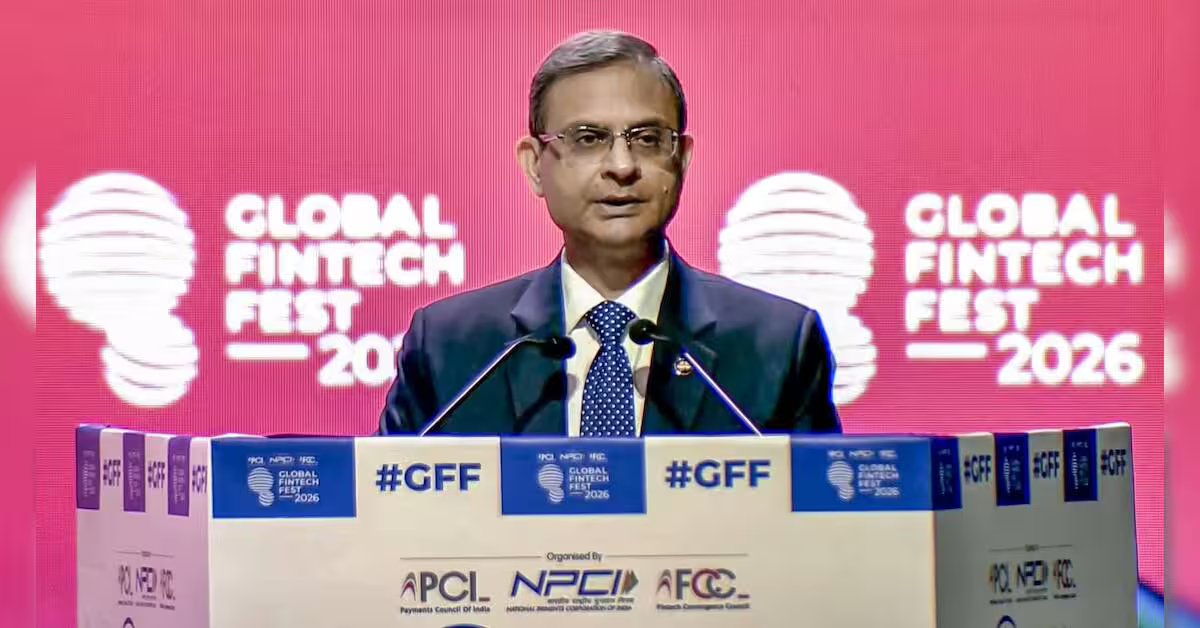
Addressing the Global Fintech Festival 2026 in the presence of Prime Minister Narendra Modi, Malhotra said the central bank’s approach to fintech had been built around “continuous, open and constructive engagement” with startups, fintech companies, and other stakeholders.
“Over the past decade, fintech has fundamentally reshaped the architecture of Indian finance … The Reserve Bank has consistently viewed fintech as a valuable partner in building the financial system of the future,” Malhotra said.
He said the RBI’s regulatory sandbox, the Reserve Bank Innovation Hub and its continued dialogue with the fintech ecosystem reflected the regulator’s belief that “better policy emerges from continuous, open and constructive engagement”.
Over the past decade, fintech has “fundamentally reshaped the architecture of Indian finance”, taking banking “from the branch to the hand of every citizen”, Malhotra said.
“Today, a shopkeeper in a small town, a farmer in a remote village, a young professional in a metro city, all of them transact, save and borrow through the same seamless digital rails,” he said, pointing to Unified Payments Interface (UPI), Aadhaar-enabled payment systems, and the Jan Dhan ecosystem.
“This is financial inclusion not only as a policy aspiration but as lived everyday reality for hundreds of millions of Indians,” the governor said.
According to Malhotra, fintech has helped connect India’s diverse population to formal finance “faster and affordably”, while also transforming the efficiency of the financial system.
He highlighted improvement in customer experience and financial infrastructure, including reduction in account-opening and payment-settlement times, lower transaction costs, stronger fraud detection through artificial intelligence-driven analytics and real-time supervision.
“Equally significant has been fintech’s role in improving customer experience and efficiency of our financial infrastructure — reducing account opening and payment settlement times, cutting transaction costs, strengthening fraud detection through AI-driven analytics, enabling real-time supervision etc,” he said.
“Perhaps, nowhere is the impact more tangible than in the credit delivery to our micro, small and medium enterprises (MSMEs),” he said while highlighting cash-flow based lending, account aggregators, and platforms like the Unified Lending Interface, fintechs are helping bridge India’s MSME credit gap by extending formal, collateral-light credit to millions of small businesses that, for decades, were invisible to traditional underwriting models. “This is credit reaching the last mile of enterprises, powering jobs and livelihoods across the country.”
Malhotra said the RBI had sought to encourage innovation while ensuring that trust remained at the foundation of the financial system.
“We have encouraged self-regulation within the sector. We have supported the development of digital public infrastructure that fintechs can build upon. We have been open to new ideas and new players. We have promoted responsible innovation while safeguarding trust that is the very foundation of finance,” he said while asserting that the RBI would continue with this approach, guided by a vision to build a financial system that was safer, more trustworthy, inclusive, fair and efficient, and supports economic growth and public welfare.
The governor said the RBI’s broader objective was to build a financial system that is “safer, more trustworthy, more inclusive, fair, efficient” and supportive of economic growth and public welfare.