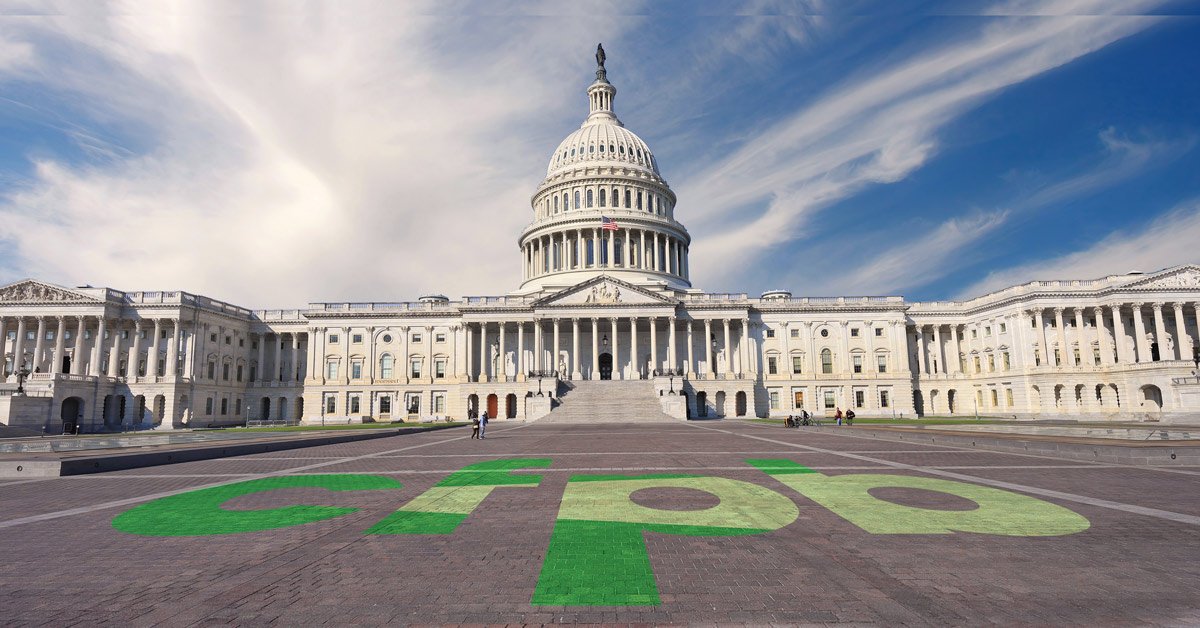
Former officials blast GOP plan to put CFPB funding under congressional control
House Republicans introduced legislation Tuesday to significantly restructure the Consumer Financial Protection Bureau (CFPB), drawing criticism from former bureau officials and consumer advocates.
The Consumer Financial Protection Accountability and Reform Act of 2026, H.R. 10184, was introduced by Rep. Andy Barr, R-Ky., who chairs the House’s financial institutions subcommittee. It was co-sponsored by Financial Services Committee Chairman French Hill, R-Ark.
If enacted, the bill would subject the bureau’s funding to the congressional appropriations process. Currently, the CFPB is funded directly by the Federal Reserve, with the director of the bureau requesting the amount needed to fund operations within annually capped limits.
Advertisement

The proposed legislation would also create a dedicated CFPB inspector general and impose additional requirements on the agency’s rulemaking process. It would also make changes to the CFPB’s supervision and enforcement authorities.
“This package establishes durable guardrails to make the CFPB more accountable and transparent while keeping its focus where it belongs: protecting consumers and promoting competition, innovation, and access to affordable financial products and services,” Hill stated in a press release.
An overview of the bill from Hill’s committee says reforms are needed because “partisan priorities, ambiguous legal standards, duplicative supervision, and punitive enforcement have driven sharp swings in CFPB policy, leaving consumers and businesses uncertain about the rules.”
Pushback from ex-officials
The proposal has received backlash from former CFPB officials.
Tom Feltner, who left the CFPB last December following a four-year stint as a senior policy adviser, told Scotsman Guide the proposal was an attempt “to advance an even more extreme sweeping deregulatory agenda than the work currently underway at the CFPB under its Trump-appointed leadership and through the recent actions taken by Congress and the courts.”
Feltner now serves as associate director of consumer policy at Americans for Financial Reform (AFR), a nonpartisan nonprofit coalition that advocates for stricter regulation of the U.S. financial system.
“Its provisions, collectively and individually, will make the financial market more complicated, more expensive and more prone to exactly the type of financial crisis the CFPB was designed to prevent,” Feltner said.
He noted that the bill is largely similar to a package of deregulatory proposals introduced in August by Republican members of the House Financial Services Committee. AFR led the writing of a 14-page letter to the committee, co-signed by 39 groups, outlining what the groups described as ways the discussion draft would give financial companies undue influence over the agency’s budget and priorities and limit its ability to protect consumers.
In addition to the rollbacks identified in August, Feltner said the new bill would add new carve-outs for earned wage access loans that would exempt these products from state usury caps, military financial protections and fair lending laws.
The new language closely tracks with the Earned Wage Access Consumer Protection Act, a bill introduced in June that would establish a national regulatory framework for earned wage access services. The bill advanced through the committee stage along party lines “over the objections from a broad coalition of consumer, community and civil rights organizations that have long documented the high cost and repeat use of these types of online payday loans,” Feltner said.
The cost to consumers
In announcing the legislation, Barr referred to a White House Council of Economic Advisers (CEA) report from February that estimated the CFPB has cost consumers almost $370 billion since 2011.
“That’s because this agency has been rogue since the beginning,” Barr said. “It’s why I’ve led the charge to bring the CFPB under the congressional appropriations process and restore accountability to this agency.”
Doug Simons, a former CFPB senior fellow, told Scotsman Guide that Barr’s reference to the CEA study “is a reminder of why that shoddy piece of analysis was published in the first place.”
According to Simons, the study had assumed the higher yields on loans with higher debt-to-income ratios were entirely a function of compliance costs (rather than genuine risk) and then applied that cost to the entire mortgage market. He said the analysis disregarded that the large majority of loans sold to Fannie Mae and Freddie Mac are exempt from the rules.
“The assumptions for credit cards are perhaps more absurd, assuming complaint volumes drive compliance costs (the opposite seems more likely),” Simons wrote in an email. “The authors likely weren’t concerned with defending these choices because they knew their allies would cite them, as Barr just did, without any context.”
What Democrats say
The House bill comes three months after 11 Democrats on the Senate Banking Committee introduced a bill “to automatically and fully fund” the agency.
Their proposal would require the Federal Reserve to transfer at least 12% of its total operating expenses to the CFPB, up to the amount the bureau is legally permitted to receive under the Dodd-Frank Act. It would reduce an administration’s ability to withhold funding to the CFPB by making those transfers mandatory and not dependent on yearly funding requests.
The Democratic bill is endorsed by the National Consumer Law Center (on behalf of its low-income clients), the Consumer Federation of America, Americans for Financial Reform, Protect Borrowers, the National Community Reinvestment Coalition, the Center for Responsible Lending and the National Association of Consumer Advocates.
“Donald Trump and his Administration launched an assault on the Consumer Financial Protection Bureau, trying to drain it of its resources so it could no longer stop big banks and giant corporations from scamming Americans out of their money,” Sen. Elizabeth Warren of Massachusetts said in a June 4 press release announcing the bill.
Warren, the Democratic ranking member of the Senate Banking Committee, was the primary congressional architect of the CFPB, which was established in 2010 following the financial crisis of 2008.
“Democrats are united in fully funding the CFPB when we take back Congress,” Warren added.