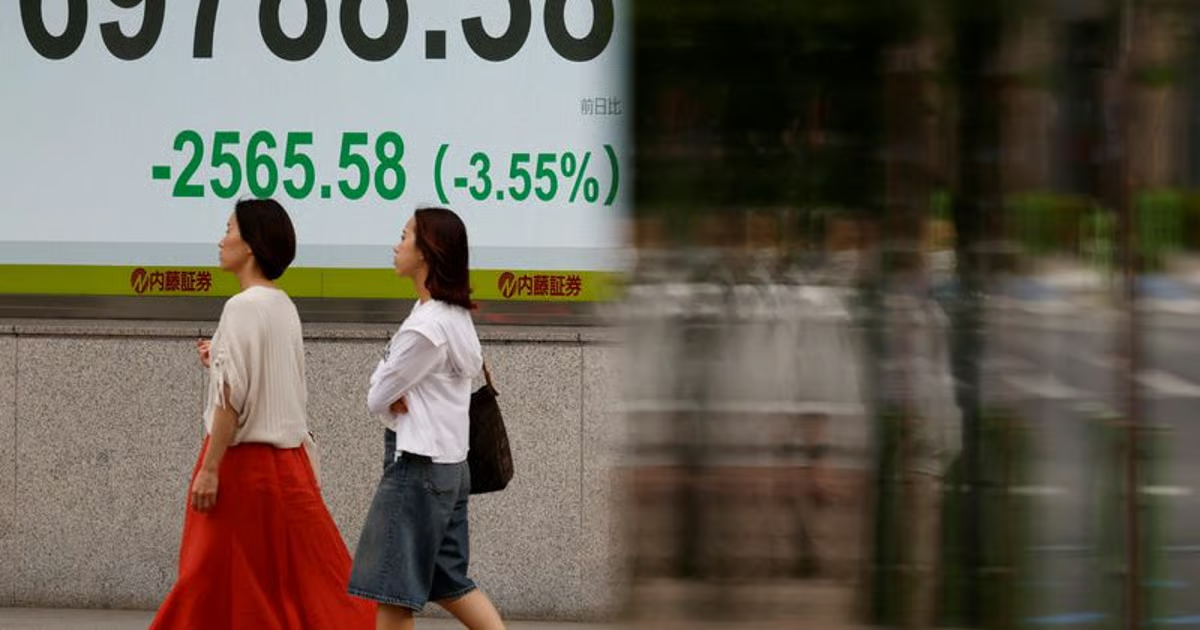
Asian Markets Tumble as US-Iran Tensions Lift Oil and Bond Yields
Asian Stocks Plunge as US-Iran Airstrikes Push Oil and Bond Yields Higher
By Gregor Stuart Hunter
Market Reactions to US-Iran Tensions
SINGAPORE, Sept 2 (Reuters) – Asian stocks slumped on Wednesday after renewed U.S. airstrikes on Iran pushed oil prices to a five-week high and drove the U.S. 10-year Treasury yield to its highest level in almost three years, extending a bond market selloff across global markets.
Stock Market Performance Across Asia
MSCI’s broadest index of Asia-Pacific shares outside Japan tumbled 2% as South Korea’s KOSPI dropped almost 4%, while the Nikkei 225 was down 2.9%. S&P 500 e-mini futures were down 0.1%.
Oil and Bond Markets Respond
Brent crude futures extended gains into a second day as trading resumed in Asia, rising 0.9% to $95.45 a barrel after the U.S. launched a barrage of airstrikes on Iran on Tuesday, which earlier pushed oil prices to a five-week high. [O/R]
Analyst Insights on Market Volatility
“The threat of further disruptions to the Strait of Hormuz has brought about renewed anxiety over inflation, driving a selloff in stocks across most major markets and a rout in global bond markets,” Westpac analysts wrote.
Bond Yields Hit New Highs
The yield on the U.S. 10-year Treasury bond hit an intraday high of 4.8122%, its highest level in almost three years, while the yield on the 10-year Japanese government bond rose 2 basis points to 3.015%, extending its climb after reaching a three-decade high earlier this week.
Expectations for Policy Response
“September kicked off on a shaky note as developed market government bonds continued to sell off,” DBS analysts wrote.
“Brace for a volatile month ahead as high yields cause angst across the asset classes,” they said. “If the bond rout does not get stemmed, policymakers would probably have to resort to more aggressive measures to cap yields.”
Currency and Central Bank Moves
The kiwi dollar was down 1% at $0.5834 after the Reserve Bank of New Zealand hiked interest rates by 25 basis points to 2.75%, as expected by markets, though dovish language in the central bank’s statement weighed on the currency.
Central Bank Messaging
“The RBNZ hiked rates as expected, but tempered expectations for further tightening,” Capital Economics analysts wrote. “The messaging sounded a bit less hawkish than before.”
The U.S. dollar index, which measures the greenback’s strength against a basket of six currencies, was up 0.1% at 99.79, its highest since August 17.
Wall Street and Economic Data
Overnight on Wall Street, the S&P 500 slipped 0.7% and the Nasdaq Composite fell 1% as a surge in government bond yields weighed on equities.
US Manufacturing and Fed Rate Hike Expectations
The declines came as data from the Institute for Supply Management released on Tuesday showed U.S. manufacturing activity moderated in August amid a slowdown in new orders, but remained in expansionary territory.
Traders believe the Federal Reserve is likely to raise interest rates at its next meeting in two weeks, though a hike is not certain.
Market Odds for Fed Action
Fed funds futures are pricing an implied 67% probability of a 25-basis-point increase to benchmark borrowing costs at the U.S. central bank’s two-day meeting ending on September 16, compared to a 39.6% chance a week ago, according to the CME Group’s FedWatch tool.
Commodities and Cryptocurrencies
Gold was down 0.6% at $4,304.64 an ounce, while bitcoin edged 0.1% lower to $77,340.50 and ether was off 0.5% at $2,407.01.
(Reporting by Gregor Stuart Hunter; Editing by Jamie Freed and Tom Hogue)