Nonbank lender finds niche in airport concession business
- Key insight: East West Bank is partnering with a nonbank lender to enter a specialty lending vertical that’s been written off by many traditional lenders.
- Supporting data: East West’s $100 million airport concession credit facility marks its second deal with the Los Angeles-based Lendistry in 10 months.
- Expert quote: “There’s a lot of blue ocean here for us, and quite frankly for other players, too.” — Lendistry CEO Everett Sands
Processing Content
A seemingly random loan application followed by some sage guidance from a well-placed credit officer propelled Lendistry into an underserved vertical that’s become a $100 million business for the Los Angeles-based nonbank lender.
In an interview, Lendistry CEO Everett Sands recalled a 2019 conversation with an airport concession customer, who said “I’d like to borrow.” Sands’ initial reaction was negative, in part because the applicant lacked sufficient collateral. But then a credit officer who had worked with some airport concessionaires at a previous job gave Sands a primer.
Sands was intrigued enough to attend a conference on airport concession lending. Ultimately, Lendistry jumped in with both feet.
Since that humble start seven years ago, the company’s Airport Concession Program has made $98 million of loans to concessionaires in 16 states. Now, it’s primed to double in size, backed by a $100 million credit facility from the $85 billion-asset East West Bancorp in Pasadena, California. The facility includes a $100 million accordion that supports additional borrowing, up to a total of $200 million, as the program expands.
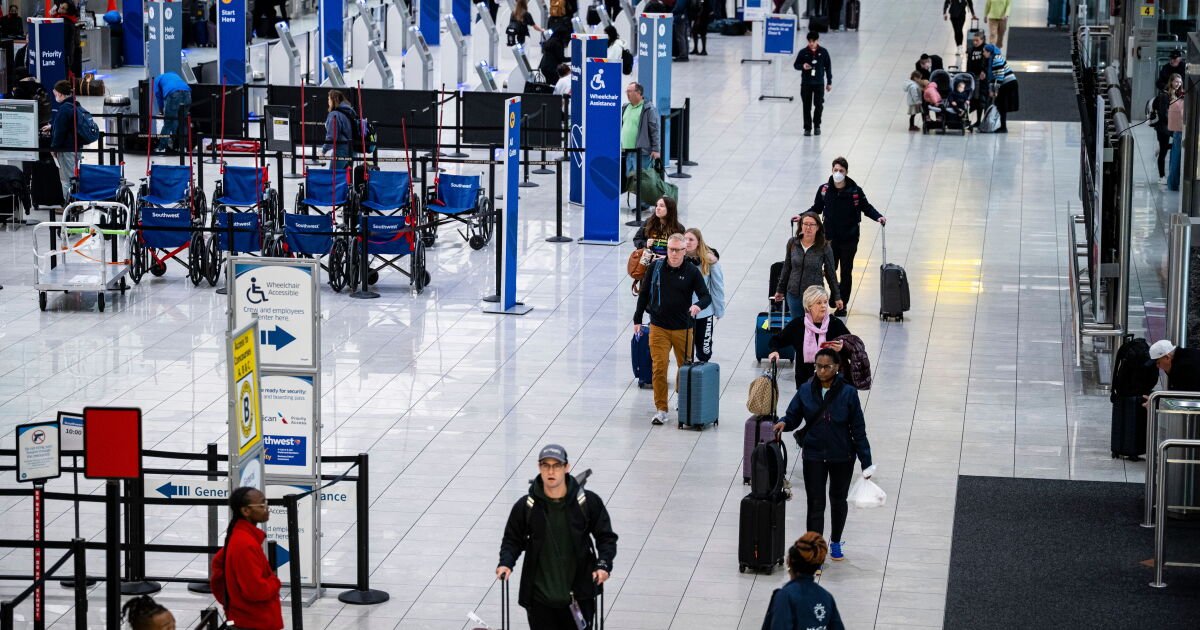
Sands hasn’t made any public projections, but he sounds convinced the Airport Concession Program still has plenty of room to grow, especially with large-scale renovation projects underway or being planned at more than a dozen major airports, including O’Hare International Airport in Chicago, Washington Dulles International Airport and John F. Kennedy Airport in New York.
“There’s a lot of blue ocean here for us, and quite frankly for other players, too.”
Sands long ago shed his doubts about the sector’s bankability.
“If you just take a step back, we’re underwriting whether or not an airport is going to be there and whether people are going to eat and drink there,” Sands said. “This is a real-estate bet that the tenant is going to have customers flow through.”
Read more:
Though Lendistry has found airport concessions to be increasingly lucrative, banks have continued to avoid direct involvement in the space — put off, like Sands was initially, by the absence of significant collateral.
Concessionaires typically don’t own or control their airport locations. Indeed, oftentimes the leases are held by a third-party master concessionaire firm that then brings in eateries and retailers. Add in regulations imposed by airport authorities, and the result is a complex, undercapitalized business model that scares off traditional lenders.
Jorge Perez, CEO of LS41, a Chicago-based restaurant company that opened three separately branded locations inside O’Hare, said in a press release that “no bank would touch us” prior to receiving an $817,000 loan from Lendistry.
“As a banker, there was always a deal that we couldn’t do,” said Sands, who worked for several banks before founding Lendistry in 2015. “It didn’t mean it was a bad deal. … It either wasn’t operationally efficient for us, or it just wasn’t something we felt we could scale.”
Banks have proved willing to play a role in airport concessions — from a distance. Lendistry has financed its growth in the segment through bank credit facilities, along with government programs, such as New York’s $50 million Airport Concessions Disadvantaged Business Development Fund.
“As we started digging deeper and deeper, we found out there were banks that actually wanted to be in the industry, but they needed an intermediary,” Sands said. “So now the puzzle pieces are all starting to come together.”

Evan Chan
East West’s $100 million airport concession facility, which was disclosed last week, comes 10 months after the bank provided Lendistry with a separate $75 million credit facility to support its Small Business Administration lending efforts.
Lendistry ranks as one of the nation’s top 100 lenders in SBA flagship 7(a) loan guarantee program, with 737 approved loans totaling $155.1 million through the first 11 months of the agency’s 2026 fiscal year.
“As Lendistry continues to grow, East West Bank is proud to serve as its financial bridge,” East West Executive Vice President Andrew Stein said in a press release.
“I would think of East West as the next level,” Sands said. “What they’ve basically said is, `We want to put a lot of money into this.'”
An East West spokesperson did not respond to a request for comment by deadline.