US Treasury yields rise: How it could impact Indian bonds and borrowers
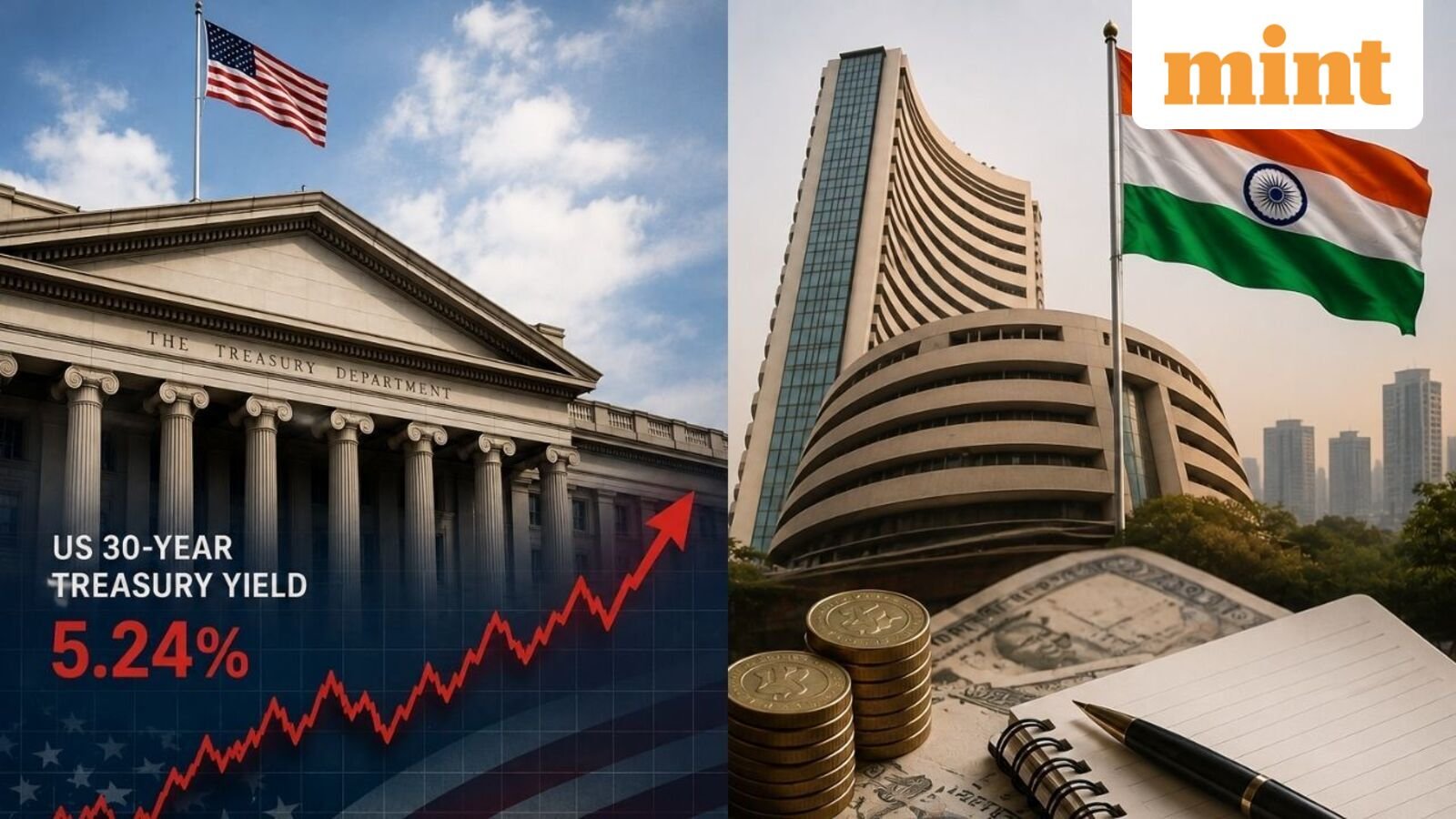
US Treasury yields have been rising, with the 30-year yield reaching around 5.24% this week, as investors demand higher returns to lend to the US government for longer periods. The move matters beyond the US because Treasury yields act as a benchmark for borrowing costs globally.
The US Treasury attempted to ease pressure on long-term borrowing costs this week by at least doubling the size of its bond buybacks from $2 billion to at least $4 billion per operation. Yields initially fell after the announcement but reversed course the following day, with the 30-year yield rising 0.06 percentage points to 5.24%.
The reversal highlighted the difficulty of using a relatively small market intervention to counter broader concerns about US debt, inflation and government borrowing.
Why are US Treasury yields rising?
The increase has been building for several weeks. The 30-year Treasury yield was around 4.9% at the end of June and rose to 5.06% at the July auction. At the August 13 auction, investors demanded 5.22%, the highest yield at a 30-year Treasury auction since August 2001.
Several factors are contributing to the rise. US government debt has reached about $40 trillion, while fiscal deficits remain around 6% of GDP. Rising interest payments are also adding to the government’s borrowing burden.
Inflation is another concern. US inflation stood at 3.4% in July, above the Federal Reserve’s 2% target. Higher inflation and uncertainty over its future path can make investors demand greater returns on long-term bonds.
Why does this matter for India?
US Treasuries are considered a benchmark for the global cost of money. When their yields rise, investors reassess the returns available from other assets, including emerging-market debt.
For Indian bonds, the key issue is the relative attractiveness of yields. If US government bonds offer higher returns, Indian debt may need to offer sufficient compensation for the additional risks associated with investing in an emerging market.
A rise in US yields can therefore put pressure on Indian bond yields and influence foreign investment flows into Indian debt.
Bond prices and yields move in opposite directions. If Indian bond yields rise in response to broader market pressures, the prices of existing bonds can fall. This is particularly relevant for investors holding longer-duration bonds, whose prices are more sensitive to changes in yields.
What does it mean for borrowers?
The impact can also extend to borrowers. Companies, banks and emerging-market borrowers generally pay more than the US government to raise money because they carry additional risk.
When the US benchmark rises, the hurdle rate for other borrowers can also increase. This does not mean Indian borrowing costs automatically rise whenever US Treasury yields increase, as domestic factors such as RBI policy, inflation, liquidity and India’s own government bond yields also matter.
But persistently elevated US yields can contribute to a higher global cost of capital.
Why the Treasury intervention matters
The Treasury’s failed attempt to sustain lower yields offers a broader signal to markets. Buybacks can improve liquidity, but they cannot address the underlying concerns surrounding US deficits, debt, inflation and future borrowing.
The Treasury also faces a choice over how it finances its borrowing. With long-term borrowing costs elevated, it can rely more heavily on shorter-term Treasury bills. That can reduce immediate pressure on long-term yields but exposes the government to more frequent refinancing as short-term debt matures.
For India, the key takeaway is that the US Treasury market cannot be viewed in isolation. Higher US yields can affect the relative attractiveness of Indian bonds, global capital flows and the broader cost of borrowing, making the US bond market an important indicator for Indian investors and borrowers.