Investor pitches new IPO plan for Fannie Mae and Freddie Mac
About a year ago, an AI-generated image posted to social media by President Donald Trump caused a stir among mortgage market participants.
The image showed Trump standing behind the New York Stock Exchange’s famous bell, with text suggesting the president was considering merging government-sponsored enterprises Fannie Mae and Freddie Mac into a publicly traded company called “The Great American Mortgage Corporation.”
That rumored plan never came to fruition in 2025, and the fate of the mortgage giants remains uncertain, despite reports that Trump had met with the CEOs of major Wall Street banks last year, presumably to discuss selling shares in the companies through an initial public offering.
Advertisement

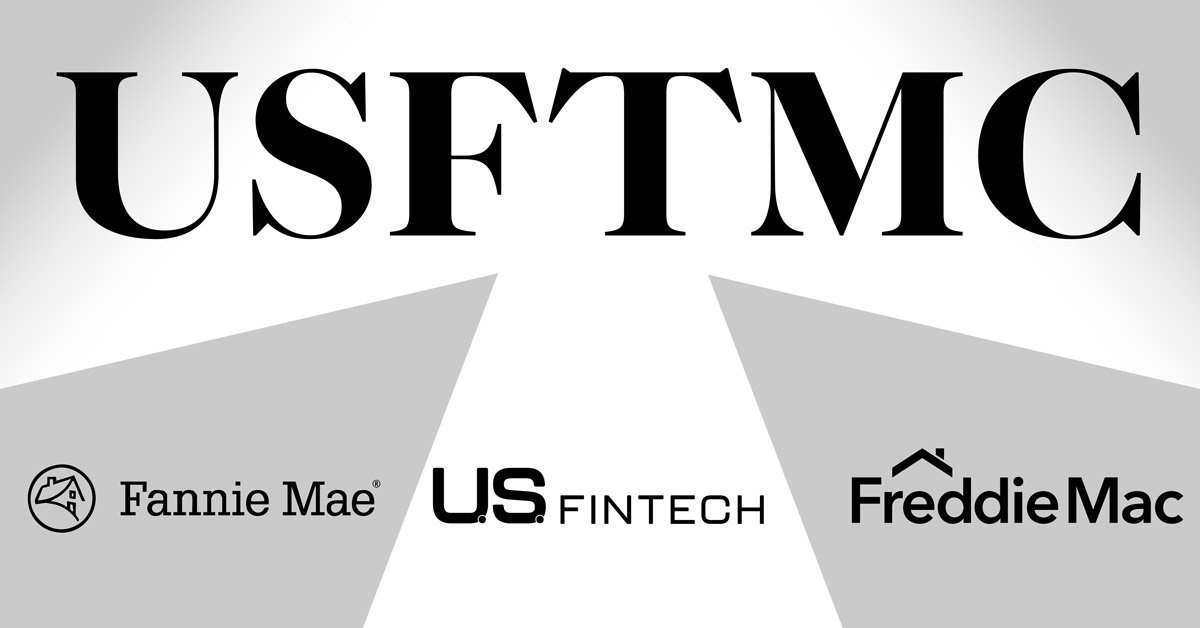
On Tuesday, Jon Oksenholt, the founder and CEO of investment firm Oksenholt Capital Management, released a white paper detailing what he termed a “Trump-style framework” for the mortgage companies, whereby Fannie and Fannie would sit beneath a publicly traded firm called “U.S. Financial Technology and Mortgage Corporation,” or USFTMC for short.
Fannie and Freddie purchase loans and package them as mortgage-backed securities (MBS) that are sold to investors, providing liquidity to lenders. Oksenholt’s firm owns Freddie Mac common stock, as well as Fannie and Freddie junior preferred securities, according to a press release from earlier this month bashing hedge fund manager Bill Ackman’s discounted Freddie valuation.
Under Oksenholt’s proposal, Fannie and Freddie would maintain separate federal charters, with separate management and corporate structures, and would remain under the conservatorship of the Federal Housing Finance Agency (FHFA). But USFTMC would become their parent company through an IPO, allowing the public to buy shares of that entity. Meanwhile, Fannie and Freddie’s jointly owned mortgage securitization platform, U.S. Financial Technology, would also be part of the USFTMC family.
“I believe this structure would create more value without dismantling what already works,” Oksenholt said in press release announcing the research. “Fannie and Freddie keep their charters, their capital and their competitive roles. U.S. FinTech gets room to become a much more valuable commercial business, and investors get one security that reflects the value of the whole platform. The idea is not to change what works. It is to make it worth more.”
The path to $1 trillion
Oksenholt’s white paper lays out the two-pronged problem the USFTMC proposal is designed to solve: How to create one publicly traded security without running afoul of antitrust laws by turning Fannie and Freddie into a single mortgage guarantor.
“A conventional exit from conservatorship would leave investors with two separately marketed mortgage guarantors and a valuable shared technology platform that is mostly buried inside the operating structure,” he writes. “A full corporate merger would be easier to explain to the market, but much harder legally because Congress chartered the two companies separately.”
Oksenholt believes the combined platform could fetch an upfront equity value around $500 billion, with “a path to $1 trillion through higher normalized earnings, realized synergies, expanded U.S. FinTech earnings and a higher consolidated valuation multiple.”
Key to that plan is the seldom-discussed U.S. FinTech, which has historically played a distant third fiddle to Fannie and Freddie in the news cycle. It was launched in July 2025, replacing the shared legacy company Common Securitization Solutions (CSS).
According to an FHFA white paper from 2023, CSS was the largest issuing agent and administrator of MBS, “holding approximately 75% of total market share and processing 30 million loans on the platform in 2021.”
The U.S. FinTech website notes it manages “full bond administration including bond factor calculations that support accurate and timely investor payments on 1.1 million securities, backed by 31 million loans, with $6.5 trillion in unpaid principal balances.”
“There is already a real technology and data business here,” Oksenholt writes. “The opportunity is to commercialize it much more broadly.”
Legal hurdles
Fannie Mae and Freddie Mac support about 70% of the U.S. mortgage market, according to the National Association of Realtors, meaning a public holding company structure would almost certainly raise the eyebrows of federal antitrust regulators charged with preventing monopolies.
Oksenholt acknowledges that common ownership legal challenge, noting “the case has to be that Fannie and Freddie can remain meaningfully independent competitors under one parent, with protections strong enough to make that structure defensible.”
To maintain autonomy between the companies, he proposes they maintain their current corporate structures with strict information firewalls for competitively sensitive information and continued independent monitoring by the FHFA.
Because U.S. FinTech manages confidential Fannie and Freddie data, Oksenholt suggests that “any commercial rights should be set out in licenses, with product governance, revenue sharing where appropriate, clean-room controls and FHFA review.”
He cites U.S. FinTech’s common securitization infrastructure for the uniform MBS market, which combines mortgage pools from both Fannie and Freddie and operates under the FHFA’s direction and guidance, as an operating precedent for how the three companies could maintain distinct governance under the USFTMC banner.
“I think there is a real path here,” Oksenholt writes. “The legal issues are not all settled, but they are specific enough to work through.”