What is a ‘fun fund’? Inside Gen-Z’s new experience-first economy and budget playbook
Gen Z is wired differently! While we might have heard, seen or read this statement multiple times on social media, it seems to be true in all respects when it comes to budgeting and handling expenses. From impromptu scuba diving in Indonesia to jetting off to Abu Dhabi for last-minute concerts or opting for pottery workshops or weekend treks, the new generation is redefining discretionary spending with a novel category called “fun funds”. This money isn’t just meant for shopping, saving or any planned purchase, but simply for experiences.
What is a ‘fun fund’?
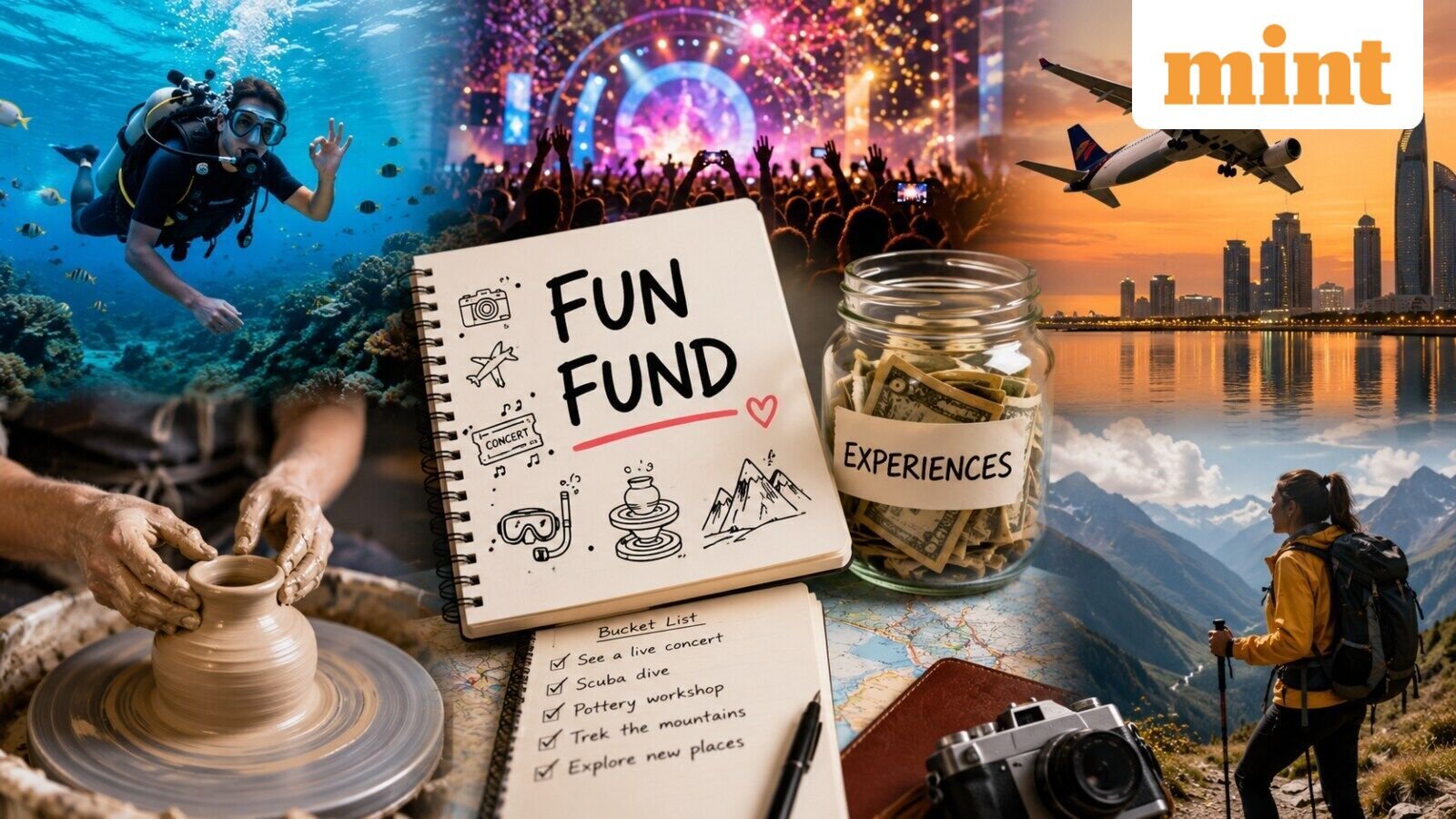
Essentially, the ‘fun funds’ can be used for everything from concert tickets and comedy shows to scuba diving, pottery workshops, cultural events and spontaneous weekend getaways.
What makes it different is that the spending isn’t related to a specific need, a materialistic purchase or even a long-planned goal. It is for those times when an interesting experience comes along; Gen Z is setting money aside to say yes to these experiences.
Experience over product purchase
According to the BookMyShow-EY-Parthenon report ‘Beyond Attention. Into Immersion’, spontaneity is a big part of this consumer behaviour. It is reported that 78% of Indian consumers now prefer splurging on experiences over physical products. Another 44% admit to making unplanned experiential purchases. This discretionary spending may also be event-driven, such as a last-minute Coldplay concert, an unexpected travel opportunity or Comic Con or Spoken Fest or Van Gogh 360 art exhibition over the weekend, which can trigger an immediate purchase.
The report seemingly hints at what young consumers consider worth their money over time. Research cited in CBRE’s Gen Z Checks In report shows that spending on experiences across Asia-Pacific has grown faster than spending on physical goods since the COVID-19 pandemic.
For a generation which values memories, social connection and novelty, the budget once reserved for an extra shopping trip or a routine mall visit is being redirected for experiences that may feel more personal, immersive and shareable. This has resulted in a new kind of discretionary spending. The question is no longer “What can I buy?” with Gen Z but “What can I experience?”
Gen-Z speaks out
Entrepreneur and musician Shanelle Ferreira, 23, from Mumbai, is among the many who believe in experiences over physical purchases. She explained, “What got my partner and I started on spending on experiences is the financial security of starting our career in music early.”
“Scuba diving classes taken spontaneously on Kili Island in Indonesia were one of our biggest experiences. I don’t look at it as an expense, ’cause the memories are something I will always carry with me. The more you spend on experiences, the more motivated you are to earn more. You have something to work towards,” she added.
A section of people even began cherishing experience-first living after experiencing uncertainty, such as the pandemic. One of them is 21-year-old Swaroopa R from Tamil Nadu, who shared how the value of money evolved for her after a knee surgery, which left her in rehabilitation for five months. After recovery, she went on a seven-day trip to Meghalaya using her savings. She spends about ₹1 lakh annually on activities like horse riding, running, trekking, and adventure sports.
“What triggered the decision was the feeling that I had spent enough time postponing things,” Swaroopa said. “After my accident and months of rehabilitation, I didn’t want to keep waiting for the ‘perfect time’ anymore. Certain opportunities come at a particular age or stage of life, and you may not get the same chance later,” she added.
While the desire to spend on experiences is almost uniform in many, the financial strategies behind it may vary.
“I make sure the passes and registration fees don’t cross a limit; if they do, I skip it. If I feel like an experience is worth it, I make it happen and maybe cut down on going out to eat a couple of times or cut down on shopping to make up for it,” said Samhitha Kandadai, 24, an entertainment manager from Mumbai.
For someone like Shanelle, whose income depends on projects, selling stocks or breaking a fixed deposit to spend on experiences is unacceptable. She added, “It’s the funds after all these (investments) go out that we make sure we have one experience to look forward to. Then we work towards it.”
“My biggest rule is that I don’t spend money I don’t have,” Swaroopa also emphasised.