3 Overlooked Autonomous Vehicle Stocks Investors Should Jump On
The autonomous vehicle (AV) industry spent a long time in the realm of science fiction before jumping quickly from concept testing to now commercial deployment, and the robotaxi market alone is projected to explode to roughly $415 billion globally by 2035. Most investors wanting to get a piece of this growth likely think of companies such as Amazon‘s Zoox, Tesla with its Cybercab, or Alphabet‘s Waymo. That leaves many overlooked AV stocks with significant upside.
Here are three investors you should stop overlooking.
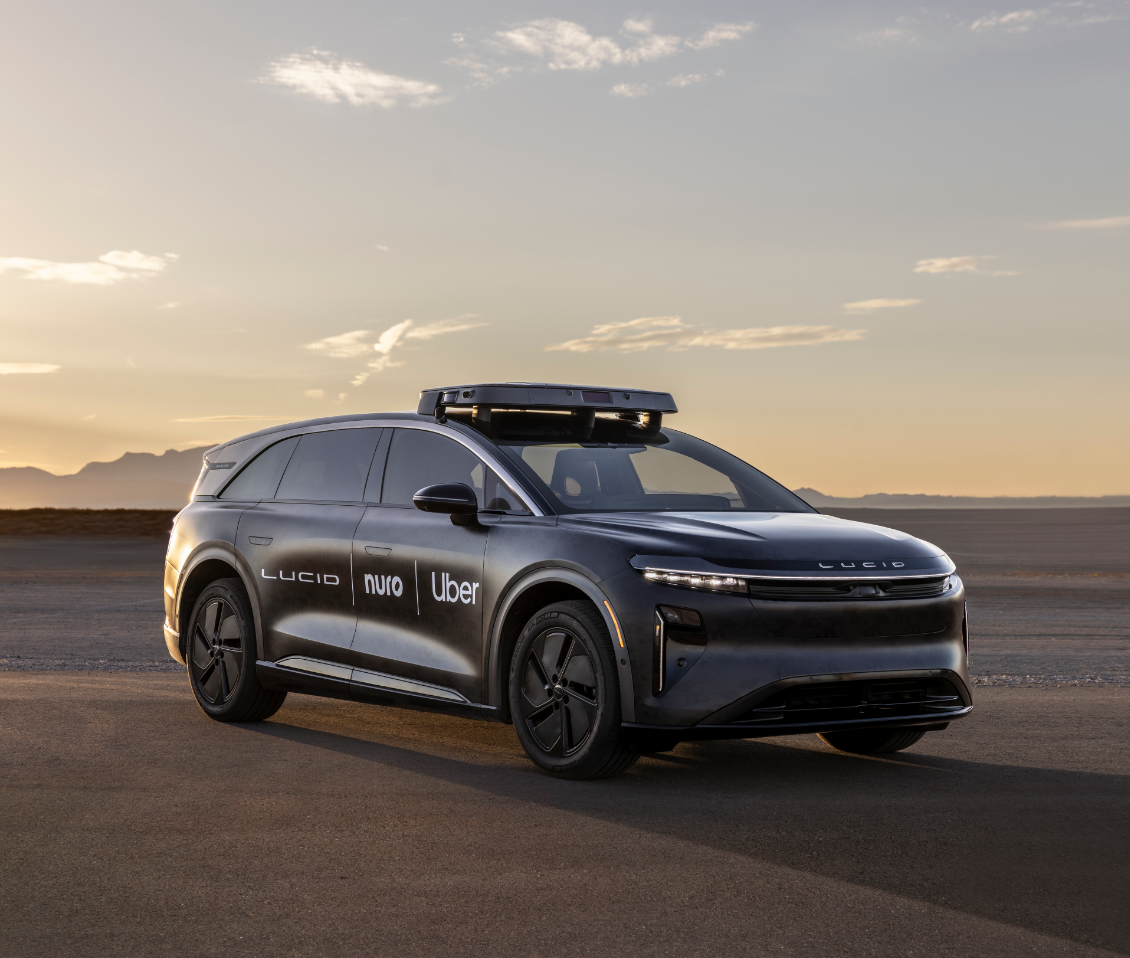
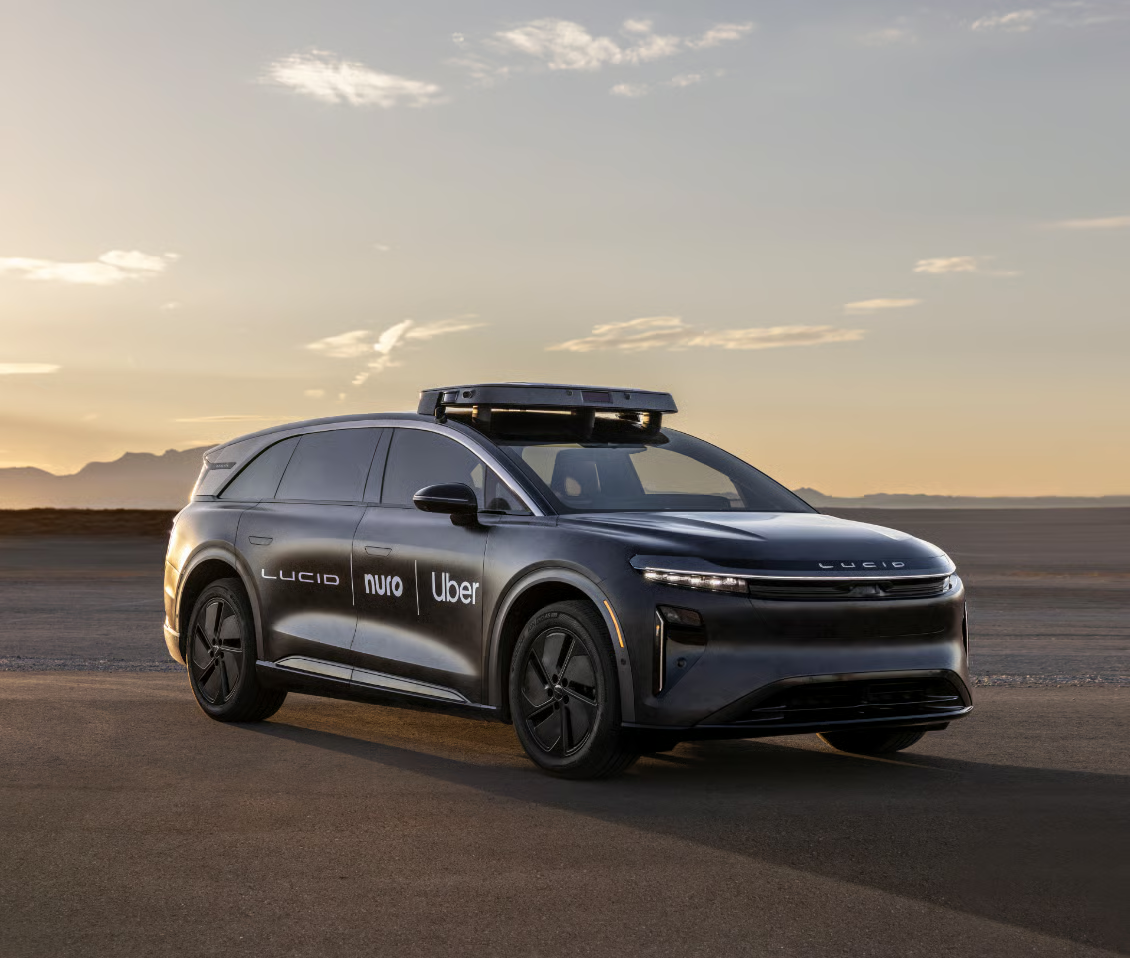
Uber, Lucid, and Nuro, are partnering to develop a global robotaxi service.
Trucking evolution
While many think of robotaxis when AVs are mentioned, long-haul trucking might be the first industry to see significant change. Aurora Innovation (AUR +1.41%) is a leader in driving the U.S. autonomous semitruck market with its proprietary Aurora Driver that combines its in-house long-range LiDAR with software and data services, enabling heavy trucks to carry full loads at highway speeds.
Aurora is certainly in the early innings of a young start-up company, but it began generating revenue in 2025 and operates largely on interstate highways in the southern U.S., where the weather tends to be more favorable to driving (Arizona, Oklahoma, New Mexico, and Texas). Beginning in 2027, the company will transition its business model to installing its hardware and software into heavy trucks owned by fleet operators, for which it will be paid on a per-mile basis.

Today’s Change
(1.41%) $0.08
Current Price
$5.77
Key Data Points
Market Cap
Day’s Range
$5.65 – $5.94
52wk Range
$3.60 – $8.56
Volume
1.6K
Avg Vol
28.7M
Gross Margin
-156000.00%
Here are some statistics to consider. First, analysts at Morningstar forecast that autonomous trucks will account for 40% of all semitruck miles in the U.S. by 2040. Second, autonomous trucking is forecast to be cheaper per mile than human-driven trucks as soon as 2028 in the U.S. market. Third, Goldman Sachs’ analysts project the global AV trucking market could reach $560 billion by 2035.
Autonomous trucks are coming to highways sooner than you might think, and the market potential is lucrative. Combine that with 2027 being a massive year as Aurora begins installing its hardware/software and being paid per mile, now is a good time to dig deeper on a start-up AV company with plenty of upside.
Market dominance
No matter how you look at Mobileye (MBLY +0.46%), it’s easy to see the company will have its hands in multiple aspects of a rapidly developing future. Mobileye is well known for its autonomous driving and advanced driver-assistance systems (ADAS), but also has expertise in artificial intelligence (AI), computer vision, and integrated software and hardware. In other words, Mobileye is developing multiple technologies to drive the ADAS and AV fields toward commercial scale. There’s a long list of reasons to consider a deep dive into Mobileye as a long-term investment, but here are some key figures to entice you.
First, consider that Mobileye has its EyeQ technology (think chips and electronic control units) in more than 250 million vehicles worldwide. Mobileye is embedded into an automaker’s vehicle architecture, and more importantly, its safety systems, giving Mobileye competitive advantages through significant switching costs.

Today’s Change
(0.46%) $0.04
Current Price
$8.68
Key Data Points
Market Cap
Day’s Range
$8.57 – $8.75
52wk Range
$6.47 – $15.81
Volume
2.2K
Avg Vol
6.4M
Gross Margin
45.63%
Second, ADAS are increasingly important to automakers because they’re the systems helping drive profits and margins higher, as consumers increasingly want these options, and Mobileye has roughly a 70% global ADAS market share according to Jefferies.
Third, per Mobileye’s 2025 full-year earnings report, the company now has an eight-year future expected auto revenue pipeline of $24.5 billion. That number is important, but perhaps the better aspect is that it represents a 42% increase over the prior pipeline figure, thanks to securing more contract wins with many of its top existing auto clients.
If you’re interested in the future of AVs, Mobileye is an excellent place to start researching.
High-risk, high-reward
Uber Technologies (UBER +1.34%) is an intriguing mix of upside and risk. Uber might be a bit overlooked when it comes to AVs simply because of the strategy it has taken. Uber has the potential to be a great AV play because, rather than taking the capital-intensive approach of developing its own vehicles, it’s opting for a range of partnerships across the industry to become the primary aggregator of ride-hailing for the broader AV industry.
That said, here comes the big risk of buying Uber for its potential in AVs: Waymo recently made its intentions clear to eventually dissolve the partnership between the two, prioritizing the growth of its own ride-hailing system and cutting Uber out of at least Waymo’s share of the pie. Will that become the norm as AV companies develop and expand, or will the majority prefer to use Uber’s well-developed routing, payment processing, and other infrastructure advantages, albeit at a cost?

Today’s Change
(1.34%) $1.06
Current Price
$80.35
Key Data Points
Market Cap
Day’s Range
$78.61 – $80.43
52wk Range
$65.41 – $101.99
Volume
53.8K
Avg Vol
20.4M
Gross Margin
35.42%
We can speculate, but for investors, the answer is uncertain — one of Wall Street’s most hated words. While the risk remains, it’s also fair to say that uncertainty has weighed on the stock, giving investors the potential to jump on board for Uber’s existing strong cash flow and profit growth at a seemingly undervalued price.
What it all means
Sure, there are plenty of reasons to consider Tesla, Amazon, and Alphabet when it comes to the future of AVs, as those are some of the largest and most impressive companies in the world; the risk there is much more tame. On the flip side, if you’re accepting of higher risk, Aurora has an intriguing road ahead with disrupting the trucking industry, Mobileye has its hand in multiple angles of the AV future, and Uber could end up connecting AVs to a massive amount of consumers using its established network and infrastructure. All three are overlooked with intriguing upside.