India is going offline again: New study reveals how consumers are moving away from digital payments in 2026
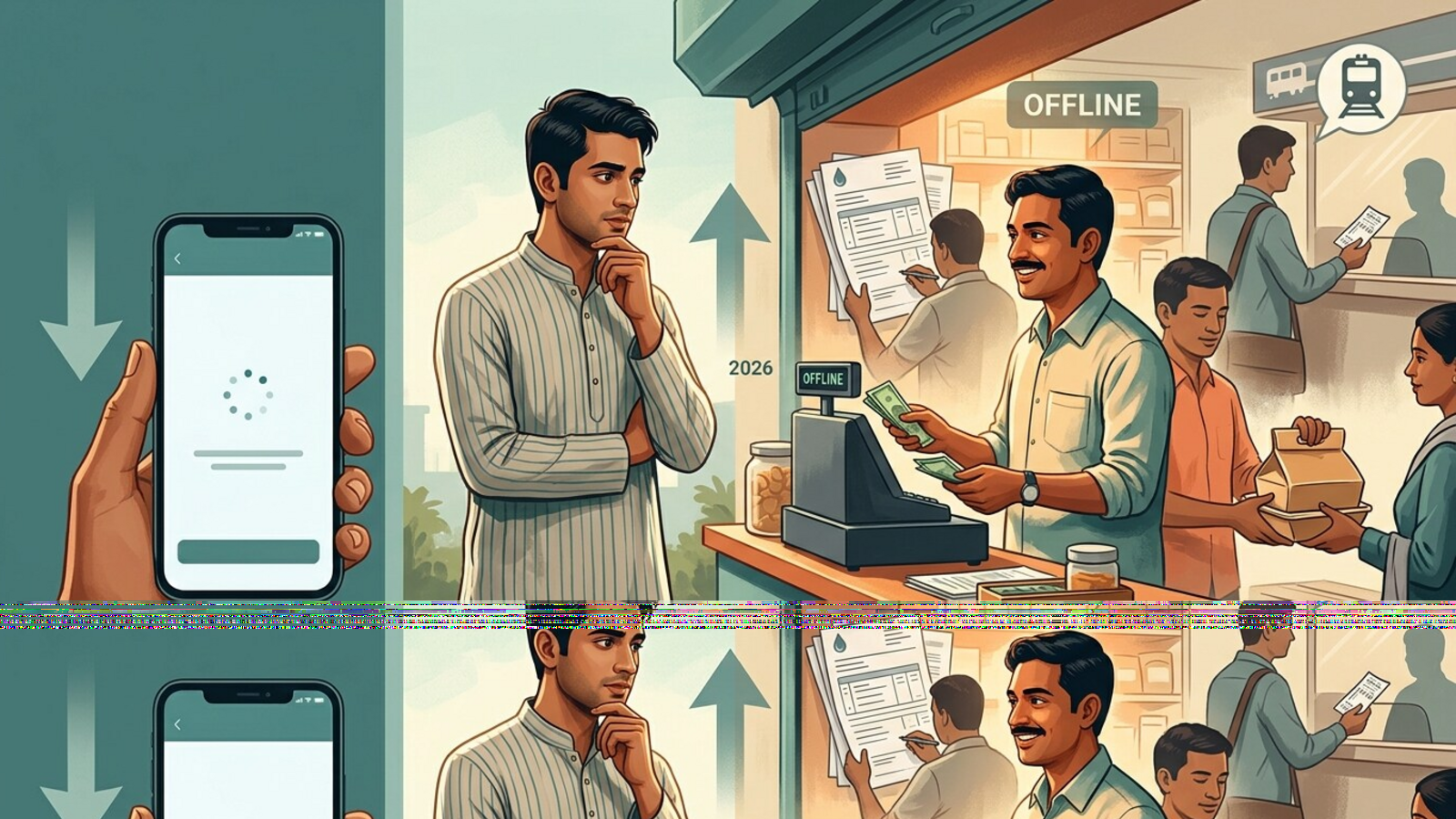
India’s middle-class consumers are showing a more mixed preference between online and offline transactions in 2026, with some everyday payments and purchases moving noticeably back towards physical channels.
The findings from The Great Indian Wallet 4.0 2026 study by Home Credit India suggest that digital adoption is not moving in one direction across all categories.
The biggest reversal is visible in bill payments, while food, travel bookings, and some other everyday transactions have also seen stronger offline preferences. At the same time, online channels continue to hold ground in retail payments and loan-taking.
Individuals surveyed were aged 18 to 55 years, with an average monthly income of ₹35,000.
Why are bill payments moving offline?
Bill payments recorded the sharpest shift in the study. The share of respondents preferring to pay bills offline rose to 59% in 2026 from 43% in 2025, while online preference fell to 39% from 54%.
“After years of assumed digital-first momentum in utility and bill payments, this is a genuine reversal and one worth watching closely as GST-era price changes and shifting household routines potentially reshape how people prefer to settle their monthly obligations,” the study noted.
Are retail payments also moving away from digital?
Retail payments are now almost evenly split between online and offline channels. In 2026, 49% preferred offline payments and 49% preferred online, compared with 46% offline and 51% online in 2025.
This puts retail payments firmly in hybrid territory, with neither channel emerging as a clear winner.
However, loan-taking continues to move gradually towards digital. The share preferring online channels rose to 51% in 2026 from 50% in 2025, while those unsure about their preference fell from 10% to 9%.
Which other transactions are moving offline?
The shift is not limited to payments. Food transactions saw a significant move offline, with preference for dine-in and takeaway rising to 73% from 59% in 2025.
Bus and train ticket bookings also moved offline, with preference rising to 72% from 58%, while online preference fell from 29% in 2025 to 21% in 2026.
Even groceries and medicines, where offline shopping was already dominant, remained strongly physical at 82% each, although both were slightly lower than 85% in 2025.
“These small but consistent movements with the broader theme running through this year’s channel data – India’s lower middle class isn’t rejecting digital, but it isn’t defaulting to it either,” the study noted.
Is India really moving away from digital?
The data does not suggest that consumers are rejecting digital transactions altogether. Instead, they appear to be becoming more selective about where digital adds value and where offline feels more convenient or familiar.
Retail payments have settled into a near-even split, online borrowing continues to gain ground, while bill payments and several everyday transactions have swung back offline.
The bigger takeaway is that India’s digital journey may not be a straight line. For the lower-middle-class consumer, the preferred channel increasingly depends on the transaction itself and not simply on whether it can be done online.
Disclaimer: This is only for informational and educational purposes.