How Landlords Are Cutting Their Eviction Costs – Commercial Observer
By Tom DeRose, co-founder and CEO at PandaGuarantee
___________________________________________________________________________________________
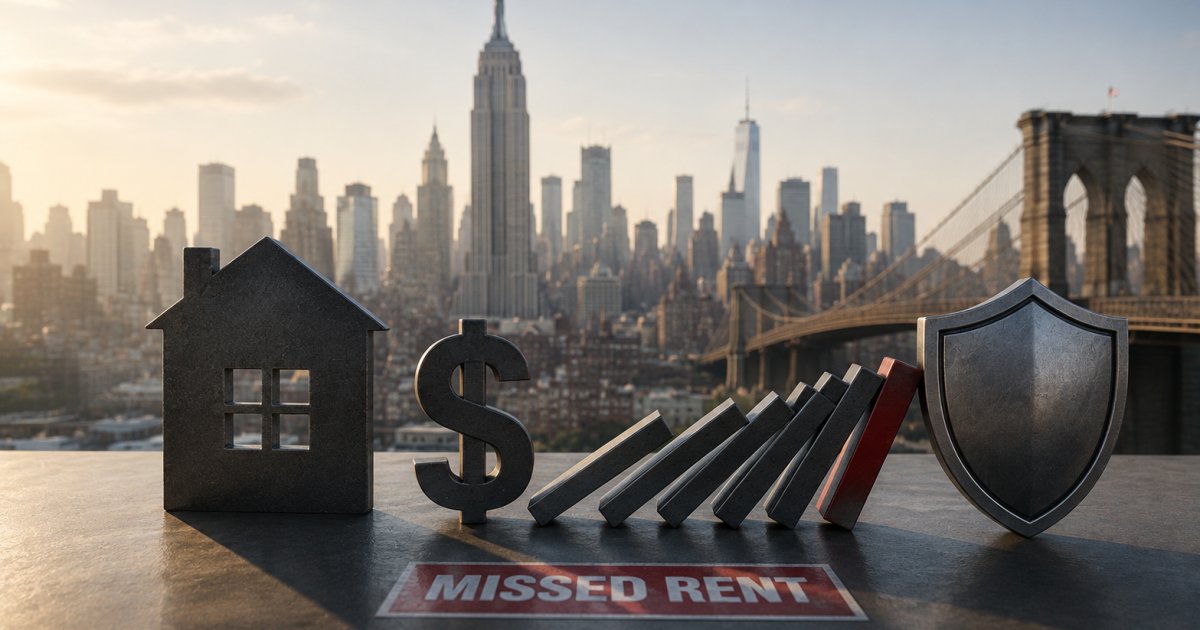
Contested evictions in New York City are the most expensive in the world, running $15,000 to $50,000 each. But the single largest piece of that cost is missed rent, and missed rent is preventable.
I started PandaGuarantee because the existing guarantor services were either too slow, too expensive or too confusing to applicants. The customer experience, both of the property owner and their tenants, seemed to be an afterthought.
The thesis is simple: The rent guarantee process needs to be as efficient and affordable as possible. Applicant approvals in minutes, economical prices, and an easy to use platform that ties it all together.
The $21,000 Problem
When landlords think about evictions, they think about lawyers’ fees and court filings. That’s real money, but not where most of the damage is.
The majority of the cost is rent — the opportunity cost of having an empty apartment or a squatter not paying for months. In a New York nonpayment proceeding, a landlord can easily go six months (or longer) without collecting while the case sits on the court’s docket. At $3,500 a month — roughly the median for a Manhattan one-bedroom — that’s $21,000 in lost income before you’ve paid a single attorney.
Cover the missed rent, and you’ve cut the financial damage roughly in half. That’s the math behind rent guarantee insurance, and it’s why I started PandaGuarantee as a fast, easy, economical option for property owners to protect themselves from tenant default.
2019 Changed the Math
Before the Housing Stability and Tenant Protection Act (HSTPA), landlords could ask borderline approvable applicants for larger security deposits.
That’s no longer an option. The 2019 HSTPA legislation capped security deposits at one month’s rent, and although the legislation was meant to protect renters, the security deposit cap means that many borderline applicants can no longer offer a larger upfront payment to account for their increased risk. Rather than protecting tenants, this has excluded many from qualifying.
In that same vein, landlords who used to use larger deposits to approve borderline applicants must find new ways of protecting their bottom line. Similarly, those who haven’t tightened their process since 2019 are carrying more risk than they realize.
Fraud in the Age of AI
Artificial intelligence has made document fraud exponentially easier. Digital imaging software can create fake pay stubs and alter bank statements at the click of a button. Floyd Williams, a leasing agent at Mirador Real Estate, says that over the years he has “seen more pay stubs and other documents we believe to be fabricated. As these clients progress in the due diligence process, they will usually remove themselves from consideration once they realize the process is comprehensive.”
It’s clear that standard screening — credit pull, income multiple, reference check — isn’t built to catch sophisticated fraud. Most landlords don’t know they have this gap until they’re in housing court.
Co-Signers Don’t Fix It
The typical response to a shaky applicant is a personal guarantor. A parent, a relative, someone willing to co-sign. But this is less protection than most landlords think.
A qualifying co-signer usually needs to earn 80 times the monthly rent — double the tenant’s threshold. Most candidates don’t clear that bar. Out-of-state guarantors are difficult or near impossible to serve, and their financial situations can change during the lease term. Even a perfectly qualifying personal guarantor only gives you a signed promise. Enforcing it means going back to court.
A personal guarantee is an uncertain promise, it’s not a payment.
Three Tracks, Not Two
The strongest leasing operations I’ve seen don’t use a binary approval process. They use three tracks.
Strong applicants get approved. Applicants with fraud signals or genuine inability to pay get rejected. But there’s a wide middle, including students, international renters, recent hires, self-employed earners and applicants who miss the income threshold by a small margin. None of them are bad renters. They’re just hard to underwrite with a rigid checklist.
The standard process turns them away, resulting in a vacancy.
For this group, an institutional lease guarantee bond is the right tool. A third-party company issues a bond covering unpaid rent for the full lease term. If the tenant defaults, the landlord files a claim. The guarantor pays. No chasing a co-signer. No six-month wait while collecting from a personal guarantor drags through housing court.
The Shift That Changes the Math
The opportunity cost of missed rent is what makes a default catastrophic. Legal fees hurt. Missed rent grows — month after month —- while the case moves at the court’s pace.
Guarantor insurance doesn’t stop tenants from defaulting. It stops the financial spiral that follows.
A landlord who routes borderline applicants through an institutional guarantee — and gets claims paid within a week — is running a different business than one who doesn’t. Same city. Same applicant pool. Meaningfully different downside.
Better risk allocation tools let landlords approve more qualified renters and absorb less avoidable loss. $21,000 in missed rent isn’t just the cost of doing business in New York anymore. It’s a choice.
Tom DeRose is co-Founder and CEO of PandaGuarantee, a third-party guarantor. PandaGuarantee offers same-day tenant approvals, full lease-term rent guarantor coverage and fast claims. Learn more at pandaguarantee.com.