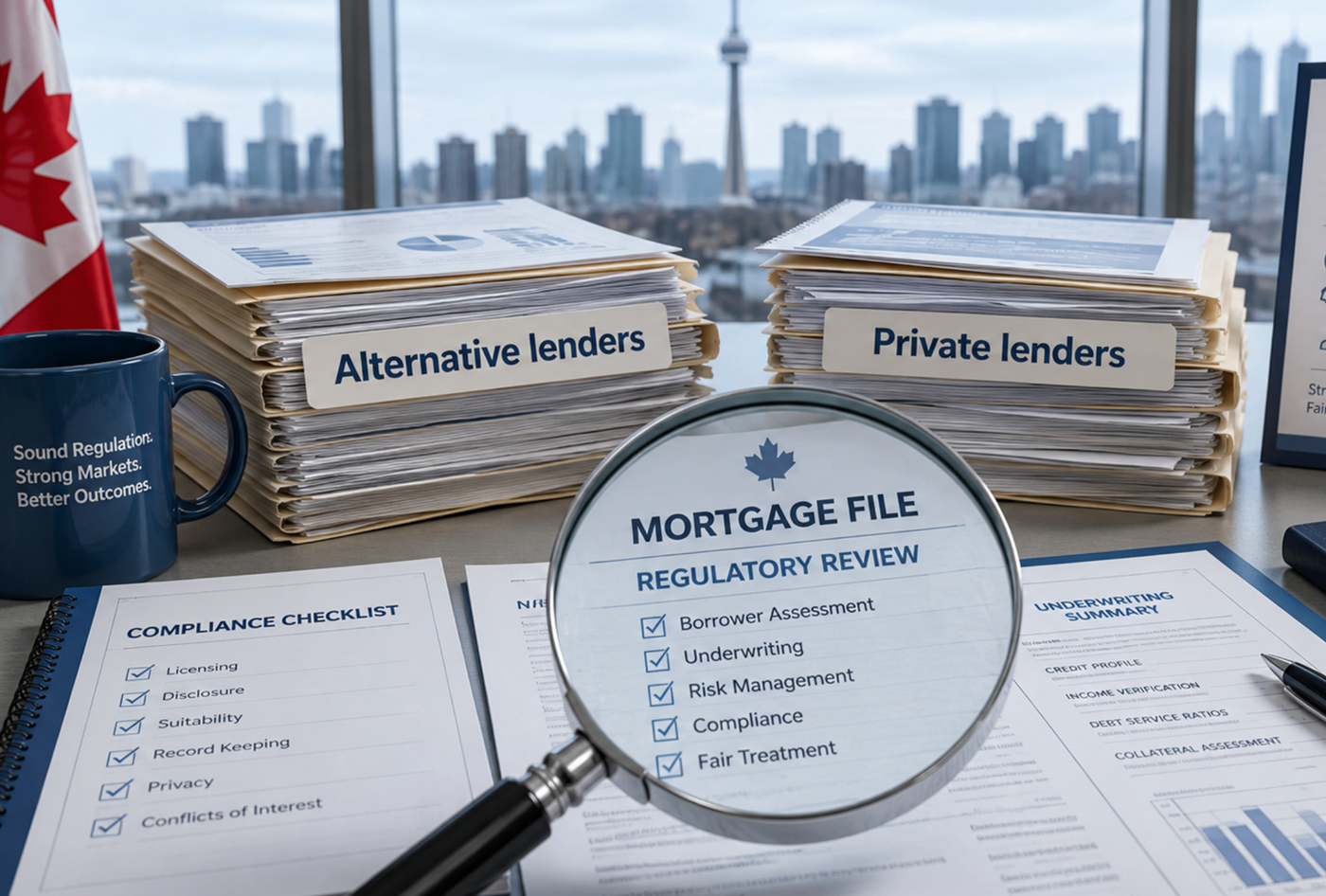
Alternative lenders warn against one-size-fits-all non-bank regulation
As regulators increase their scrutiny of non-bank lenders, Canada’s alternative lenders are looking to ensure borrowers, brokers and especially regulators understand their distinction from private lenders.

The Canadian Alternative Mortgage Lenders Association (CAMLA) laid out those differences in a recently published position paper intended to clear any confusion.
“Our alternative lenders generally have governance, underwriting standards, clear compliance programs, risk management strategies, clear investor obligations and regulatory oversight,” says CAMLA executive director Dan Nguyen. “Alternative lenders also generally carry insurance coverage that private lenders may not, but overall, there’s a lot more governance and structure involved in the way that alternative lenders operate, generally speaking.”
The position paper comes at a time when both sectors are seeing significant growth, though both remain small relative to the banks’ share of outstanding mortgages, and as regulators warn of increased financial sector risk tied to the growth of non-bank lending.
According to CMHC’s latest Residential Mortgage Industry Report, “other non-bank lenders” held roughly 4% of outstanding mortgages in the third quarter of 2025, while mortgage investment entities held about 1.3%.
The report also found that mortgage investment entities, which include “mortgage investment corporations and other private entities,” had an arrears rate of 1.96% in the third quarter of 2025, up from 1.55% in Q1. Meanwhile, “other non-bank lenders,” which include much of the alternative lending sector, had an arrears rate of 0.23%, slightly below the 0.24% reported by chartered banks.
Despite those differences, alternative and private lenders are still often grouped under the broader “non-bank” label. For example, CMHC’s glossary defines “alternative lenders” as including “mortgage investment entities, mortgage investment corporations, private lenders and individual lenders.”
Regulators are eyeing the private mortgage sector
Private lenders have recently found themselves in the crosshairs of industry watchdogs like the Financial Services Regulatory Authority of Ontario (FSRA), which explicitly warned about the risks associated with the private mortgage market, citing it as a priority area of oversight.
Those concerns have also emerged alongside broader warnings from Bank of Canada Governor Tiff Macklem about the risks tied to the growth of private credit.
“The issue is not private credit itself,” Macklem said in a March address to the Global Risk Institute in Toronto. “It’s how private credit will behave under stress — and the risks it poses to the broader financial system.”
OSFI’s Annual Risk Outlook for Fiscal Year 2026-2027, meanwhile, includes “non-bank financial institution (NBFI) risk” and “real estate secured lending (RESL) risk” among the key risks facing federally regulated financial institutions.
How private and alternative lenders became grouped together
Nguyen explains that in the industry’s early days, “alternative lender” was used as a catch-all term for any loan provider that wasn’t one of the country’s major banks, credit unions or other traditional financial institutions.
More recently, however, the alternative lending industry has emerged as a more formal entity with specific regulatory requirements and standards, some of which do not apply to private lenders.
As regulators warn of the risks associated with the rapid growth of private lending and broader non-bank finance, alternative lenders are seeking to ensure that distinction remains clear.
“There are definitely a lot of terms that are thrown around and used interchangeably, and I think that contributes to the confusion,” Nguyen says. “As legislation and compliance requirements have developed, the language hasn’t always kept up.”
Nguyen adds that it’s important to establish a better distinction between the two non-bank loan provider types to ensure consumers, brokers and regulators are aware of the differences in how each operates.
“What we want to do is strengthen, as opposed to weaken, consumer protection, and one of the important aspects of this is ensuring that definitions are clear,” he says. “Having clear definitions helps us create good policies that actually achieve the objectives that the regulators are aiming to achieve, while also providing borrowers with greater consumer protection.”
Each lender type plays a distinct role in the market
Nguyen emphasizes that having a clearly defined, well-regulated and widely trusted alternative lending sector is vital to the long-term prosperity of Canadians.
“Banks serve the majority of Canadians extremely well, but alternative lending exists for those borrowers who are credit-worthy, but whose circumstances don’t fit the traditional underwriting models,” he says. “We think that these borrowers still deserve responsible access to credit, whether they’re newcomers to Canada, rebuilding their credit or in transition.”
Nguyen adds that it’s up to the alternative mortgage sector to educate brokers on the distinction between various non-bank lender types so that they can have more informed conversations with clients.
“When there are regulations put in place it’s important that it reflects the actual structure and risk profile of the organizations that are impacted by it, as opposed to an umbrella approach to regulation, treating all non-bank lending as if they’re the same.”
Visited 152 times, 152 visit(s) today
alternative lenders alternative lending CAMLA Canadian Alternative Mortgage Lenders Association credit risks Dan Nguyen position paper private lending
Last modified: July 9, 2026