Serbia Turns to Russia for Wildfire Aid Amidst EU Resource Shortage
Serbia Seeks Russian Assistance as Wildfires Strain EU Firefighting Resources
Serbia’s Response to Widespread Wildfires and International Support
Request for Russian Aid Amid EU Resource Shortages
BELGRADE, Aug 20 (Reuters) – Serbia has turned to Russia for help in fighting wildfires because of a lack of available planes from the European Union, its interior ministry said.
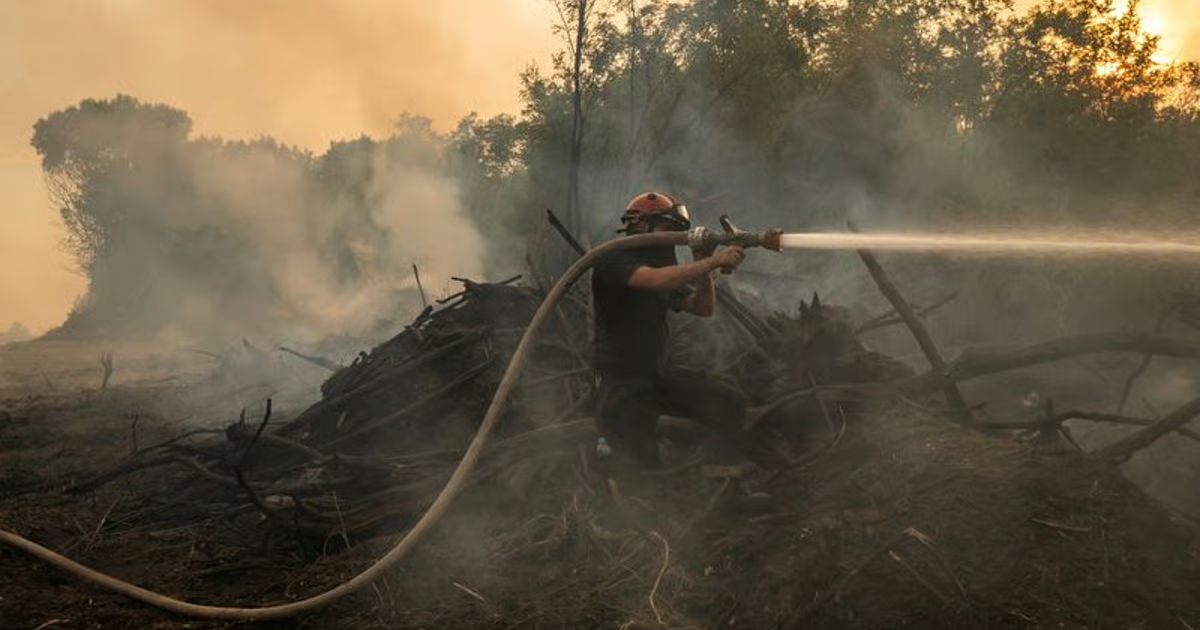
A Russian Emergencies Ministry IL-76P firefighting plane landed in the southern city of Nis on Wednesday evening and was deployed on Thursday to tackle a wildfire in the Deliblatska Pescara natural protected reserve that has raged for weeks.
Serbia’s Relationship with the EU Civil Protection Mechanism
Serbia is not a member of the EU but has access to emergency EU help under the bloc’s Civil Protection Mechanism. This summer, Belgrade sent a firefighting helicopter and emergency response team to help Spain combat wildfires under that mechanism, but wildfires across Europe have sapped EU resources.
Limitations of EU Firefighting Resources
“Considering that there are no firefighting aircraft of this capacity available within the EU…the arriving Russian aircraft will significantly strengthen our capacities in fighting the fires,” Luka Causic, head of the Interior Ministry’s Department for Emergency Situations, said late on Wednesday.
European Commission’s Position and Ongoing Support
A European Commission spokesperson said Serbia had not “up till now” activated the EU Civil Protection Mechanism and that the bloc would mobilise its assistance in line with Belgrade’s needs on the ground.
Readiness to Assist and Political Considerations
“We can also confirm that Europe is ready to support the country with a fleet fitting the actual situation,” the spokesperson told Reuters.
The spokesperson also reiterated that there can be no “business as usual” with Russia as long as it continues to wage its “unprovoked and unjustified war of aggression on European soil in Ukraine”.
Logistics and Geopolitical Implications of Russian Aid
Humanitarian Exemptions and Flight Path
Russian planes are forbidden from flying over EU airspace under sanctions imposed over its 2022 invasion of Ukraine, but humanitarian aid is exempt.
On its way to Serbia, the Russian plane crossed the airspace of EU and NATO member Bulgaria following a request from Belgrade, the BTA news agency reported, citing a statement by Bulgaria’s Ministry of Transport and Communications.
Serbia’s Balancing Act Between Russia and the EU
The plane’s arrival is another sign of Serbia’s balancing act between Russia, with which it has historical ties, and the EU, which it hopes to join. Ukrainian President Volodymyr Zelenskiy visited Serbia this month, but Belgrade has not joined sanctions against Moscow over the war in Ukraine.
Statements from Russian Crew and Media Reports
“We came here to work. It is not the first time; we feel like at home here,” pilot Andrei Vidlov told state RTS news on Wednesday after he landed the plane.
Serbian media said the aircraft was sent on instructions from Russian President Vladimir Putin, following Serbia’s request for assistance. Reuters could not immediately confirm this.
Reporting Credits
(Reporting by Aleksandar Vasovic and Ivana Sekularac; Additional reporting by Charlotte Van Campenhout; Editing by Timothy Heritage and Gareth Jones)