New York City’s Next Multifamily Shortage? Buildings to Buy. – Commercial Observer
For years, nearly every conversation about New York City multifamily has centered around one shortage: housing.
We don’t have enough apartments. We don’t build fast enough. Vacancy remains tight, construction is expensive, and the regulatory environment makes adding new supply increasingly difficult.
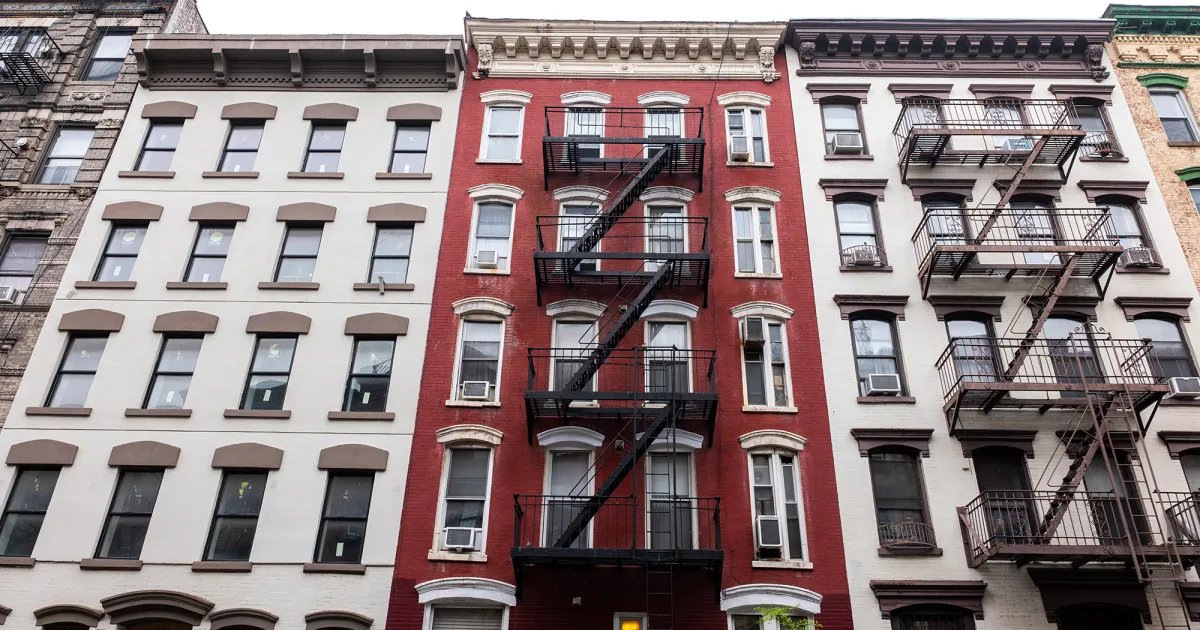
But there is another shortage developing that investors and owners should be paying close attention to: a shortage of multifamily buildings to buy. I am talking about quality buildings worth buying — free-market apartment buildings with minimal regulatory risk hurdles.

That may sound strange after several years when buyers had the upper hand and plenty of owners struggled to get their pricing. But the market is changing. Capital is coming back faster than quality inventory is coming to market, and the numbers are starting to reflect that.
According to Alpha Realty’s second-quarter 2026 multifamily market report, New York City recorded 304 multifamily transactions during the three months ended June 30, up 10.5 percent from the first quarter and 2.4 percent year-over-year. That followed 275 transactions in the first quarter, which itself was up nearly 20 percent from the prior year.
In other words, despite elevated borrowing costs, transaction velocity continues to improve. Most of the multifamily transactions have been for free-market and newer construction buildings.
What’s interesting is that multifamily buildings with 20-plus units accounted for 112 transactions in the second quarter, up 24.4 percent from the quarter before and 8.7 percent from a year earlier. Those assets represented $872.2 million, or roughly 57 percent of all New York City multifamily dollar volume during the quarter.
That follows an already strong first quarter, when properties with at least 20 units accounted for $1.06 billion, or approximately 61 percent of citywide multifamily volume.
Put those two quarters together and the message is difficult to ignore: Buyers want quality and scale, and they are actively competing for it.
Manhattan makes the point even clearer. In the second quarter, 91 multifamily properties traded for $824.6 million. Deal count was up 62.5 percent from a year earlier, while dollar volume was up 96.1 percent. Transactions involving buildings with 20 or more units nearly doubled year-over-year, from 22 to 43, while dollar volume in that segment jumped 91.1 percent to nearly $500 million.
That is not speculative capital dipping a toe into New York. That is conviction.
And here is where I think the market gets interesting.
For most of the last several years, investors were waiting for something to change. They were waiting for interest rates to fall, sellers to capitulate, regulations to become clearer or some combination of all three. But markets rarely ring a bell when the bottom is in. Eventually, buyers adjust their underwriting, lenders adjust their proceeds, and sellers adjust their expectations.
That process has already happened.
Now the question is no longer whether there is capital for NYC multifamily. The question is whether there will be enough attractive inventory to satisfy it.
New construction isn’t going to solve that problem anytime soon. The expiration of 421-a disrupted the development pipeline, while the replacement 485-x program has been slower to generate meaningful new supply. Even projects that pencil today will take years to deliver.
Meanwhile, the buildings investors want most — well-located, free-market or lightly regulated properties with scale — cannot simply be manufactured overnight.
That creates an unusual condition.
If transaction activity continues improving while quality inventory remains constrained, buyers may find themselves competing against each other before they realize the market has shifted. And that can have a greater impact on pricing than another 25 or 50 basis point rate cut from the Fed.
We are already seeing how selective that competition can be.
For instance, we recently closed on 525 Union Avenue, a 45-unit multifamily building in Williamsburg, Brooklyn, at a 4.9 percent cap rate — strong execution in today’s market. It was a well-located, free-market multifamily building that immediately attracted multiple bidders. Qualified capital, both private and institutional, were actively pursuing it.
Overall, Brooklyn recorded 116 transactions in the second quarter, making it the city’s busiest borough, but average deal size declined to $3.8 million. Queens saw only 34 transactions and $70 million in volume. Meanwhile, the Bronx rebounded dramatically to 63 transactions from 23 in the first quarter, with 45 involving buildings of 20 units or more.
Capital isn’t blindly buying everything. It is moving toward opportunities where the basis, scale and long-term economics make sense.
New York has always been a supply-constrained market. We usually talk about that in terms of apartments and rents. Increasingly, I think we’ll be talking about it in terms of investment opportunities as well.
What matters is simple: The next phase of the NYC multifamily recovery may not be defined by a shortage of capital. It may be defined by too much capital chasing too few good buildings.
Lev Mavashev is the founder and principal of Alpha Realty, a New York brokerage focusing on multifamily.