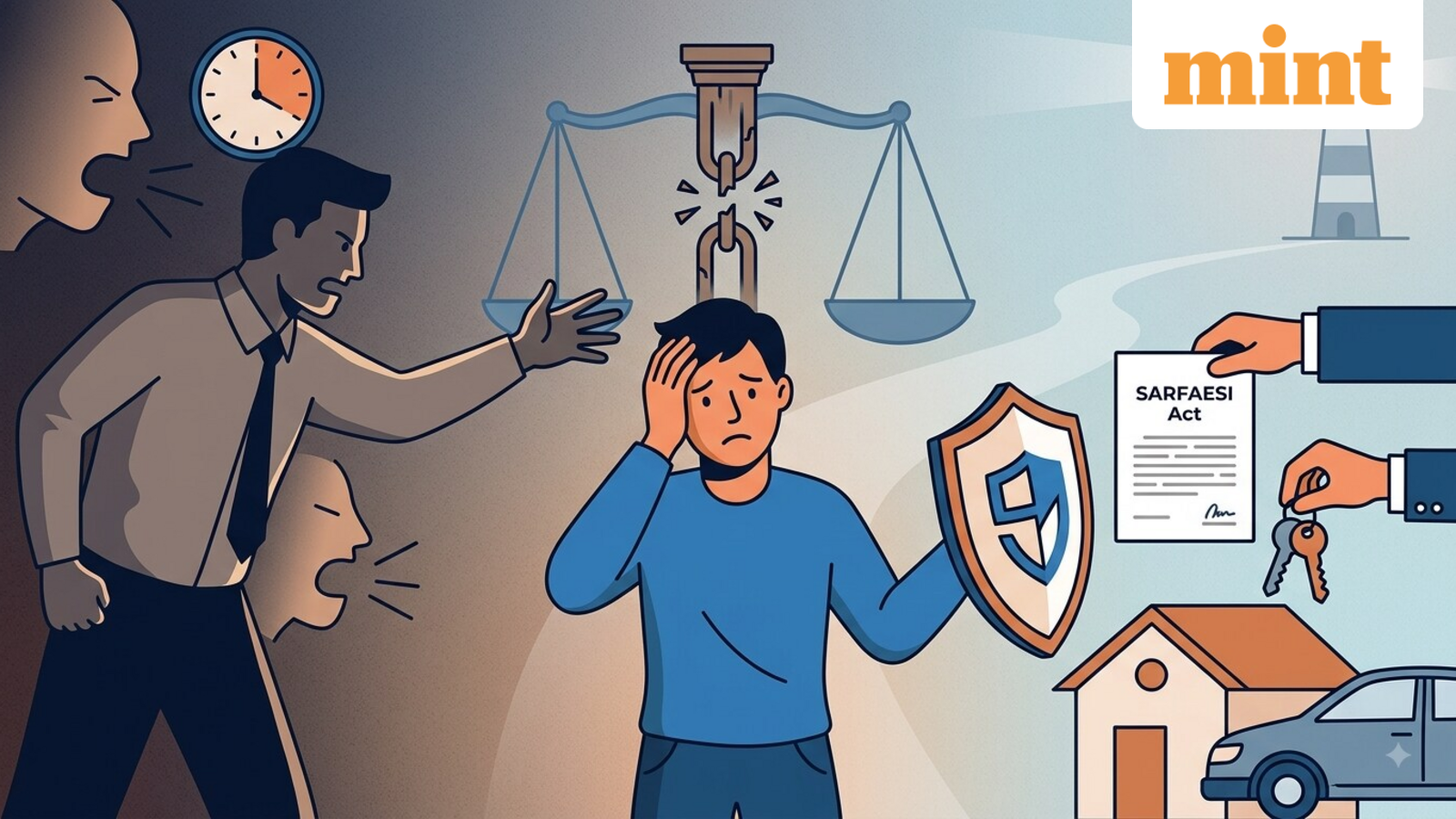
Defaulted on your loan? Know when banks can seize your property and what recovery agents cannot legally do
Borrowing has become an integral part of household finances, whether it is to buy a home or vehicle or meet short-term expenses through personal loans and credit cards. But a job loss, income disruption or an unexpected financial setback can sometimes make it difficult for a borrower to keep up with repayments.
Missing a loan EMI can trigger reminders, penalties and eventually recovery proceedings. But a default does not give a bank unlimited powers over a borrower or allow recovery agents to use threats and intimidation.
The rules depend on the type of loan, the extent of the default and the legal process followed by the lender.
“A single missed EMI does not give the bank the right to seize the borrower’s property or assets,” said Anshi Shrivastava, head of personal finance training at 1 Finance.
When can a bank seize your property after a loan default?
For a secured loan such as a home loan, vehicle loan, gold loan or loan against property, the lender has the right to enforce the security if the borrower defaults and the account is classified as a non-performing asset, subject to the applicable legal process.
Under Section 13(2) of the Securitisation and Reconstruction of Financial Assets and Enforcement of Security Interest (SARFAESI) Act, once a secured debt is classified as an NPA, the lender can issue a written demand notice requiring the borrower to clear the dues within 60 days. If the borrower raises an objection or makes a representation, the lender has to consider it and communicate reasons for rejecting it within 15 days.
This means a borrower who has just missed an EMI should not assume that the bank can immediately take possession of the house or vehicle.
Banks may also have a right of set-off in certain circumstances, allowing them to adjust a borrower’s dues against funds held with the same bank. However, this is not the same as giving a lender unrestricted access to accounts held by the borrower with other banks.
Can recovery agents call your family or threaten you?
The distinction between legitimate recovery and harassment becomes particularly important when a recovery agent starts calling.
RBI rules prohibit regulated entities and their recovery agents from using intimidation or harassment during debt collection. This includes conduct intended to publicly humiliate borrowers or intrude on the privacy of their family members, referees and friends. Recovery agents are also prohibited from making threatening or anonymous calls, sending inappropriate messages and persistently calling borrowers before 8 a.m. or after 7 p.m. for recovery of overdue loans.
“Abusive, threatening or humiliating language in any channel, any threat of arrest for unsecured debt default, and repeated harassing calls are all violations,” Shrivastava said.
Borrowers should also be cautious about recovery agents contacting relatives, employers or colleagues. RBI’s rules specifically prohibit attempts to publicly humiliate borrowers or intrude on the privacy of family members, referees and friends. Shrivastava said that contacting a reference merely to locate a borrower can be different from using a third party to shame or pressure them.
Importantly, the bank cannot distance itself from the conduct of a recovery agent simply because the agent is an outsourced service provider. RBI has said regulated entities remain responsible for the actions of their service providers, including recovery agents.
What should you do if a recovery agent harasses you?
If a borrower faces harassment, Shrivastava recommends preserving call logs, WhatsApp messages, voicemails and other evidence.
The complaint should first be made to the lender through its grievance-redress mechanism. If the complaint is not resolved satisfactorily, the borrower can escalate it through the RBI’s complaint mechanism, subject to the applicable eligibility and timelines.
For serious threats, intimidation, trespass or physical violence, the borrower can also approach the police.
The key point for borrowers is that default does not cancel a lender’s right to recover its money, but recovery must happen within the law. A bank can pursue its dues and, in the case of secured loans, eventually enforce the underlying security. What it cannot do is replace the legal recovery process with intimidation, humiliation or unauthorised seizure.
For someone struggling to repay an EMI, the safest approach is to contact the lender early, understand the available repayment or restructuring options and keep a written record of all communication rather than simply ignoring recovery notices.