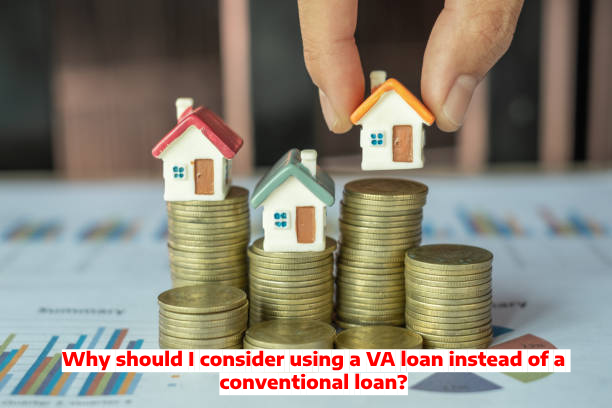
Why should I consider using a VA loan instead of a conventional loan?

Introduction:
In this article, I’ll explore the reasons why you should consider using a VA
loan instead of a conventional loan. When it comes to financing your home, it’s
important to evaluate different loan options to find the best fit for your
needs. If you are a veteran or an active-duty military member, a VA loan can
offer distinct advantages over a conventional loan.
A VA loan is a mortgage loan program specifically designed for veterans,
active-duty military personnel, and their eligible spouses. One of the key
benefits of a VA loan is that it is backed by the U.S. Department of Veterans
Affairs, providing added security for lenders. This guarantee allows lenders to
offer more favorable terms and conditions, such as lower interest rates and
reduced down payment requirements, making homeownership more accessible for
eligible borrowers.
Benefits for eligible veterans and military
personnel
VA loans offer exclusive benefits to eligible veterans and military
personnel as a way to recognize and reward their service. These loans are
specifically designed to cater to the unique needs and circumstances of those
who have served their country. By considering a VA loan, eligible borrowers can
access the advantages and support provided through this program. This includes
favorable terms, reduced fees, and additional assistance programs tailored to
veterans and military personnel.
VA loans provide a tangible benefit to borrowers who have dedicated their
lives to serving their country. It is a way for the government to show appreciation
and provide tangible support in achieving the goal of homeownership. By taking
advantage of the benefits available, eligible veterans and military personnel
can enhance their financial stability and secure a place to call home.
Lower interest rates
One of the significant advantages of VA loans is the potential for lower
interest rates compared to conventional loans. The U.S. Department of Veterans
Affairs guarantees a portion of the loan, which reduces the risk for lenders.
This guarantee allows lenders to offer more competitive interest rates to
eligible borrowers. Lower interest rates result in lower monthly mortgage
payments and overall savings throughout the life of the loan.
The lower interest rates available through VA loans can make a significant
difference in the affordability of homeownership. It allows eligible veterans
and military personnel to allocate their financial resources more effectively,
enabling them to manage their mortgage payments and other expenses more
comfortably. The reduced interest rates are a valuable benefit that contributes
to the long-term financial well-being of borrowers.
Reduced or no down payment
VA loans often come with reduced or no down payment requirements, making
homeownership more accessible for eligible veterans and military personnel.
While conventional loans typically require a substantial down payment, VA loans
offer a more lenient approach. This means that eligible borrowers can secure a
mortgage with a smaller upfront payment, freeing up their savings for other
purposes.
The reduced or no down payment feature of VA loans can be especially
advantageous for first-time homebuyers or those with limited savings. It
eliminates the barrier of accumulating a significant amount of money for a down
payment, allowing eligible veterans and military personnel to achieve
homeownership sooner. The reduced financial burden at the outset of the
homebuying process enables borrowers to enter the housing market with greater
ease and flexibility.
Lenient credit requirements
VA loans have more lenient credit requirements compared to conventional
loans. While conventional loans often have strict credit score thresholds, VA
loans take a more holistic approach in evaluating borrowers’ creditworthiness.
The U.S. Department of Veterans Affairs does not set a minimum credit score
requirement for VA loans. Instead, lenders have the flexibility to establish
their own credit standards based on their risk tolerance. This flexibility
allows lenders to consider factors beyond credit scores, such as the borrower’s
overall financial picture, employment stability, and ability to make mortgage
payments. As a result, veterans and military personnel who may have lower
credit scores or a less extensive credit history can still be eligible for a VA
loan.
The lenient credit requirements of VA loans recognize that creditworthiness
should not be solely determined by a credit score, especially for those who
have made significant sacrifices in service to their country. This approach
widens the accessibility of homeownership to a broader range of veterans and
military personnel who may have faced credit challenges related to their
military service. By taking into account various aspects of a borrower’s
financial situation, VA loans provide opportunities for individuals to achieve
their homeownership goals, even if they have faced credit obstacles in the
past.
No private mortgage insurance (PMI)
One of the advantages of VA loans is that they do not require private
mortgage insurance (PMI). PMI is typically required by lenders for conventional
loans when the borrower’s down payment is less than 20% of the home’s purchase
price. This insurance protects the lender in case of default but adds an
additional cost to the borrower’s monthly mortgage payment. In contrast, VA
loans do not have a PMI requirement. The U.S. Department of Veterans Affairs’
guarantee on the loan serves as an alternative to PMI, providing lenders with
the assurance they need.
This absence of PMI results in lower monthly mortgage payments for VA loan
borrowers, making homeownership more affordable and reducing the overall cost
of the loan over time. The exclusion of PMI in VA loans is a significant
financial advantage for veterans and military personnel. It allows them to
allocate their resources towards other essential expenses or savings, providing
them with increased financial flexibility and stability. The elimination of PMI
is another way that VA loans strive to provide favorable terms and conditions
to those who have served in the military.
Assistance programs for disabled veterans
VA loans offer additional assistance programs specifically tailored to
disabled veterans. These programs recognize the unique challenges faced by
veterans with service-related disabilities and aim to provide them with
additional support in their pursuit of homeownership. One such program is the
Specially Adapted Housing (SAH) grant, which provides financial assistance to
disabled veterans to modify or adapt their homes to accommodate their
disabilities. The SAH grant can cover the costs of home modifications, such as
wheelchair ramps, widened doorways, or accessible bathrooms, making the home
more suitable for the veteran’s needs. This program ensures that disabled
veterans have safe and accessible housing options that cater to their specific
requirements.
In addition to the SAH grant, there are also other assistance programs
available, such as the Temporary Residence Adaptation (TRA) grant and the
Special Housing Adaptation (SHA) grant, which provide financial support for
temporary or permanent housing adaptations. These programs help disabled
veterans maintain their independence and enhance their quality of life within
their own homes. The availability of these assistance programs underscores the
commitment of the VA to support disabled veterans in their housing needs. It
acknowledges the sacrifices made by these individuals and provides them with
resources to overcome the challenges they may face in finding suitable and
accessible housing options.
Flexible refinancing options
VA loans offer flexible refinancing options, providing veterans and military
personnel with opportunities to refinance their existing mortgages to take
advantage of better interest rates, lower monthly payments, or access their
home’s equity. One popular refinancing option available for VA loan borrowers
is the Interest Rate Reduction Refinance Loan (IRRRL), also known as a VA
Streamline Refinance. The IRRRL allows eligible borrowers to refinance their
current VA loan into a new loan with a lower interest rate, typically without
requiring a new appraisal or extensive documentation. This streamlined process
simplifies refinancing and can result in significant savings for borrowers by
reducing their monthly mortgage payments.
Another refinancing option is the VA Cash-Out Refinance, which enables
homeowners to refinance their existing VA loan while also accessing a portion
of their home’s equity in the form of cash. This option can be beneficial for
veterans and military personnel who need funds for home improvements, debt
consolidation, or other financial needs. The VA Cash-Out Refinance allows
borrowers to tap into the equity they have built in their homes, providing them
with additional financial flexibility.
The flexible refinancing options with VA loans empower veterans and military
personnel to optimize their mortgage terms and adapt to changing financial
circumstances. Whether it’s lowering monthly payments or accessing funds for
other purposes, these options provide borrowers with opportunities to manage
their finances effectively and make the most out of their homeownership
journey.
Government-backed loan with added advantages
A notable advantage of VA loans is that they are government-backed loans.
The U.S. Department of Veterans Affairs guarantees a portion of the loan, which
provides an added layer of security for lenders. This guarantee reduces the
risk for lenders, making them more willing to offer favorable terms and
conditions to eligible borrowers. The government-backed nature of VA loans also
instills confidence in borrowers, knowing that their loan is supported and
regulated by a trusted entity. This assurance can provide peace of mind and a
sense of stability throughout the homeownership process.
Additionally, VA loans offer the advantage of added benefits and protections
specifically designed for veterans and military personnel. These benefits
include financial counseling services, assistance in avoiding foreclosure, and
various loan modification options in times of financial hardship. Choosing a VA
loan over a conventional loan means accessing the advantages and protections
provided by the government to honor and support those who have served their
country. The government-backed guarantee, coupled with the specialized benefits
and assistance programs, makes VA loans an appealing choice for eligible
veterans and military personnel in their pursuit of homeownership.
Conclusion:
I hope this article has shed light on why considering a VA loan instead of a
conventional loan can be advantageous. By exploring the benefits of VA loans,
eligible veterans and military personnel can make informed decisions about
their home financing options. VA loans offer a range of benefits, including
lower interest rates, reduced or no down payment requirements, lenient credit
requirements, and exemption from private mortgage insurance (PMI). These
advantages make homeownership more accessible and affordable for those who have
served their country.
Additionally, VA loans provide specialized assistance programs for disabled
veterans, ensuring that they have safe and adapted housing options. Moreover,
VA loans offer flexible refinancing options and are backed by the government,
providing added security for both lenders and borrowers. The government’s
commitment to supporting veterans and military personnel is evident through the
comprehensive benefits and protections provided within the VA loan program.