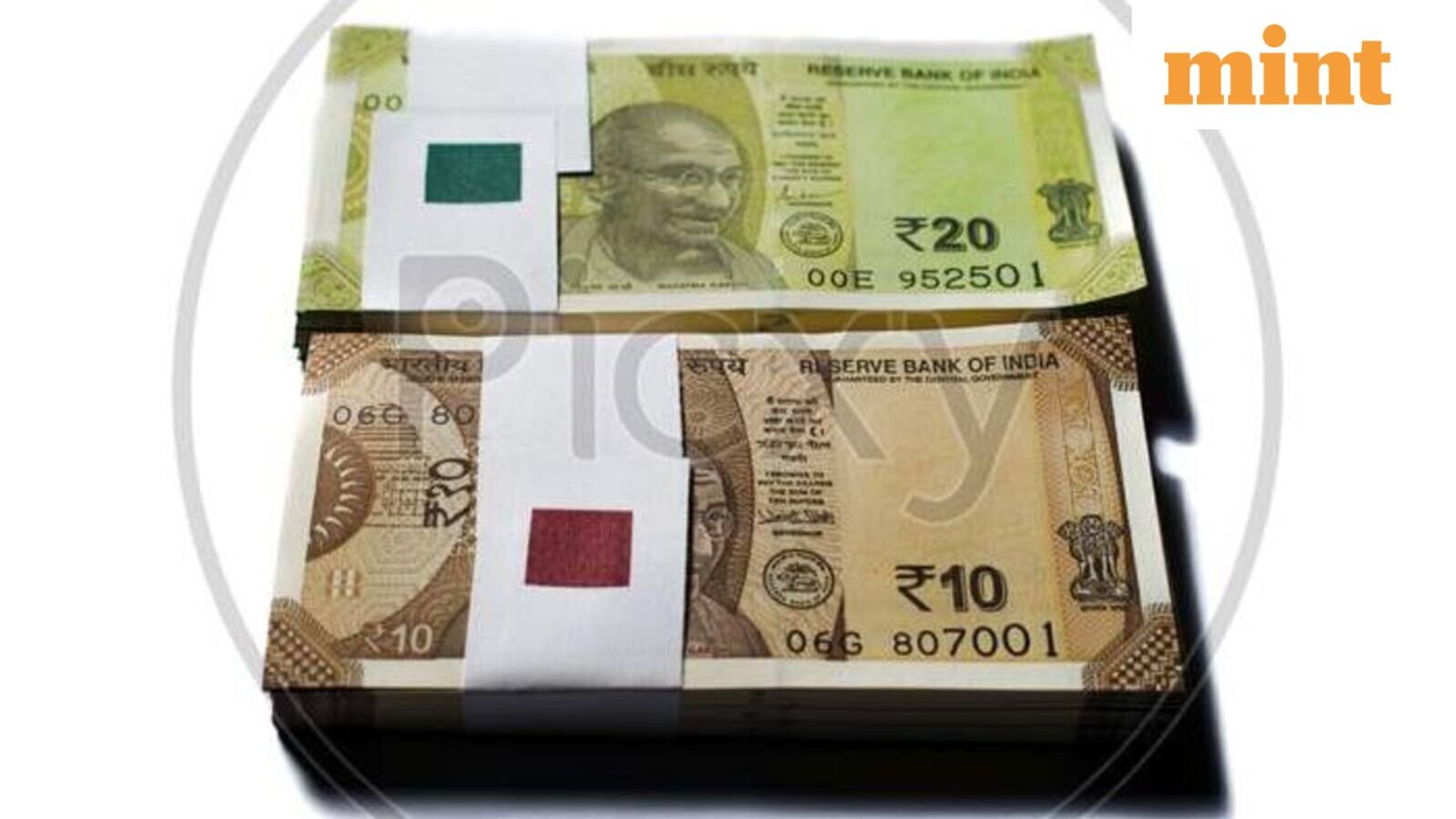
When will govt issue plastic ₹10 and ₹20 banknotes? FM Nirmala Sitharaman responds to query in Rajya Sabha
The Reserve Bank of India (RBI) Governor, Sanjay Malhotra, announced last week that the government is conducting a pilot to test how polymer banknotes will perform in Indian conditions, climate and infrastructure.
While speaking at a press conference following the Monetary Policy Committee (MPC) meeting, he said the rollout is expected to happen at the beginning of the next fiscal year if everything goes according to plan. However, the RBI governor did not specify a date for the launch of these plastic banknotes.
The proposed rollout of polymer notes came up for discussion in the Rajya Sabha on Tuesday (11 August), when MP Neeraj Shekhar asked whether the government and the RBI plan to introduce plastic money and, if so, what the timeline could be.
What did FM Nirmala Sitharaman say about polymer notes?
In response to Shekhar’s question, Nirmala Sitharaman, Union Minister of Finance, said that the RBI had sent a proposal to the government for introducing one billion pieces each of ₹10 and ₹20 polymer banknotes for field trials.
She also mentioned that the government has approved the proposal, and the regular issuance of polymer banknotes in these two denominations is expected to happen after successful trials.
“The proposal has been approved by the Government. As per RBI, these polymer banknotes are proposed to be issued along with paper substrate-based banknotes,” her response read.
However, the finance minister did not give an official launch date, saying that the procurement of plastic notes is still in its initial stage.
“RBI has informed that the procurement process is presently at an initial stage. Therefore, at this point of time, it would not be possible to practicably determine the exact timeframe for introduction of polymer banknotes or the expenditure likely to be incurred thereon,” Sitharaman told Rajya Sabha.
What are polymer banknotes?
Polymer currency notes are made from a plastic substrate rather than the cotton-based paper traditionally used for banknotes. Although they look and feel similar to paper currency, they are significantly more durable and can remain in circulation for a much longer period.
As the material is resistant to moisture, dirt and wear, polymer notes tend to stay cleaner and suffer less damage from everyday use. Polymer banknotes can incorporate advanced security features such as see-through windows, micro-optic holograms and specialized inks, making them harder to counterfeit.
Around 60 countries, including Australia, Canada, the UK, New Zealand, Singapore, Vietnam, Malaysia and Mexico, use polymer banknotes.
Why does RBI want to introduce plastic notes?
As per media reports that first emerged in May 2026, the central bank may be looking to revive a decade-old plan to shift to polymer notes to avoid the rising cost of printing paper currency and the need to replace a high volume of soiled notes.
After the RBI governor announced in June that introducing polymer currency notes is under consideration, several incorrect reports started circulating on social media claiming that the central bank would withdraw currency notes and replace them with plastic notes by the end of June 2026.
This prompted the government to issue a clarification.