A Buyer’s Summer Is “On” as Asking Prices See Steepest Decline Since 2017
Dave:
Real estate investors love to say that real estate is local, and today’s headlines are proving that idea exactly. On a national basis, we’re seeing asking prices drop faster than they have in years, but certain cities are seeing surging demand and some places that are attracting new businesses are poised for a quick rebound. Meanwhile, a lot of the housing market feels stuck, but senior housing is a major bright spot that investors should be paying attention to. I’m Dave Meyer here with Kathy Fettke, Henry Washington, and James Dainard. And today we’re looking at where momentum is fading, where it’s building, and all the headlines investors should be paying attention to next. This is On the Market. Let’s dive in. Everyone, welcome to On the Market. I’m Dave Meyer. Today we have Henry, James Dainard, and Kathy Fettke joining us. As usual, we’re going to have four headlines today.
And who will I pick on first? James, you have to go first.
James:
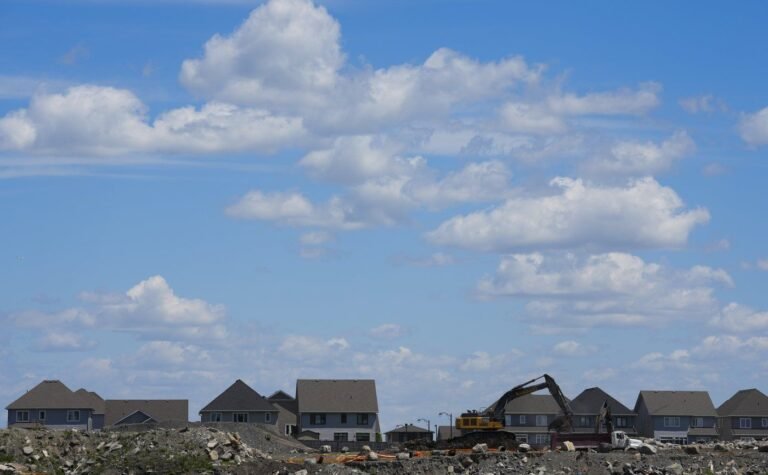
I brought in an article because I’m about ready to put 15 homes to market right now, and it’s all about how do you sell them quick? And I mean, besides if you’re in San Francisco or kind of in Kathy’s neck of the woods, things are not selling quick and they’re selling for below. So you got to kind of prep your stuff right. So the article from realtor.com, it says, “After years of waiting, buyers are getting their summer.” It’s a hot buyer summer is what this is. So buyers, they can be who they want, they can do what they want. But what it talks about is national asking prices fell two and a half percent year over year in June to 430,000. This is the steepest annual drop since 2017, the last time that they tracked. But pending sales, there’s a highlight, are up 3.7%
With the seventh straight month of growth. I mean, what we’re seeing is just really an affordability thing. The buyers are there, it’s just right outside their reach. But I am seeing people kind of freaking out and cutting price a little too aggressive. Or it is so key right now to roll your price out at the right price and not get stale on market because the things that are going pending, at least what we see in our market, they’re actually going pending fairly quick if they’re priced well. But the ones that are overpriced out the gate are sitting flat and then they get stale, they rack up days on markets, and it becomes the property where everyone thinks there’s something wrong with it, even though it was just the price. These are important things because there’s a lot of negative energy out there right now like, “Oh, market’s crashing.” No, you’re overpricing your homes.
That’s what it comes down to. Your rents are too high. You can’t lease your spot. You’re trying to sell your property. It’s not selling because it’s priced too high. And at the end of the day, besides new construction, there’s still demand in a lot of different segments as long as you’re priced accordingly. And this article, I mean, that stat alone tells a big story. Pending sales are up,
But list price are coming down. Well, they’re catching the magical middle, and that’s where you have to be. And so all week I’ve been comping out these houses. I comped them out three different times because sometimes I got to look at it three different ways in three different time periods and go, “Okay, no, here’s my price.” And it really comes down to three important things. What’s the velocity in that neighborhood? What’s the days on market? And what is your average from list to pending in the comps that you’re using? The mistake that I see people making is they’re cutting price before they look at that data and they’re giving away money because they just need to understand that it takes time. And so right now, everything that we’re pricing, even though we’re pricing well, we’re still anticipating 30 to 45-day market times because if your expectations aren’t set right, you can make a bad decision.
And once you start cutting and you start chasing your tail, buyers will beat you up. It could be a hot buyer summer because people are getting nervous.
Dave:
It is a hot buyer summer.
James:
Yeah, I think we should all get t-shirts, hot buyer summer.
Dave:
But are the people you’re saying cutting quickly, are they distressed? Are you saying flippers or just everyone?
James:
The ones I’ve seen the most cuts are the people that are either relocating out of the state and they have to move. Those people are going. And then the flippers are definitely the ones that are very irrational because they bought this property, they spent too much on the renovation because costs have been floating. Things are changing, things cost more. You have issues with permitting, takes longer. So they’re pricing it to where they don’t lose money out the gate, and maybe they should have just priced it accordingly and they’re not chasing their tail. If you start cutting price, a meaningful price drop is three to 5%. That’s a big, big price drop when you’re dealing with a million or $2 million house. But if you price it well at the gate, it will still move. And that’s what the data’s telling us. So you got to price accordingly in today’s market, not about your performa, not what you want.
What is it worth today?
Henry:
Yep. This market is crushing new flippers who aren’t great at underwriting or bad flippers who are just overpaying for deals. I mean, what we’re seeing in this market is very similar. If it is priced right out of the gate and it’s done well, there’s some that are priced right, but they’re not done well. And so they get showings, but they don’t really get offers because there’s so many other properties on the market that are priced the same that are done better. So that’s where people are struggling. And we’re also seeing that there’s a lot of buyers who need the affordability and want the affordability more than they want the home to look great. So what we’ve been doing recently is comping homes based on it just being fresh and clean so that I can price it much lower than what a full remodel would take and allow us to price it for.
And those are selling better than remodeled flips because people are able to buy something more affordable. And yeah, it might not be the best looking product, but they don’t care about that right now. What they care about is, can I afford it? And I can fix up what I want to fix up when I want to fix it up.
Dave:
So you can’t just put your house on the market for the number you need. Is that what you’re saying? You actually have to understand market dynamics and price it accordingly?
Henry:
What you need has never mattered. I don’t know why people think it does.
Dave:
This happens all over the place too. You hear landlords do it too. They’re like, “Oh, I need to make this rent.” I’m like,
Henry:
“Well, good luck.” Sorry about your life.
Kathy:
You just haven’t lived long enough if you ever say that out loud.
James:
Well, I used to get that question all the time when we’d sell a house like, “Well, you only paid this for the property.” And I’m like, “Well, no, you’re not seeing all the fees in there, but also does it matter?” It doesn’t matter. I’m like, “If I was losing money, would you bring that up to me? Would you pay more if I was losing money? No. So if I’m making money, does it matter?”
Dave:
But I think you’re right. The thing that’s lost in all of the media right now is home buyer demand is up and pending sales is up. Even at a time when affordability has gotten worse in the last three months and mortgage rates have gone up. I’ve said this a couple times before, but I think we’re seeing a lot of resilience in the housing market. I know it’s not a good healthy housing market, but considering that things have gotten worse and demand is still there and people are still transacting, I think we’re kind of seeing a floor unless the unemployment gets really bad, but there’s no evidence of that right now either. So I just think this is a good thing for investors.This is a stable base from which you can make decisions, but you have to make rational decisions, as James was saying. You have to learn how to price things right.
Henry:
Are you saying you have to be good at the business of flipping houses to make money flipping houses?
Dave:
I don’t know. I don’t claim to be a great flipper, but I do know as a buyer, it is a hot buyer summer. It’s easier to be a buyer right now. It is.
Henry:
I’m giving people all kinds of stuff they ask for on inspections. Yeah, this is the time. I’ve been doing stuff I would’ve never done five years ago.
James:
But that’s the beautiful thing about being an investor. You can also be a hot buyer, not just. Do you want to be a desperate seller or a hot buyer? Be close. Be a flipper.
Dave:
All right, let’s move on to our next story. I’m going to go next because it kind of relates to what you were talking about, James, earlier and about there being demand, but affordability is really the challenge here. And this is a story that comes from realtor.com. The headline is the housing cash crunch that has everyone pointing fingers. You could check out the article, but basically it’s saying that people are stretched in other parts of their life, and this is creating challenges for the housing market. And I think when people hear the idea of demand in the market, like that word demand, they think that means who wants a house. That’s not what it means. It’s who wants a house and couldn’t afford to buy a house. And so what we have in this country right now is a lot of people who want to buy a home, but who can’t afford it because other things are becoming more expensive.
Just as an example, this is crazy guys. I kind of was shocked. What do you think the average new car payment is right now per month, average?
Henry:
$850. 600.
James:
700 then. I’m going in the middle.
Dave:
770. Oh, geez. Average, insane. I don’t understand that. But what it was crazy? 770. It’s crazy. But so the cool thing about this article on Realtor is they did the math and they figured if you bought that car that cost you 770 a month, that takes away $135,000 of your purchase price on a new mortgage. Now, I know everyone in the comments is going to go crazy. You don’t need a $770 car. I agree. I’m not saying that you do. It’s crazy though. People are spending that money, and that creates this challenge of affordability.
Kathy:
And you can’t turn around and sell it. It’s already devalued the moment you drive it off the lot.
Dave:
Oh, it’s way worse investment. But I think it was just trying to show that people, their money is going to other things, and it’s limiting who can participate in the housing market right now. Now, some of those things are probably voluntary. No one needs a $770 a month car. But the article does go on to talk about other things, basically the cost of food or gas or health insurance or whatever. Childcare. Those things. Yeah, childcare, absolutely insane. Those kinds of things are pulling people out of the housing market. And for me, I thought the big takeaway is one, like I’ve said many times in the show, appreciation’s going to be a little bit muted in the United States for a while. But I actually think this really hits rents too. If you look at the savings rate going down, all these affordability challenges, personally, I am going to count on lower rent growth for the foreseeable future until this turns around and we start to see wages go up because man, whether they need to make these decisions or not, that is the average.
That’s what it is. And so money’s not going to be going to housing if it’s going to all this other stuff.
Henry:
Yeah. As I was researching articles for the show, one of the articles I came across said that there’s a record number of people that are accessing the equity in their home because life is so unaffordable, so they’re tapping into equity to be able to live.
Dave:
47 billion in the
Henry:
First
Dave:
Quarter of 2026.
Henry:
47 billion
Dave:
Dollars. Yeah, it’s a
Henry:
Lot. Of people tapping into equity. So yes, it is affordability because people are taking that money. They’re not always spending it on improving the home. They’re consolidating debt because there’s a lot of consumer credit card debt that people are struggling with right now because a lot of people are leveraging credit card debt to do normal everyday life too. So it does have a compounding effect and have an effect on the housing market.
Dave:
All right. Well, we got to take a break, but we got two more headlines when we come back. Stick with us. Welcome back to On the Market. I’m here with Kathy, James and Henry going through today’s headlines. Who’s up next? Kathy.
Kathy:
All right. I am going to quiz you guys. GoDaddy reveals the 2026 most entrepreneurial cities.
Henry:
Ooh,
Kathy:
Okay. What city do you think has had the fastest entrepreneurial growth this past year?
Henry:
Atlanta, Georgia.
Kathy:
Dallas. All right, James.
James:
I’m going San Francisco. I think it’s booming.
Kathy:
Yeah, that is true. I was very surprised and they were too. San Antonio, Texas was the fastest growing. I though that was interesting. And I’m guessing it’s because Austin’s expensive. So if you want to start a business, you’ll just be nearby in San Antonio where the average home price is 278,000. It’s only an hour and a half or so to get to Austin.
Dave:
San Antonio’s a sneaky huge city. It’s massive. It’s the eighth biggest city in the United States. It’s huge.
Henry:
It’s massive.
Kathy:
Yeah. So it’s affordable and yet near one of the epicenters, Austin, of entrepreneurial growth. So that was great because we have our build-to-rent community there that we’re just breaking ground and hopefully it’ll be up and running just in time for all these new businesses. And what was interesting is that it said San Antonio emerges as the nation’s top. And for each business that is formed, five new jobs are created. Love that. And a lot of people don’t realize it really is America is built on small business. So most of the jobs are created by small business owners. So that’s cool. One new business, five new jobs.
Dave:
That’s so cool.
Kathy:
It’s so cool. Now the city that had the most was Miami. Again, no state income tax. What?
Dave:
Really?
Kathy:
It was over 36,000.
Dave:
How many of them are crypto businesses driven by guys in a Lamborghini?
James:
AI consulting companies.
Dave:
Yeah, exactly. Right.
Kathy:
Yeah. And then some of the cities that were surprising was Washington DC, which is you wouldn’t think of as necessarily entrepreneurial, but that was up high. And then not New York City, but the Bronx.
Dave:
It’s in New York City.
Kathy:
I mean, not Manhattan.
Dave:
Not
Kathy:
Manhattan. All
Dave:
Right.
Kathy:
Which again, makes sense if you want to be near it.
Dave:
I’m looking at your list now. Tampa was on my list to guess. That was number eight. You also have Milwaukee. I like that. I like seeing the Midwest represented here a little bit.
Kathy:
El Paso.
Dave:
Albuquerque.
Kathy:
Yeah.
Dave:
What? That might be the first time we’ve mentioned anywhere in New Mexico on the show.
Kathy:
When you look closely, it’s only 1200 new businesses there, but it’s picking up speed. I like
Dave:
That.
Kathy:
It doesn’t even compare with the 36,000 in Miami, but it’s on the map.
Dave:
I like this though, Kathy. People always ask, how do you pick markets? Job growth. Job growth is the number one thing. It is a reflection of population growth, and it also brings population growth at the same time. So it’s one of these positive spirals that create for a place. So look for places that have job growth. And I’m with you, Kathy. Everyone thinks there’s layoffs in the economy because Meta’s laying off people in Amazon. More than half the country is employed by small business.That is the American economy, the engine of normal people. And most of GDP comes from small business when we’re not spending $500 billion on data centers every quarter. But that is really the reflection of a healthy, good local economy. So I love this list. This is great.
Kathy:
Awesome.
Dave:
All right. Well, we got one more story for you. I can’t even remember who I’ve called on yet. So we’re going to take a break and when we come back, we’ll have one more headline. Welcome back to On the Market. I’m here with Kathy James and Henry who’s got our last story of the day for us. What do you
Henry:
Got? Yes, I have an article from Luminant and it is a senior housing article. So it’s saying senior housing is the best performing real estate asset class that nobody is talking about. It says that senior housing delivered a 17.3% total return last year. And that is driven obviously by demographics. It is saying that 76 million people are baby boomers that were born between 1946 and 1964. And right now, the oldest baby boomers have turned or are turning 80 in 2026. And that is what’s driving this demand for senior housing. At age 80, that’s the threshold for senior housing. Before 80, most people are mostly independent, so they stay at home or they’re in more of a Golden Girls house or some sort of active adult community. But once they hit 80, the need for more structured or assisted care really starts to kick in. And so now that the oldest boomers are hitting that threshold, they have started to take up a lot of these beds.
And what the article is also saying that the age of 75 plus boomers is expected to grow more than four million people by 2030, which is going to increase the demand for beds even more. And right now, as we sit, there aren’t enough beds to satisfy the demand of the aging boomers. And so for those who have positioned themselves to have assisted living facilities and provide beds, especially ones that aren’t feel like these people are living in a hospital, so not the big boxes, but some of the residential assisted living facilities, those are doing very well because they’re providing an option for people that doesn’t feel like they have to go live in some hospital. Those beds are filling up fast. People are paying a pretty penny to have one of those beds. And so this sector of real estate is doing very well right now.
And what the article also goes on to say is that we are just now scratching the surface in terms of potential here. So it’s not too late to get in. Matter of fact, we’re still early to get in for a lot of investors who can use this as a strategy in their markets. And I say investors who can use this is because I was on this train. I was going to do this, but it is very hard, dang near impossible to do in Arkansas. Arkansas is one of the two states where this is very, very, very, very hard to do. Can’t do this here. But there is a lot of cities all across the country where this asset class is going to make people a lot of money in the coming years.
Kathy:
Yeah. I know some people who are doing it and it is very lucrative, but it’s a different kind of business.
Henry:
It’s business and real estate, and you absolutely have to run a business. But there are options. You can buy the real estate and rent your house to an assisted living facility company, and they can essentially operate the business in your real estate and pay you rent, or you can do both.
Kathy:
That’s true.
James:
My question is, is this going to be the next self-storage rush? Because now everybody’s talking about this. I’m hearing like, “Oh, I’m going to do this.” I’m like, “Oh, here we go.” All of a sudden there’s going to be all these houses.
Henry:
I think the barrier to entry is harder here than it is for self-storage.
Dave:
I agree with that, Henry. I think it’s interesting. How do you get into it and get out of it? Because we were talking about boomers on another recent show, and this is a moment in time where we have this demand. So how do you get into it, but then not have senior housing when Gen X is that age because they’re a much smaller generation?
Henry:
Yeah, this is definitely something that you have to be paying attention to the trends. And ideally what you want to do is you want to get in now, you want to operate now while there’s demand, but sell while there’s still some demand and get out of the business. So a lot of people are going to sell these businesses hopefully as a way to get out. But yeah, I think there is a point in time where you can get caught holding the bag. But I think the other benefit is the sector of this business that’s doing the best is these small, almost call it boutique residential assisted living facilities. So even when demand goes down, I don’t know that demand in that specific sector is going to be super impacted because that sector is for people who want to have a feel like they live in a home.
They’re willing to pay a little more to get that. You’re talking eight to 10 beds in a house versus what people really want to avoid is going into these massive hospital feeling big box facilities where there’s hundreds of beds and it’s not the same demand group.
James:
Yeah. Let me give everyone a quick tip on this. Go meet your operators, then go buy the housing. Fill orders. That’s
Dave:
A
James:
Great call. Because I do know people that have bought these and then they put the wrong operator in because they rented to them. They’re paying a premium on the rent, and it turns out these people weren’t so good at people. And then all of a sudden it turned into a massive mess at their rental property. Oh boy. And so if you want to get into it, I like the small residential, go find the operators, then work a deal, what they’ll pay for rent, what you’ll do on the TIs for them on your burrs, on your renovations. And there’s a good opportunity, especially if you’re buying burrs where you can construct these in. You can also build this into your current plan with no plan to do adult living right now.
Dave:
Yes.
James:
If you’re doing a heavy burr, I’m starting to look at this. I got a big rambler in a good area. I don’t want stairs. So if I got a rambler, I can burr it out. Then frame your door jambs for ADA. Put in ADA conscious finishes and you can still rent it out the traditional way, still do your burr strategy. And then it’s kind of like just throwing an ace in the hole. If it comes into high demand, then you can start swapping it out because you’re already doing the construction, so it doesn’t cost more. And so if you want to get into it, but you don’t want to get it going, go find a heavy burr. Still do your renovations, still do your TIs, just plan a little bit ahead with the hallway sizes, the doorway sizes, and the bathroom fixtures. That way you won’t miss the boom, but you’re also not going to jump in too deep with everyone else.
Dave:
I like what you’re saying, both of you, Henry and James, because you’re basically saying optionality. If it works, great. If it doesn’t, you rent it out, you flip it, you do something else. Because to Henry’s point, maybe demand stays around for these boutique places forever. Great, you’re going to make great return. If not, turn it into a long-term rental, turn into a midterm rental, do something else with it. It’s just a regular asset. You’re not buying a commercial asset that is specifically created for this purpose and limits your optionality on how you could actually operate this business. But the demand is clearly there. The demographics make so much sense for this. I think finding a good way to get a little slice of this trend is a winner for people.
Henry:
Yeah, but that’s a great call out. You definitely need to pay attention to the direction the trend’s going because you’re going to have to pivot as demand changes. You’ll have to offer more services or you’ll have to change your pricing to compete. So you really do have to pay attention so that even if the demand for boutique doesn’t drop as much as demand for others, your price may have to come down in order for you to keep your beds full. And is that going to destroy your profitability?
Dave:
All right. Well, this was a fun episode. Thank you, Henry, James and Kathy for bringing them. And thank you all so much for listening to this episode of On the Market. I’m Dave Meyer for Kathy, James and Henry, and we’ll see you all next time.
Help us reach new listeners on iTunes by leaving us a rating and review! It takes just 30 seconds and instructions can be found here. Thanks! We really appreciate it!
Interested in learning more about today’s sponsors or becoming a BiggerPockets partner yourself? Email [email protected].