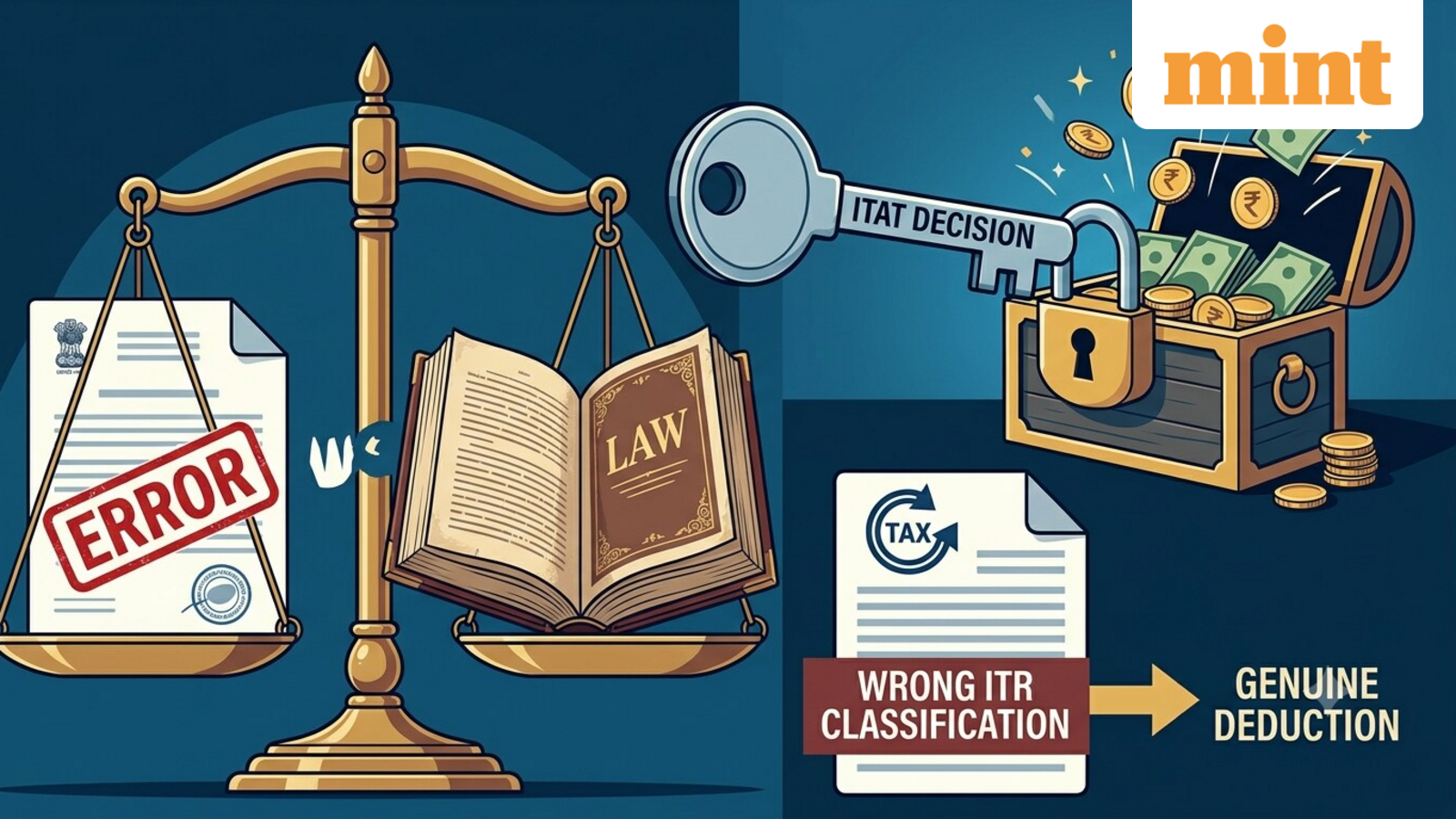
Gratuity tax deduction of ₹79.25 lakh denied over wrong ITR schedule, ITAT Chennai rules in taxpayer’s favour
A company that lost a ₹79.25 lakh gratuity deduction because of an error in its income tax return has won relief from the Income Tax Appellate Tribunal (ITAT), Chennai. The tribunal held that a genuine tax deduction cannot be denied merely because it was reported under the wrong schedule in the ITR, particularly when the underlying facts establish that the claim is valid.
According to a report by ET Wealth Online, the case relates to assessment year 2020-21 and was decided by the Chennai ITAT on 24 June 2026.
How the ₹79.25 lakh gratuity claim was disallowed
The corporate taxpayer filed its ITR on 18 December 2020, declaring total income of about ₹38.1 lakh. When the return was processed by the Central Processing Centre (CPC), Bengaluru, the income was recalculated at around ₹1.18 crore.
Among the adjustments, the CPC disallowed ₹79.25 lakh claimed as gratuity under Section 43B of the Income-tax Act, 1961. According to the report, the issue arose because the company had disclosed the gratuity amount under Part A-OI, item 10(b), instead of claiming it under the appropriate allowance section in Schedule BP.
The gratuity amount was also not reported by the tax auditor in Form 3CD. The CPC consequently disallowed the deduction while processing the return under Section 143(1).
The company later explained that the gratuity had actually been paid during the relevant year and that the incorrect classification was an inadvertent error. It filed a revised tax audit report, a revised ITR and a rectification application under Section 154. However, these attempts were rejected and the Commissioner of Income Tax (Appeals) upheld the disallowance.
ITAT says genuine deduction cannot be denied for reporting mistake
The company then approached the Chennai ITAT, arguing that the gratuity expenditure was a genuine deduction allowable under Section 43B and that the disallowance arose only because of an inadvertent reporting error.
According to the report, the tribunal accepted the assessee’s contention and observed that the omission in the tax audit report was a bona fide mistake. The relevant facts were already available on record, although the claim had been reported under an incorrect classification in the ITR.
The tribunal held that an assessee should not be subjected to excess taxation merely because of a mistake in reporting a legitimate claim. It also relied on earlier judicial decisions, including the Allahabad High Court’s ruling in Dhampur Sugar Mills Ltd. v. CIT and the Gujarat High Court’s ruling in S.R. Koshti v. CIT.
The Chennai ITAT also referred to CBDT Circular No. 14 (XL-35), dated 11 April 1955. The circular instructs tax authorities to assist taxpayers in securing reliefs to which they are legally entitled and not to take advantage of technical mistakes made by taxpayers.
The tribunal accordingly set aside the CIT(A)’s order and directed the Assessing Officer to delete the ₹79.25 lakh disallowance.
The ruling highlights that an error in reporting a tax claim does not, by itself, make an otherwise legitimate deduction ineligible. Where the relevant facts are available on record and the claim is legally allowable, taxpayers may still be entitled to relief despite an inadvertent ITR or tax audit reporting error.