SEBI reveals ₹3,811 crore unclaimed in mutual funds in FY26; all FAQs answered on how you can check and recover it
Unclaimed amount in mutual funds stood at ₹3,811 crore at the end of FY26, up from ₹3,452 crore a year earlier, according to the Securities and Exchange Board of India’s (SEBI) Annual Report.
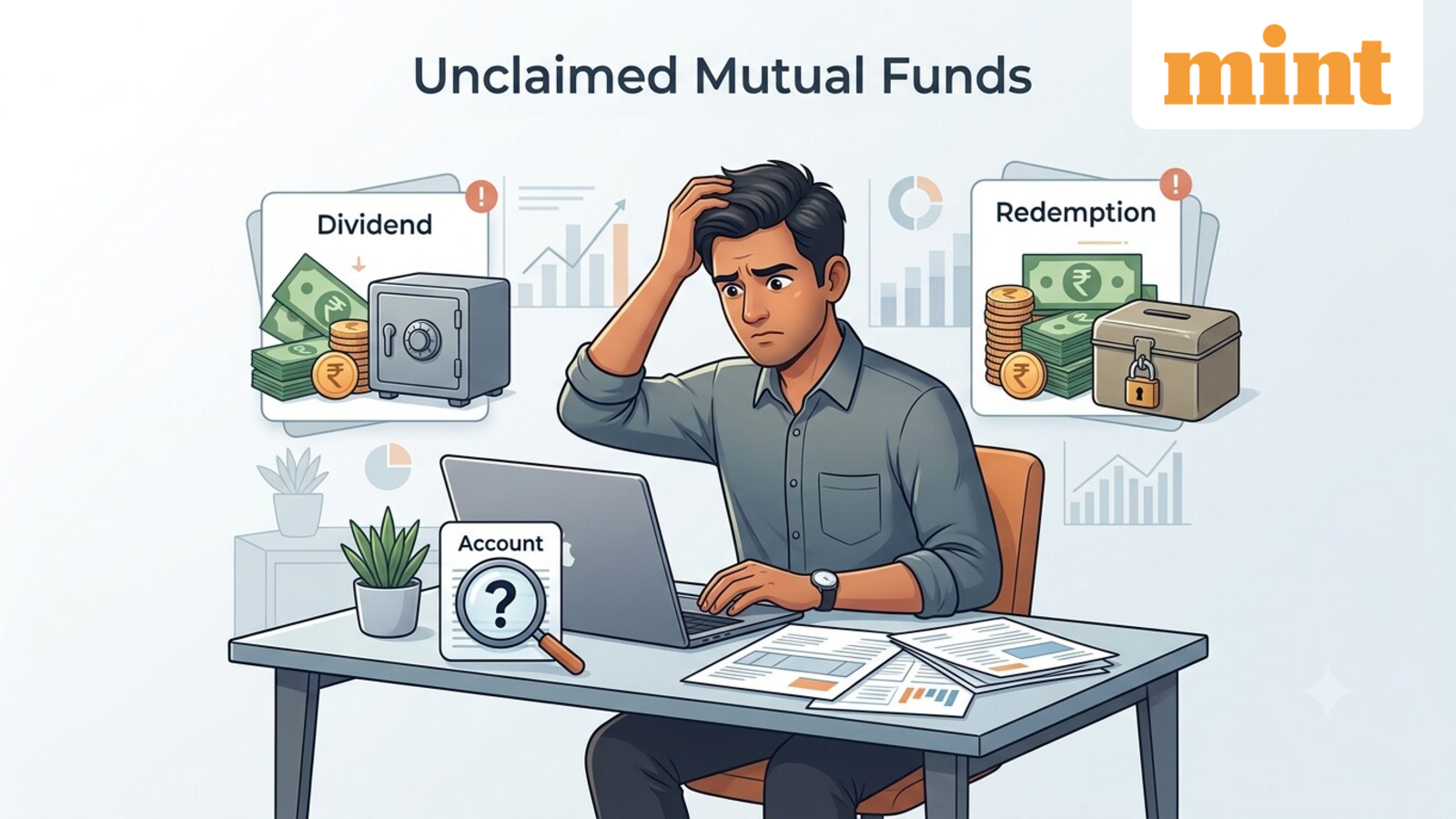
Of the total, ₹1,122 crore was in unclaimed redemption amount, marginally lower than ₹1,128 crore in FY25. Meanwhile, unclaimed dividend amount rose by 15.7% to ₹2,689 crore in FY26 from ₹2,324 crore in FY25.
Here’s what every investor should know about checking, tracing and claiming unclaimed amount.
What does unclaimed mutual fund amount mean?
Mutual funds pay you when you redeem units or receive maturity proceeds or dividends. These payments are credited to your registered bank account or sent by cheque to your registered address.
If the payment cannot be completed because your bank account has been changed or closed, your bank details are incomplete, a cheque remains unencashed, or your address is outdated, the amount becomes unclaimed. Payments may also remain unpaid if you are not KYC-compliant.
How can you check if you have any unclaimed amount?
You can check the website of your mutual fund house (AMC) or Registrar and Transfer Agent (RTA).
You can also log in to MF Central and provide the required details. Unpaid or unclaimed amounts are also available in your Consolidated Account Statement (CAS).
What if you do not remember which mutual fund you invested in?
You can use MITRA (Mutual Fund Investment Tracing and Retrieval Assistant), a facility available through the MF Central website, to trace inactive and unclaimed mutual fund investments.
An inactive folio is one where no transaction has taken place in the last 10 years, although the unit balance is still there.
If your details match an inactive or unclaimed investment, MITRA shows the mutual fund concerned. You can then approach the AMC or its RTA to start the claim process.
How do you get the unclaimed amount?
Once you identify the mutual fund, download the claim form from the AMC’s website and submit the duly signed form to the AMC or RTA.
The RTA verifies your records and signature. If everything is in order, the claim is processed, and the payment is made from the Unclaimed Dividend/ Redemption Scheme (UDRS), along with applicable appreciation.
How long does it take to receive the money?
The payment is generally made within two to five days after your claim is processed.
The claim is treated similarly to a redemption, and the applicable NAV is determined based on the date and time when your claim form is received.
What if you do not receive the amount?
If you do not receive the payment or rejection communication within seven working days, you can contact the concerned AMC or RTA.
If your complaint remains unresolved or you are not satisfied with the response, you can escalate it through SEBI’s SCORES platform.
Does unclaimed money earn any returns?
Yes.
Mutual funds can invest unclaimed amounts in the call money market, money-market instruments, or a separate plan of an overnight, liquid or money-market mutual fund scheme, known as UDRS.
This investment can generate additional returns, called appreciation. You receive this appreciation for three years from the date the units are created. If you claim the money within this period, you receive the applicable UDRS NAV along with the appreciation.
If you claim the money after three years, the redemption is based on its value at the end of that three-year period. Any appreciation generated after that goes to the Investor Education Fund.
How to prevent a mutual fund from becoming unclaimed?
Keep your PAN, KYC, address and bank account details updated with your AMC or RTA.
After placing a redemption request, check your bank account. If you do not receive an electronic payment within three working days, or a cheque does not arrive within five to seven working days, contact the AMC, RTA or distributor.
Disclaimer: This is purely for educational/informational purposes and should not be taken as any sort of investment advice. Always consult a SEBI-registered advisor before making any investment decisions.