A $5.7M Lot and Zero Rebuilt Homes: How Wildfire Recovery Is Changing the Face of Malibu
A prime burned lot sitting along the iconic Pacific Coast Highway in Malibu, CA, has hit the market for nearly $5.7 million after the owners calculated that their insurance payout wouldn’t come close to covering the cost of rebuilding.
The story of the parcel with 53 feet of direct ocean frontage on Las Flores Beach—a rarity in Malibu, where 40-foot lots are standard—is emblematic of the long road to recovery in this ritzy Southern California enclave in the aftermath of the devastating 2025 wildfires.
The deadly Palisades Fire scorched more than 600 homes in the community, including dozens sitting directly along the coastline overlooking the Pacific Ocean.
More than 18 months later, over 1,000 permits have been issued for damages, repairs, debris removal, and temporary structures. However, only 88 actual building permits have been approved for construction, according to the city of Malibu’s real-time Rebuild Dashboard.
To date, not a single certificate of occupancy has been issued in town, meaning no destroyed home has been fully rebuilt.
The sluggish rebuilding pace stems from a tangle of obstacles: skyrocketing construction costs, stringent environmental regulations associated with the location, and thorny infrastructure hurdles.
As a result, many local homeowners opted to cut their losses and sell rather than shoulder massive financial risk and spend years navigating Malibu’s complex coastal building requirements, which often call for wave and tide assessments, upgraded seawalls, concrete caisson systems, and pricey new septic infrastructure.
Rare property with complex requirements
In 2024, the owners of the Las Flores property purchased the original home for $8.6 million to use as a profitable short-term rental home and weekend getaway. Just a year later, the wildfire descended from the hills—an unprecedented event for Malibu, where beachfront houses had historically been spared from brushfires.
Unwilling to spend millions of dollars out of pocket and years mired in the slow rebuilding process, the owners listed the vacant lot for $5.69 million, roughly $3 million below what they paid. However, even at that lower price, finding a buyer has proven a challenge given the unique complexities of building along a protected coastline.
“You got to have a professional developer that knows Malibu, knows what they’re doing,” Steve Lewis, president of Core Real Estate Group and the listing agent on the property, tells Realtor.com®. “Malibu is its own animal.”
The listing markets the property as a “rare coastal canvas” giving buyers a “once-in-a-generation chance” to build their dream estate on one of Malibu’s most coveted stretches of coastline.
“The site arrives fully cleared and primed for your vision, offering a true blank slate in an unbeatable location,” it reads. “Breathtaking, unobstructed views sweep across the Pacific, capturing the offshore islands, the sweeping coastline, and the glittering arc of the Queen’s Necklace a spectacle enjoyed year-round from your future home.”
At the same time, the listing advises buyers “to perform comprehensive due diligence prior to purchase,” including the Coastal Commission requirements, soil conditions, and sewer connectivity, and stresses that the property is being sold strictly “as is.”
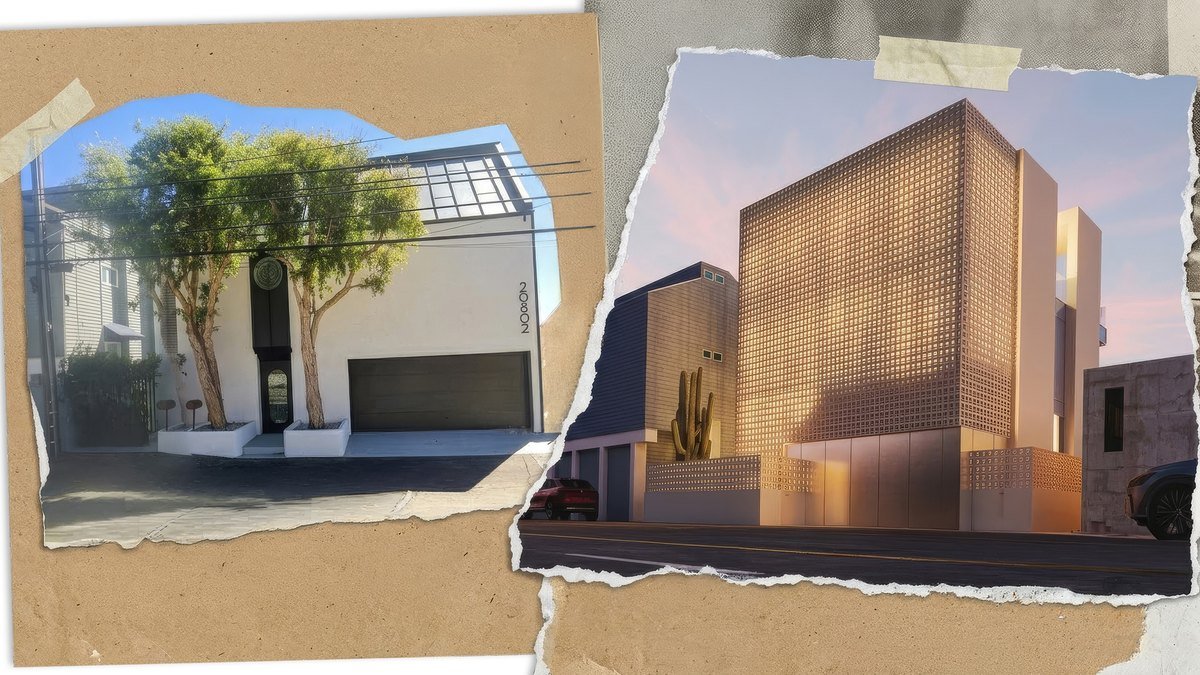
Renderings accompanying the listing offer a glimpse of what a future home built at the site might look like, depicting a sleek glass-and-concrete structure built on thick concrete stilts.
Ready for something new?
Newbies need not apply
Lewis says that since the lot hit the market over two months ago, he has received many inquiries from developers and individual buyers alike drawn by the scenic location and competitive price. However, once would-be buyers learn what building on a protected coastline parcel actually entails, many back off.
“They may have built one house before, they remodeled the kitchen, and then they start to discover quickly, no, you really need to be a pro to do this. So that cuts the audience down,” says the agent. “To somebody who doesn’t know the process, it can be daunting.”
Lewis believes the ideal buyer for the Las Flores property would be either a developer who has built in Malibu before and knows what he calls the town’s “idiosyncrasies,” or an individual who would hire a seasoned contractor intimately familiar with the regulatory ins and outs.
“If somebody is looking for prime land, there aren’t that many pieces to choose from,” says the agent.
Vacant lots in Las Flores Beach are significantly more affordable compared to nearby Carbon Beach, the agent says, referring to the area nicknamed “Billionaires Beach,” where Oracle co-founder Larry Ellison owns multiple homes and entertainment mogul David Geffen sold a sprawling compound for a record $85 million in 2017.
Land prices surge
Despite the challenges, the market has not lost sight of how valuable scarce, buildable land remains in an exclusive community like Malibu.
The latest housing data analysis from Realtor.com shows that while the median existing-home price in Malibu fell 2.5% year over year in June to $5.69 million, the price of unbuilt land surged 15%, reaching $1.49 million.
“Lot listings are seeing prices rise likely due to their affordability, accessibility, and development potential,” says Realtor.com senior economist Hannah Jones.
Jones explains that land carries a different risk profile than a finished home, and each hurdle filters the buyer pool further.
“Financing is scarce as lenders are wary of construction risk, so lots skew toward cash buyers,” she notes. “Compliance is costly and permitting adds friction, piling on carrying costs and timeline risk. The result is that land buyers are increasingly cash-rich investors and ultrawealthy end users, squeezing out the traditional mortgage-backed buyer.”
Protecting Malibu’s ‘flavor’
For Malibu residents affected by the fire, the city offers a fast-track rebuilding option known as the “like-for-like plus 10%.” This allows homeowners to increase a previously permitted structure’s size by up to 10% in height, square footage, and volume, provided it stays within 50% of the original footprint.
Anyone looking to rebuild on a larger scale will have to go through the trouble of obtaining a Coastal Development Permit, which costs a minimum of nearly $11,600, can take up to two years, and requires city approval.
Lewis believes the high cost of land, combined with a process that makes supersized developments prohibitively slow and expensive to get off the ground, will ensure that Malibu keeps its low-key, small-beach-town charm as the postfire recovery continues.
“You’re not going to see 10,000-[square]-foot houses being built on the sand, no McMansions,” argues the agent. “You’re not going to see apartment buildings built on the sand.”
Instead, Lewis expects to see smaller, 3,000-square-foot homes rise along the shoreline, similar in scale and look to the traditional East Coast-style dwellings lost in the 2025 inferno. And even if buyers opt for more modern designs, he anticipates they will remain modest in size.
“Malibu will keep its flavor,” he says. “Notwithstanding what people think, it really is like a small community, a little beach community that’s very casual.”
As for any developer nursing dreams of erecting an 8,000-square-foot “gargantuan monster,” Lewis offers a warning: “Good luck. It’s going to take a long time, if you ever get approval, which you probably wouldn’t.”