An Inflation Quadruple Whammy, Headlined by Trumpflation, Threatens to Crush the Stock Market
This has been a history-packed year for Wall Street. In addition to witnessing the largest-ever initial public offering in stock market history and the swearing in of only the 17th Fed chair since the central bank’s inception in 1913, investors have seen the timeless Dow Jones Industrial Average (^DJI +0.28%), benchmark S&P 500 (^GSPC +0.62%), and growth-stock-dependent Nasdaq Composite (^IXIC +1.30%) romp to all-time highs.
Several factors have acted as the wind in Wall Street’s sails, including the evolution of artificial intelligence (AI) and better-than-expected corporate earnings.
But things aren’t nearly as perfect as Wall Street’s major indexes suggest. An inflation quadruple whammy is brewing in the background, headlined by Trumpflation — and it’s the perfect recipe to crush Wall Street’s historic bull market rally.
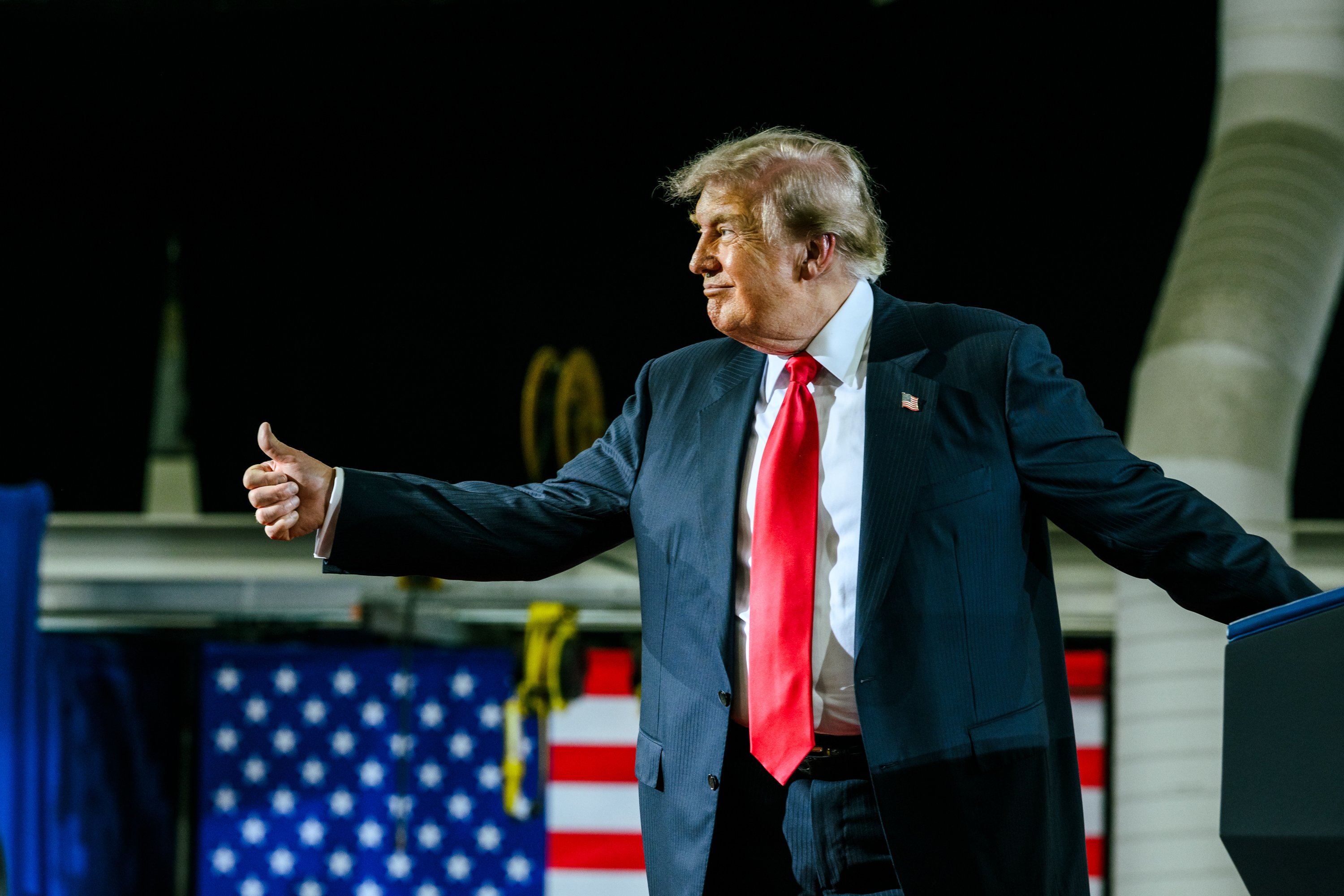
President Trump’s policies are fanning the flames of inflation. Image source: Official White House Photo by Daniel Torok.
1. President Trump’s tariffs are proving problematic
To preface the following discussion, a modest level of inflation (rising prices) is normal and healthy for a growing economy. Even the Federal Reserve has a long-term inflation target of 2%, not 0%, because policymakers understand that businesses should have some degree of pricing power over their goods and services.
However, trailing 12-month (TTM) inflation has soared in recent months, from 2.4% in February to a (current) peak of 4.2% in May. The bulk of the blame for this inflationary surge lies with President Donald Trump’s policies (i.e., Trumpflation).
From the NY Fed: Tariff pass-through isn’t done. Almost half of tariff-paying firms say more price increases are still coming as they’ve opted to spread higher input costs out over a longer timeline
(“‘one-time’ does not mean ‘all at once.'”) https://t.co/kBm914Jk8S pic.twitter.com/th0iV1PTOa
— Nick Timiraos (@NickTimiraos) July 8, 2026
For instance, in April 2025, President Trump unveiled sweeping global tariffs and higher reciprocal tariffs on dozens of countries believed to have adverse trade imbalances with America. Although a U.S. Supreme Court ruling overturned many of these “Liberation Day” tariffs in February 2026, Trump and his administration have since reinstated sweeping or selective tariffs using different justifications.
Unfortunately, adding duties to unfinished imported goods, such as steel, can increase production costs for U.S. manufacturers, which are then passed on to consumers. With the Trump administration announcing a new round of tariffs last month, the adverse impact of tariffs on prices in the goods sector, which former Fed Chair Jerome Powell frequently highlighted, is likely to continue.
2. The Iran war has resulted in a historic energy supply disruption
The second aspect of this inflation quadruple whammy, highlighted by Trumpflation, has to do with the president’s decision to attack Iran on Feb. 28.
Shortly after military operations commenced, Iran shut down the Strait of Hormuz to most maritime traffic. Approximately one-fifth of the world’s petroleum liquids passes through this narrow channel each day. Trump’s decision to attack Iran has resulted in the largest energy supply disruption in modern history.
BREAKING: May CPI inflation rises to 4.2%, the highest level since April 2023.
Core CPI inflation also rises to 2.9%, the highest since September 2025.
Inflation in the US is officially back above 4% and more than double the Fed’s target.
Odds of Fed rate hikes are rising.
— The Kobeissi Letter (@KobeissiLetter) June 10, 2026
The initial reaction to this energy supply disruption was a rapid increase in crude oil prices. Within weeks, gas prices rose at the fastest pace in three decades. Even though crude oil prices have tapered from their Iran war highs amid peace talks, fuel prices tend to fall like a feather — especially when energy supply issues persist.
It could be a considerable amount of time before commercial traffic in the Strait of Hormuz returns to normal.
3. Trumpflation is beginning to reach the broader economy
However, the inflationary aspects of the Iran war extend well beyond the energy sector. While consumers’ pain has initially been felt at the fuel pump, evidence is mounting that Trumpflation is evolving and reaching the broader economy.
For example, headline TTM inflation fell from a three-year high of 4.2% in May to 3.5% in June, driven almost entirely by a softening in crude oil prices and lower fuel prices. But Core Personal Consumption Expenditures (PCE), which excludes volatile food and energy costs, retraced marginally to 3.3% in June from 3.4% in May. According to the Federal Reserve Bank of Cleveland’s Inflation Nowcasting tool, Core PCE should be relatively unchanged at 3.3% in July as well.
64.
As in 64 consecutive months with US core inflation above the Fed’s 2% target.
The Fed has lost all credibility when it comes to fighting inflation.
Kevin Warsh talks a big game, but talk is cheap. The Fed should have hiked rates yesterday and ended QE. pic.twitter.com/HvimqfW6WW
— Charlie Bilello (@charliebilello) July 30, 2026
The price stickiness of Core PCE indicates that Iran-war-driven inflation has spilled over into sectors beyond energy. Businesses being forced to alter shipping routes, change suppliers, and pay premiums for petroleum-based products, such as synthetic polymers and plastics, result in higher costs that are eventually passed on to consumers.
This evolution of Trumpflation suggests that above-average inflation will last longer than initially forecast.
4. The stock market’s No. 1 catalyst is fanning the flames of inflation
The final catalyst of this inflation quadruple whammy, and the one component not directly linked to President Donald Trump’s policies, is the stock market’s No. 1 driver: artificial intelligence.
In the Federal Open Market Committee’s (FOMC) June meeting minutes, policymakers specifically highlighted AI as a source of inflation:
Core goods price inflation had risen relative to a year earlier, which the staff judged as largely reflecting the effects of tariffs and AI-related pricing pressures.
If you’ve invested in the AI hardware and applications companies leading the AI revolution, there’s a good chance you’re smiling from ear to ear. With demand for AI infrastructure vastly outstripping supply, chipmakers and memory/storage solution providers are enjoying otherworldly pricing power and sky-high gross margins.
On the other hand, these higher prices are working their way down the chain to consumers. With no clear end in sight to this supply demand mismatch in the AI infrastructure arena, supercharged AI growth rates can fan the flames of inflation.

Image source: Getty Images.
This inflation quadruple whammy can crush the stock market
Although the Dow Jones Industrial Average, S&P 500, and Nasdaq Composite have a lengthy track record of climbing the wall of worry and blasting to new highs over multiple decades, the near-term outlook for the stock market is as murky as it’s been in a long time.
While several historical factors point to serious trouble on Wall Street, including pricey valuations and a parabolic move higher in outstanding margin debt, it’s the prospect of the Federal Reserve raising interest rates to stabilize prices that can crush the stock market.
At the July 28-29 FOMC meeting, three of the 12 voting members dissented in favor of a quarter-point rate hike. It’s the first time since September 2016 that three policymakers dissented in the same direction.
We’ve also seen Treasury bond yields at the long end of the yield curve (10-year and 30-year bonds) climbing to or near levels last observed during the Great Recession. The bond market is, thus far, calling Fed Chair Kevin Warsh’s bluff on interest rates and expecting the FOMC to act.
If interest rates rise, the partially debt-financed AI infrastructure build-out could slow, forcing investors to rethink sky-high growth rates and adjust otherworldly AI stock valuation premiums. In short, one or more rate hikes, precipitated by this inflation quadruple whammy, can halt this historic bull market in its tracks.