A dovish pause: RBI holds steady, rate hike off the table in FY27 | Finance News
The Reserve Bank of India’s (RBI) six-member monetary policy committee (MPC) has unanimously kept the repo rate unchanged at 5.25 per cent for a fourth straight meeting, while maintaining its neutral stance. Economists described the latest policy tone as dovish, and said they do not expect any rate hike this financial year.
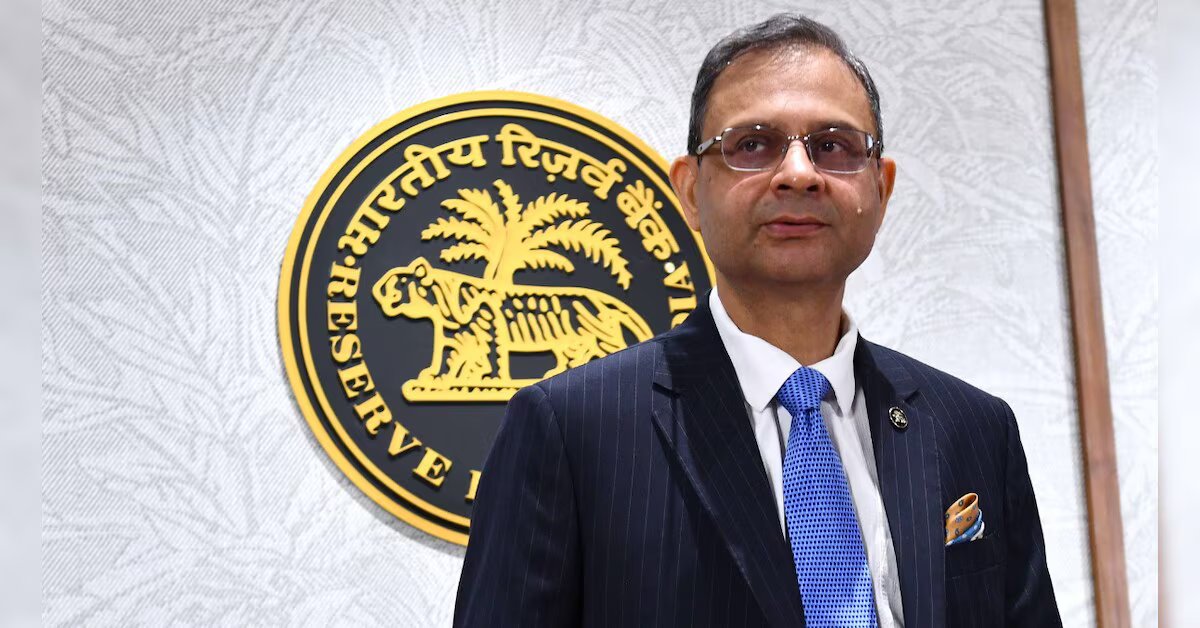
Although headline retail inflation accelerated to 4.4 per cent in June, above the RBI’s 4 per cent target, Governor Sanjay Malhotra said the increase was largely driven by food and fuel prices, with little evidence of broader price pressures. That suggests the rate-setting panel is prepared to look through the headline spike.
Malhotra stressed that underlying inflation — core inflation excluding precious metals — remains benign and is expected to align with overall core inflation by the end of the financial year. “To sum up, even though headline inflation is projected to increase, it is primarily on account of supply-side pressures caused by food and fuel; it is not getting broad-based; core inflation remains moderate and is expected to decline after peaking in Q3,” he said at the post-monetary policy press conference on Wednesday.
The inflation outlook, he said, however, remains clouded by several factors, including the El Niño impact on the southwest monsoon rainfall, geopolitics, and global trade policy.
“There is a need for greater clarity, especially regarding inflation, its path and composition, before taking any policy action,” Malhotra said, adding, “Any such action would also have to consider the need for recalibration of policy rates in line with the evolving growth-inflation dynamics, especially the normalisation of the underlying inflation from its benign levels seen hitherto.”
At the press conference, Malhotra rejected characterisations of the MPC’s policy move as either dovish or hawkish, saying: “We are neither hawkish nor dovish. This is the right policy rate.”
Economists, however, interpreted the policy as dovish. “We think the policy tone was dovish overall, in fact more than in the June meeting,” HSBC economists said in a note, pointing out that average inflation in the first quarter was 30 basis points below the RBI’s projection. The note added that the central bank made it clear it is focused on bringing inflation back to the 4 per cent target over the medium term.
The bond market appeared to share that assessment, with the benchmark 10-year government bond yield falling 4 basis points to close at 6.77 per cent.
The RBI raised its FY27 headline inflation forecast by 10 basis points to 5 per cent. Inflation is projected to remain above 5 per cent for three consecutive quarters, from October-December FY27 through April-June FY28, while core inflation is forecast at 4.3 per cent for 2026-27. “Core inflation excluding precious metals is projected to be lower, though it is likely to align with core inflation from Q4,” Malhotra said.
On growth, the RBI said domestic economic activity has remained resilient despite persistent global uncertainty, as reflected in high-frequency indicators for the first quarter. It raised its FY27 real GDP growth forecast by 10 basis points to 6.7 per cent.
“Our analysis indicates that the policy statement exhibits a predominantly dovish communication profile… Clearly, the RBI policy statement pushes out any rate hikes in FY27, with inflation projected at 5 per cent and core inflation at 4.3 per cent,” said Soumya Kanti Ghosh, group chief economic advisor, State Bank of India.
Gaura Sen Gupta, chief economist at IDFC FIRST Bank, also expects the RBI to remain on hold through FY27. “Monetary policy is not the appropriate tool to deal with supply-side shocks, as it works through the demand channel. Fiscal policy will be the first line of defence. Given the nature of the shock, we maintain our expectation of the RBI remaining on pause in FY27,” she said.
On the external sector, Malhotra said India’s current account deficit in 2025-26 remained modest despite a challenging global macroeconomic environment and was well below levels considered sustainable for emerging markets.
India’s foreign exchange reserves remain adequate by standard metrics, with import cover of more than 10 months and external debt cover of 90.8 per cent, he said.