Will UPI payments remain free forever? Bernstein says consumers likely to stay unaffected; 30-40 bps MDR possible
UPI users are unlikely to pay any charges even if the government decides to allow a Merchant Discount Rate (MDR) on UPI transactions in the future, according to a report by global brokerage firm Bernstein.
The report, cited by ANI on 5 August, mentioned that “a merchant-funded MDR of 30-40 basis points (bps) appears to be the most likely outcome if the government decides to permit such charges.”
The report comes amid discussions over proposed amendments to the Payment and Settlement Systems Act. The proposed law does not impose MDR. Instead, it removes UPI’s automatic statutory exemption, giving the government the power to decide in the future whether any digital payment mode should attract MDR.
What is changing?
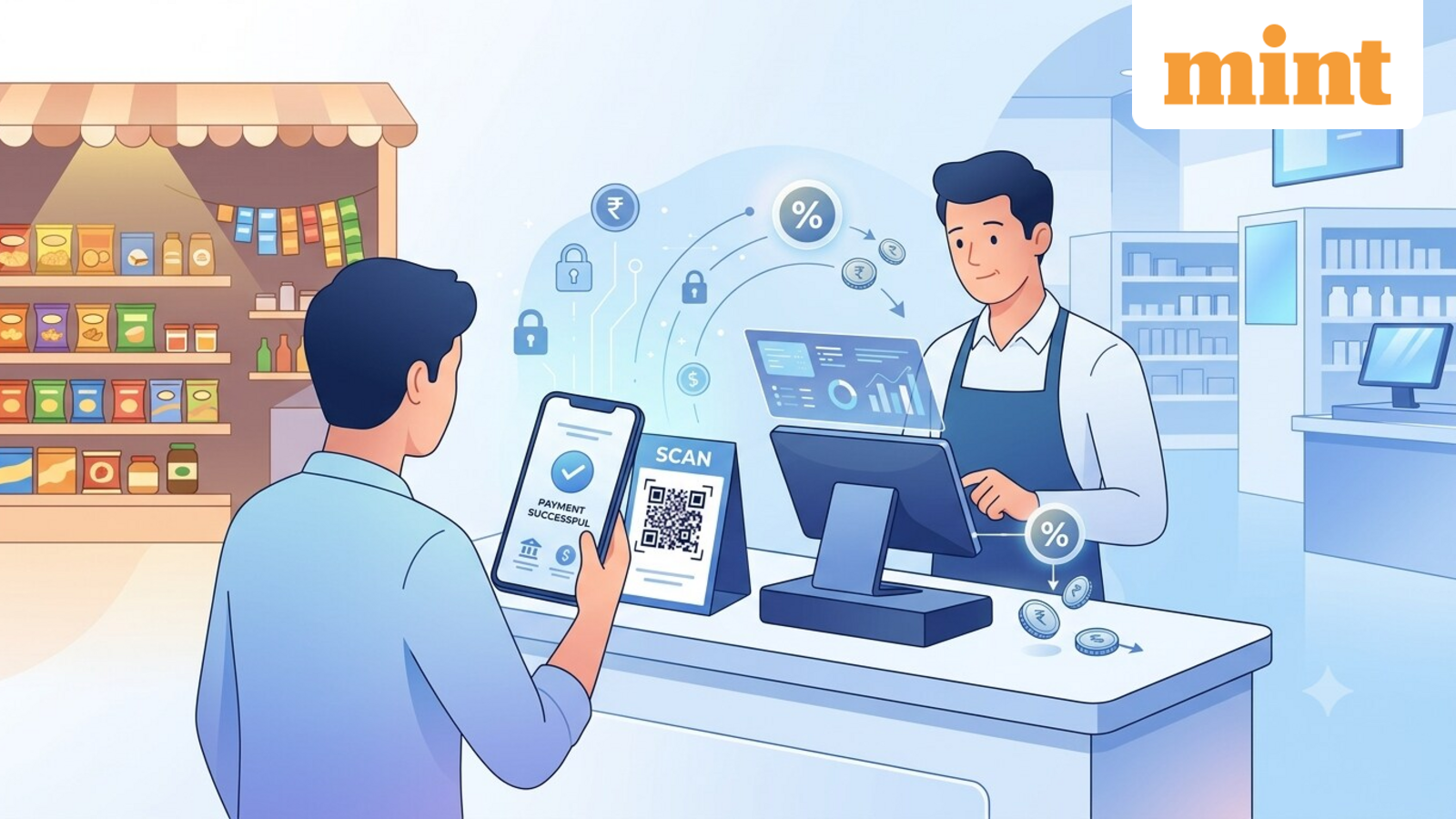
MDR is a fee that merchants pay to banks and payment service providers for processing digital transactions made by customers. Currently, UPI transactions do not attract MDR.
However, the government has introduced the Taxation and Other Laws (Amendment) Bill, 2026, which proposes removing UPI’s automatic exemption from MDR under the law.
In short, the Bill creates the legal framework but does not introduce any charges immediately.
What does Bernstein expect if MDR is introduced?
According to Bernstein, “Based on debit card MDR benchmarks, RBI cost estimates, and comparable payment instruments, we believe an MDR of 30-40bps is the most likely outcome.”
- Consumers would continue to make UPI payments without paying any fee.
- Merchants would pay an MDR of 30-40 bps (0.30%-0.40%) on eligible UPI transactions.
- Small merchants and low-value transactions would likely remain exempt, similar to the existing RuPay credit card-on-UPI framework.
Why is MDR being discussed now?
UPI is free for users, but banks, the National Payments Corporation of India (NPCI) and payment companies incur costs to process every transaction and maintain the digital payments infrastructure.
According to Bernstein, these costs have so far been justified by broader benefits such as:
- Lower cash handling costs.
- Reduced ATM usage.
- Greater digitisation across the economy.
- Improved payment acceptance for merchants.
“There is a credible case for retaining the current framework. That said, the need for payment platforms to monetize their infrastructure investments, combined with recent policy discussions, has brought the MDR debate back into focus,” the report noted.
Why are transactions above ₹2,000 being discussed?
Bernstein says high-value transactions offer the biggest monetisation opportunity while affecting only a small share of total payments.
According to the brokerage:
- Transactions above ₹2,000 account for only around 4% of UPI transaction volume.
- Yet they contribute nearly 70% of the total transaction value.
“This makes them the most practical starting point for monetisation while limiting disruption to overall payment volumes,” the report noted.
However, the report cautioned that an MDR on UPI could increase costs for small merchants by around ₹150 per month. It noted that this amount is roughly two to three times the monthly subscription fee many merchants currently pay for a UPI payment device, such as a QR code soundbox or payment terminal.
What has RBI Governor said?
Separately, RBI Governor Sanjay Malhotra said on 5 August that it is too early to conclude whether UPI transactions will attract charges.
“It is very premature to talk right now. The government is still carrying out the amendment. The costs have to be paid by someone. We all want that this public infrastructure should continue to strengthen. Let’s wait and watch for further developments on this,” Malhotra said, as mentioned by NDTV.
He added that although users may not directly pay any fee, someone in the payments ecosystem is already bearing the cost of operating UPI. Malhotra said, “It is important that we continue to invest and we continue to find the means, whether it is MDR or other things.”
Disclaimer: This is for informational purposes only. Please visit the official website or refer to government updates for the latest information.