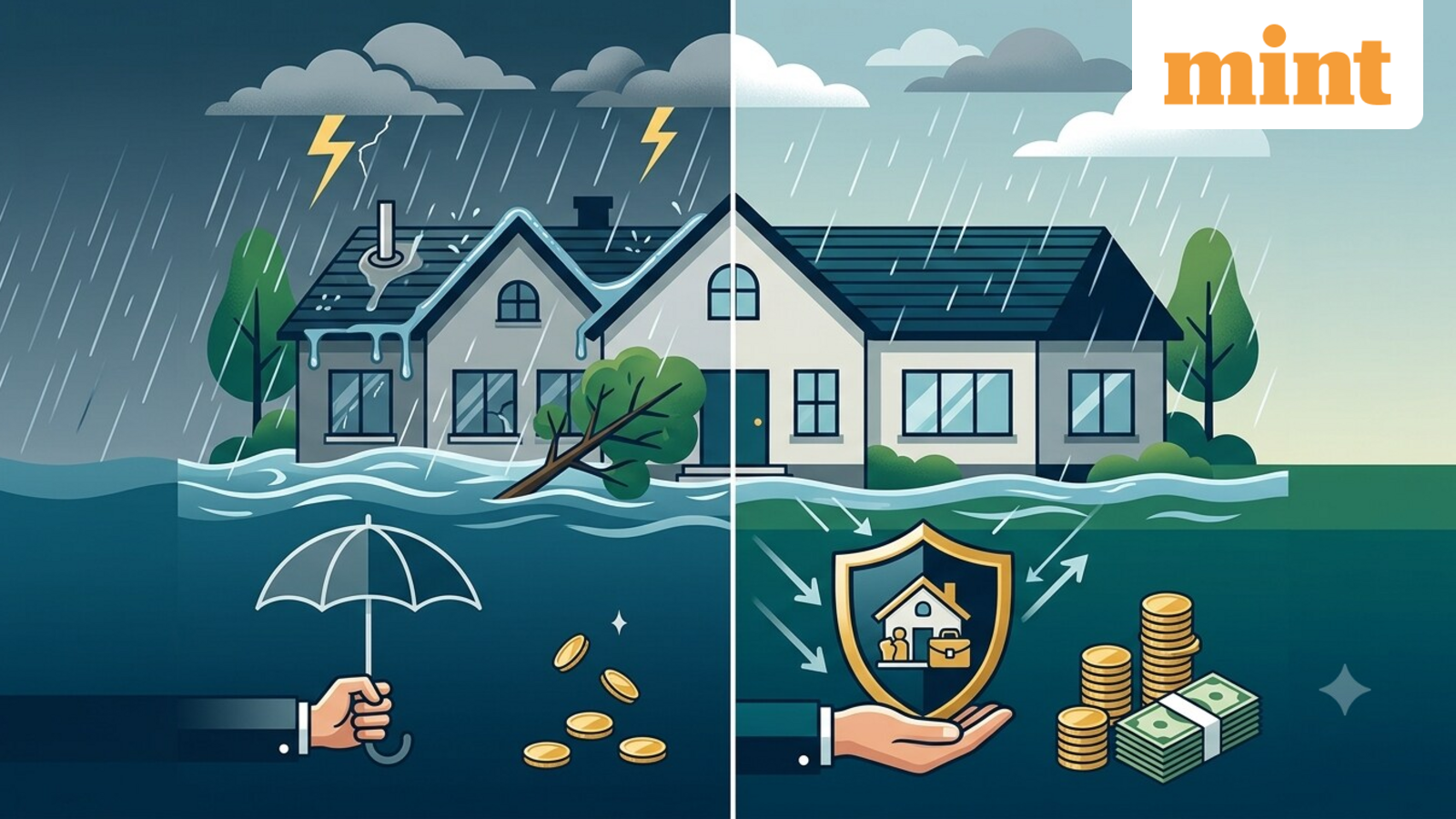
Home insurance during monsoon: What it covers, key exclusions, and why homeowners should check their policy
As heavy rains lash several parts of the country, many homeowners rush to waterproof terraces, seal leaking windows and clear drains. While these preventive measures can reduce damage, they may not be enough to protect against the financial impact of severe monsoon-related incidents.
Insurance experts say heavy rainfall can trigger a range of unexpected losses, from flooded homes and damaged furniture to electrical short circuits and fallen trees. A comprehensive home insurance policy can help cover these risks, provided the damage results from an insured event.
According to Manju Dhake, Head – Insurance Advisory & Partner at 1 Finance, monsoon-related claims are not restricted to large-scale flooding.
“Insurers commonly see losses arising from water entering homes, damage to furniture and electrical appliances, short circuits, overflowing tanks or pipes, roof damage and fallen trees,” she said.
However, she cautioned that not every rain-related loss is automatically covered under a home insurance policy.
What does home insurance cover during the monsoon?
A standard home insurance policy generally covers damage caused by insured events such as floods, inundation, storms, and the bursting or overflowing of water tanks and pipes. The key factor, however, is the cause of the damage.
Dhake explained that heavy rainfall alone does not automatically make a claim admissible. Instead, insurers assess the “proximate cause” of the loss. If the damage is caused by a sudden and identifiable insured event, the policy is likely to respond.
For example, if floodwater enters a home and damages flooring, furniture or electrical appliances, the claim may be covered under the policy. Similarly, damage caused by a storm or a fallen tree may also be payable.
On the other hand, gradual seepage, damp walls, peeling paint, poor maintenance or construction defects are generally excluded. Even if a house has been waterproofed, insurance would typically cover the resulting physical damage from an insured event, but not the cost of repairing faulty waterproofing or addressing long-standing maintenance issues.
Home insurance is not just for homeowners
Home insurance is often associated only with property owners, but experts say tenants also face significant financial risks during the monsoon.
While homeowners should insure both the building structure and household contents, tenants should consider policies that protect their own belongings, including furniture, electronics, appliances and other personal possessions. This is because the landlord’s insurance policy, if one exists, usually covers only the structure and not a tenant’s belongings.
Dhake said consumers should avoid treating home insurance as a standard purchase. Instead, the policy should be chosen based on ownership, occupancy and the actual risks faced by the household.
With extreme weather events becoming more frequent, reviewing home insurance before the peak monsoon season could help households avoid substantial out-of-pocket expenses if an unexpected event causes damage.