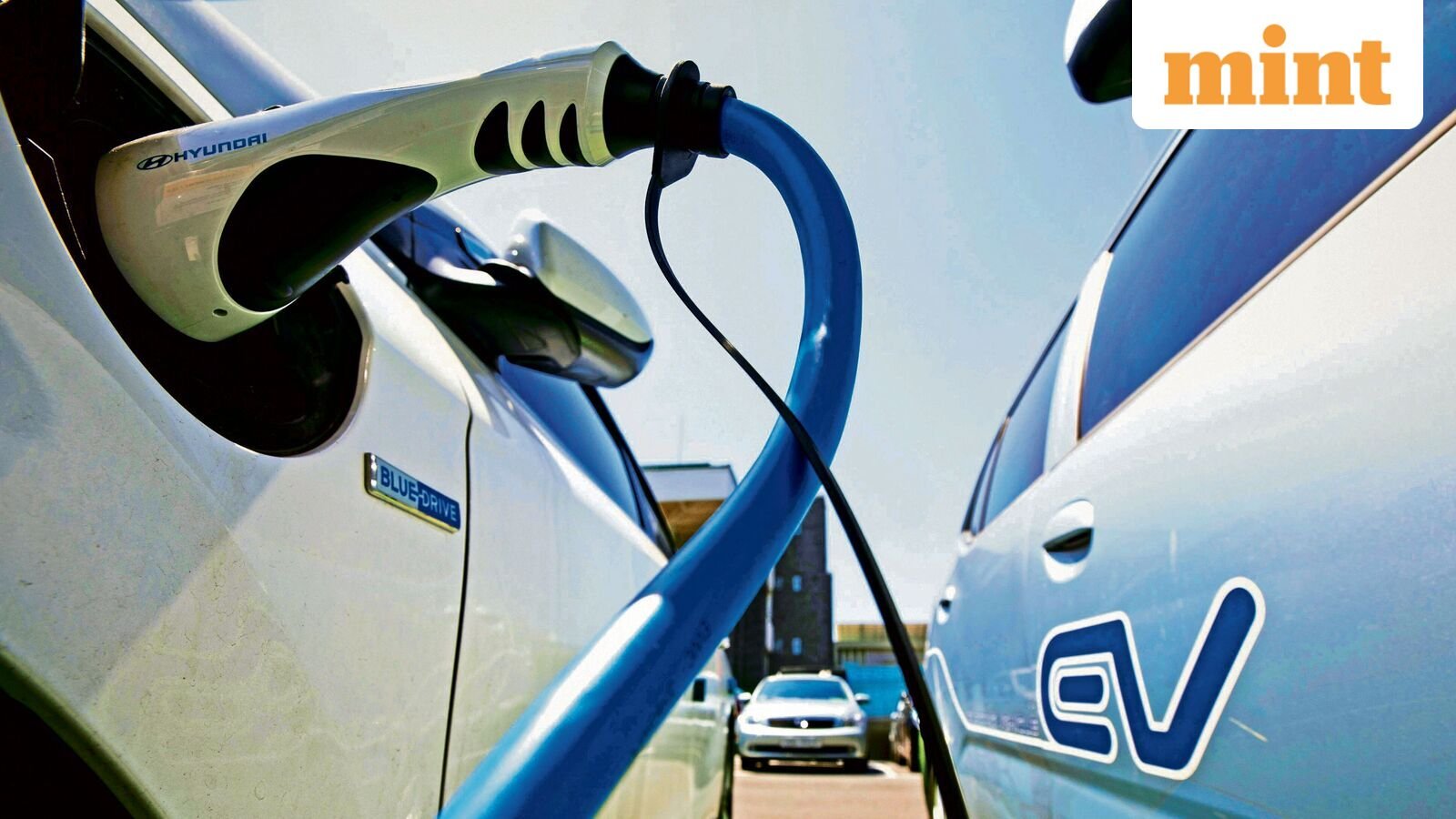
Own an EV? Here’s why a regular ICE vehicle insurance policy won’t cut it
Are you riding or driving an electric vehicle (EV)? Then, you must have an insurance policy that specifically covers the battery, as it accounts for nearly 50% of the vehicle’s cost. Insurance for EVs is more expensive than for petrol- and diesel-powered vehicles. Most insurance policies do not cover batteries. The cover for batteries can be bought only as an ‘add-on’ in most policies.
The real protection for your EV lies in specific covers like ‘EV Shield’, which is offered as an ‘add-on’ to cover batteries. An ‘EV Shield’ is essential as it specifically covers the battery, electric panel, and charging equipment, including wall chargers and charging cables, according to experts who track motor insurance. An EV shield typically offers battery protection, electric motor cover, charging equipment cover, and protection against water ingress, short circuits, electrical surges, or accidental damage.
EV owners should also consider opting for other add-ons like ‘Roadside Assistance’ that offers emergency battery-swapping or mobile charging units if you are stranded with a fully depleted battery. Here is a checklist of what EV owners should consider while buying insurance.
Battery drives everything
Since the battery accounts for 40-60% of the vehicle’s value, the IDV (Insured Declared Value) is higher for EVs compared to equivalent petrol vehicles. “EV owners need to specifically confirm battery coverage rather than assume standard comprehensive cover (that) treats it like any other part,” said Shilpa Arora, Co-founder and COO of Insurance Samadhan, an online tech platform specialising in customer grievance redressal for insurance-related complaints.
“A comprehensive motor insurance policy provides financial protection against theft, accidents, and third-party liabilities, but the real protection for your EV lies in specific covers. The most critical component of any electric vehicle is its battery, which often accounts for up to 40% of the vehicle’s total cost,” said Aditya Kumar, Head, Motor Underwriting, Digit Insurance. EV owners should buy insurance that specifically covers the battery and related equipment, he said.
Get the correct IDV
IDV for EVs should equal the on-road price minus standard depreciation (as per policy). For EVs, the insured should ensure that the battery replacement cost sits inside the IDV envelope. “A common mistake is (insurance) agents quoting IDV on ex-showroom price, which produces a lower premium but leaves a shortfall at claim time. A lower IDV may reduce premium costs but can result in inadequate compensation,” Arora said.
Zero-depreciation cover is non-negotiable
Without zero-depreciation cover, the insurer can apply up to 50% depreciation on the battery specifically, which is a large amount given the battery’s share of vehicle value. “Zero depreciation ensures you won’t have to pay out-of-pocket for depreciation on replaced parts during repairs,” Kumar said.
You can also buy ‘Return to Invoice’ as an ‘add-on’ as it guarantees a payout of the vehicle’s full original invoice value in the event of total loss or theft. EV owners should also consider ‘Consumables and Tyre Protect’ add-ons as they provide coverage for smaller replacement costs such as coolants and brake fluids while safeguarding against damage to tyres.
Buy own-damage cover even if premiums are higher
EV owners should buy ‘own-damage’ cover for their vehicles. EVs get about 15% discount on third-party premiums, but own-damage premiums are 20%-40% higher than a petrol equivalent. “This is because a minor collision that dents the battery casing can trigger a lakhs-worth replacement, versus a much smaller body-panel repair bill for an ICE (Internal Combustion Engine) car,” Arora said.
“Damage to charging equipment from power surges, electrical faults, theft, or accidental damage isn’t always included in standard policies. Insurers offer separate ‘add-ons’ extending cover to home charging infrastructure,” she said.
Don’t do unauthorised repairs
Beyond standard exclusions like drunk-driving, insurers can reject battery claims if you fail to follow OEM (Original Equipment Manufacturer) charging and maintenance guidelines, or if you carry out unauthorised third-party repairs.
“EV repair costs are slightly higher than those for ICE vehicles. The EV repair ecosystem in India is still developing, leading to a scarcity of specialised technicians and costly replacement technology,” Kumar stated. “To prevent high out-of-pocket expenses, always opt for a comprehensive policy, choose an insurer with a robust garage network and a high claim-settlement ratio,” he said.
During the monsoon season, EV owners often worry about waterlogging and flooding. Here is a checklist of monsoon-related damage that is typically covered under EV insurance.
What is covered
A comprehensive motor insurance generally covers flooding, inundation, landslides, hailstorms, fallen trees, and rain-related accidents, and may pay for damaged parts, repainting, and repairs after floodwater enters the vehicle.
‘Own Damage’ (OD) cover under a comprehensive (or standalone OD) policy pays for damage to your own vehicle from accident, fire, flood, or theft. A third-party cover, which is legally mandatory, only pays for damage caused to others.
When claims get rejected
Exceeding the wading depth/riding into deep water
You have to check the wading depth that is allowed for your vehicle in the policy. Your claim can be rejected if the vehicle’s depth exceeds the one specified in the policy.
For instance, if your vehicle stopped mid-road after you rode through 1-foot water and the depth allowed in your policy is only 150 mm, then your claim will be rejected. “Know your vehicle’s wading limit and never ride through stagnant deep water,” Arora stated.
Restarting a submerged/stalled vehicle
The biggest error owners make is trying to start a submerged vehicle. This often causes a hydrostatic lock, which is usually excluded from standard policies because insurers view it as consequential loss rather than a direct accidental event.
“The vehicle should be left untouched and should be towed to a workshop until a professional surveyor inspects the water damage. Insurers may classify this restart-related damage as avoidable and reject that portion of the claim. Experts recommend switching off the ignition immediately if the vehicle stalls in floodwater,” Arora said.