₹15 lakh income, different tax liabilities: Why salaried middle class ends up paying highest tax
With the 31 July Income Tax Return (ITR) filing deadline here, millions of taxpayers are either rushing to submit their returns or hoping for a last-minute extension. But beyond the annual compliance exercise lies a question many taxpayers overlook: Does earning the same income mean paying the same amount of tax?
India’s income tax system is progressive – higher incomes are taxed at higher rates. Yet final tax liability depends not just on how much a person earns, but also how that income is earned. Salary, pension, professional income and business income are governed by different rules on deductions, exemptions and expense claims, often resulting in vastly different tax outgoes.
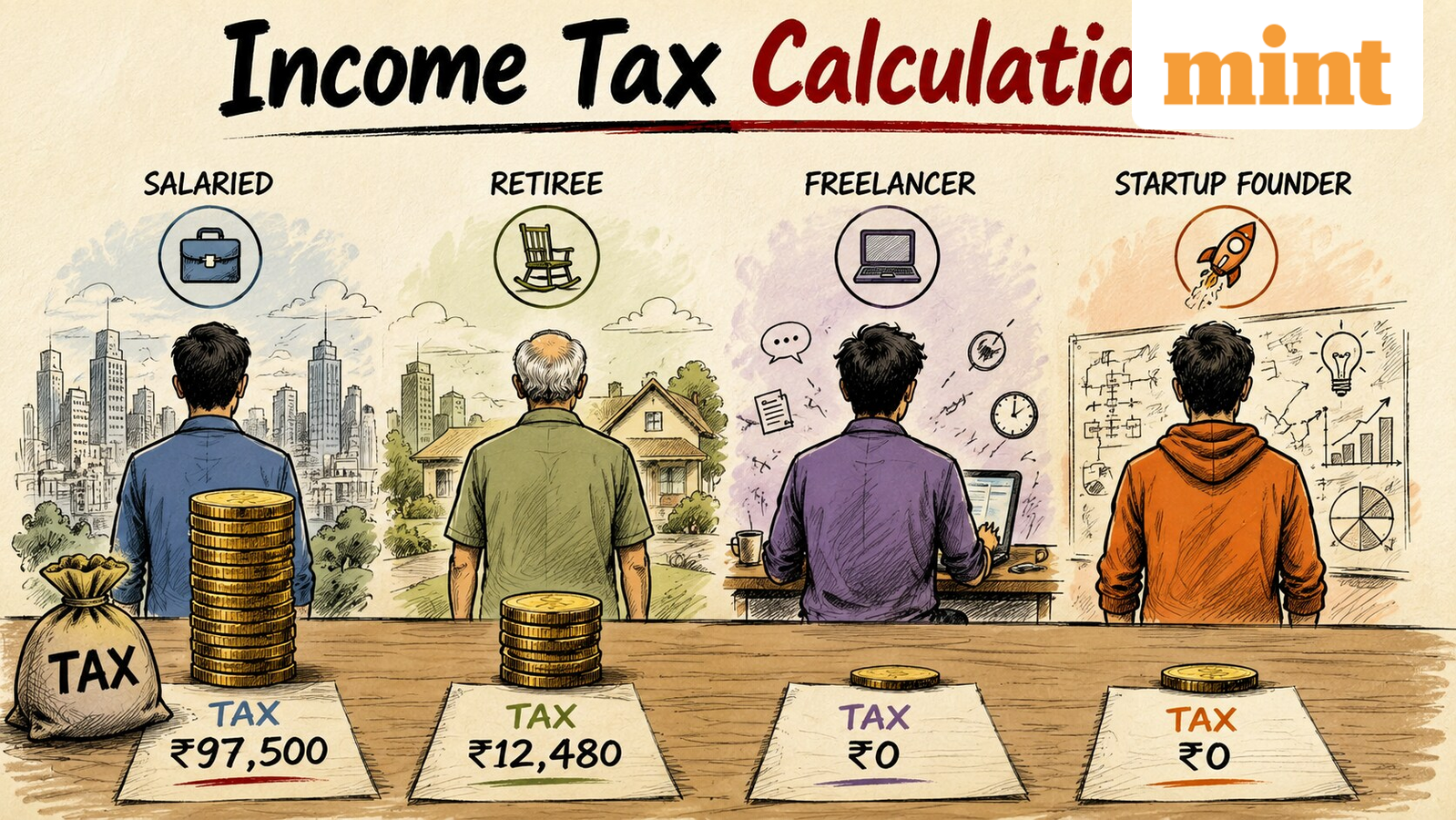
Consider four taxpayers, each earning ₹15 lakh a year: a salaried software engineer, a retiree living on a pension, a freelance consultant and a small entrepreneur with ₹15 lakh annual turnover. Although they fall in the same income bracket, their tax bills vary dramatically—from nearly ₹1 lakh in one case to nil in another.
Here’s how the tax system treats each of them.
What does table show?
In this example, four taxpayers each report ₹15 lakh, yet their tax liability ranges from ₹97,500 to nil.
“Under the new regime, the same headline number can produce very different tax depending on whether it is salary, passive income, professional receipts or business turnover, because deductions, presumptive schemes and the ₹12 lakh rebate all work differently on each,” CA Chandni Anandan, Tax Expert at ClearTax, told LiveMint.
How does system treat salaried employees?
A salaried employee, with only the ₹75,000 standard deduction under the new tax regime, pays the highest tax at ₹97,500.
How does it apply to pensioners?
A retiree earning from pension, rental income and interest pays just ₹12,480, as the 30% standard deduction on rental income reduces taxable income to just above the ₹12 lakh rebate threshold, with marginal relief further bringing down the tax.
What about freelancers?
A freelancer opting for the presumptive taxation scheme under Section 44ADA is taxed on only 50% of gross receipts, reducing taxable income to ₹7.5 lakh, which is fully offset by the Section 87A rebate.
And small entrepreneurs?
Likewise, a small entrepreneur under Section 44AD is deemed to have earned only 6% of digital turnover as taxable income, leaving the tax liability at nil.