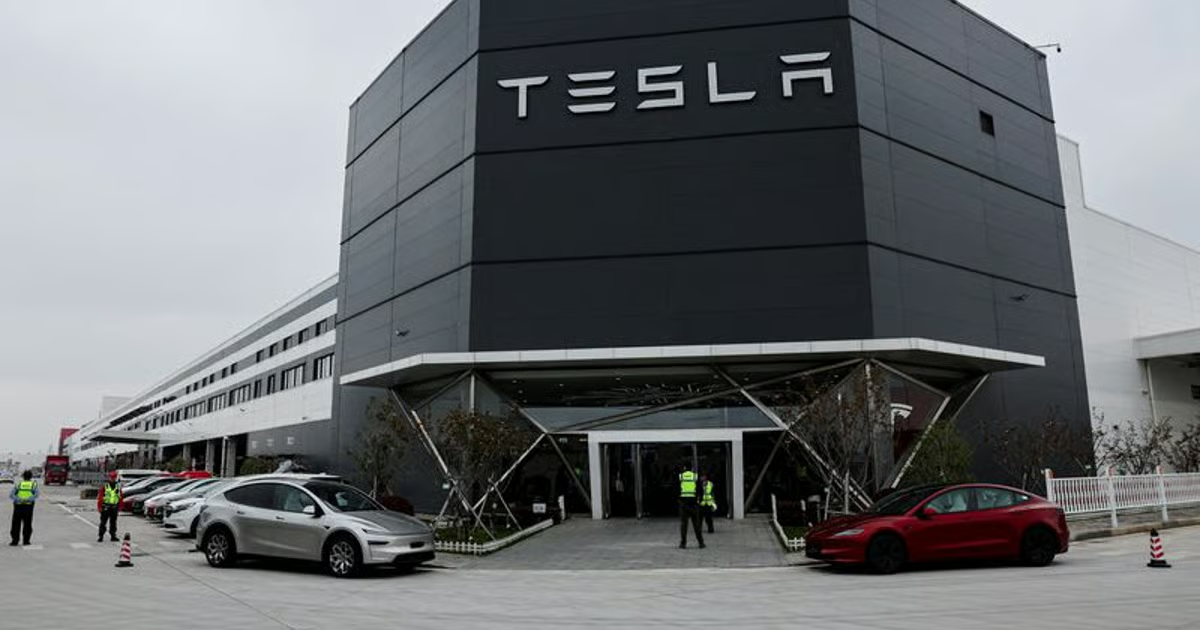
Tesla’s China Operations: Gigafactory Shanghai and Global Production
Tesla’s China Operations: Shanghai Gigafactory and Market Impact in 2025
Overview of Tesla’s Presence and Performance in China
SHANGHAI/BEIJING, July 31 (Reuters) – Tesla is considering a separation of its China business to pave the way for a potential merger with SpaceX, the Wall Street Journal reported, citing a person familiar with the talks.
Reuters was unable to independently verify the report. Tesla and SpaceX did not immediately respond to requests for comment.
Below are key facts regarding Tesla’s operations in China:
The Global Production Engine
Shanghai Gigafactory: Establishment and Growth
Tesla’s Gigafactory Shanghai began production in October 2019, becoming China’s first wholly foreign-owned car plant and symbolising Beijing’s opening of its automotive sector.
The factory has since become Tesla’s largest and most productive site globally, serving as its main export hub for Europe, Canada and the Asia-Pacific region.
Production Capacity and Output
The plant produces the Model 3 compact sedan and Model Y sport utility vehicle and has annual production capacity of more than 950,000 vehicles, according to company data.
The Shanghai factory accounted for more than half of its global vehicle deliveries in 2025, Grace Tao, Tesla vice president in charge of external relations in China has said.
Tesla’s other vehicle assembly plants are located in California, Texas and Berlin.
Supply Chain and Efficiency
Localization and Supplier Network
Tesla sources more than 95% of components for its China-made vehicles locally, relying on a network of more than 400 domestic suppliers, according to Tao. More than 60 of those suppliers also serve Tesla’s global operations, she said.
Cost Reduction and Logistics
The deep localisation of its supply chain has helped Tesla lower manufacturing costs and reduce exposure to global logistical disruptions.
Its China-made vehicle deliveries rose for an eighth consecutive month in June, helped by demand in overseas markets including Europe. Second-quarter sales from the Shanghai factory, including exports, increased by one third from a year ago.
Domestic Sales and Competition
Market Share and Model Performance
Local production helped Tesla establish an early lead in China’s premium EV market.
China was Tesla’s second-largest market after the United States by revenue in 2025 and the Shanghai-built Model Y has been one of the country’s best-selling passenger vehicles across all fuel type.
Competitive Landscape
However, Tesla has faced intensifying competition from Chinese automakers since entering the market in 2019. Domestic rivals have narrowed the technology gap, while benefiting from integrated supply chains, faster product development cycles and aggressive pricing.
BYD has emerged as one of Tesla’s biggest rivals in EV market, alongside a growing group of Chinese EV makers including Xiaomi, Xpeng and Li Auto.
(Reporting by Zhang Yan, Ju-min Park and Chris Kirkham; Editing by Miyoung Kim and Lincoln Feast)