Even Mamdani’s Favorite Nonprofit Landlords Are Exasperated
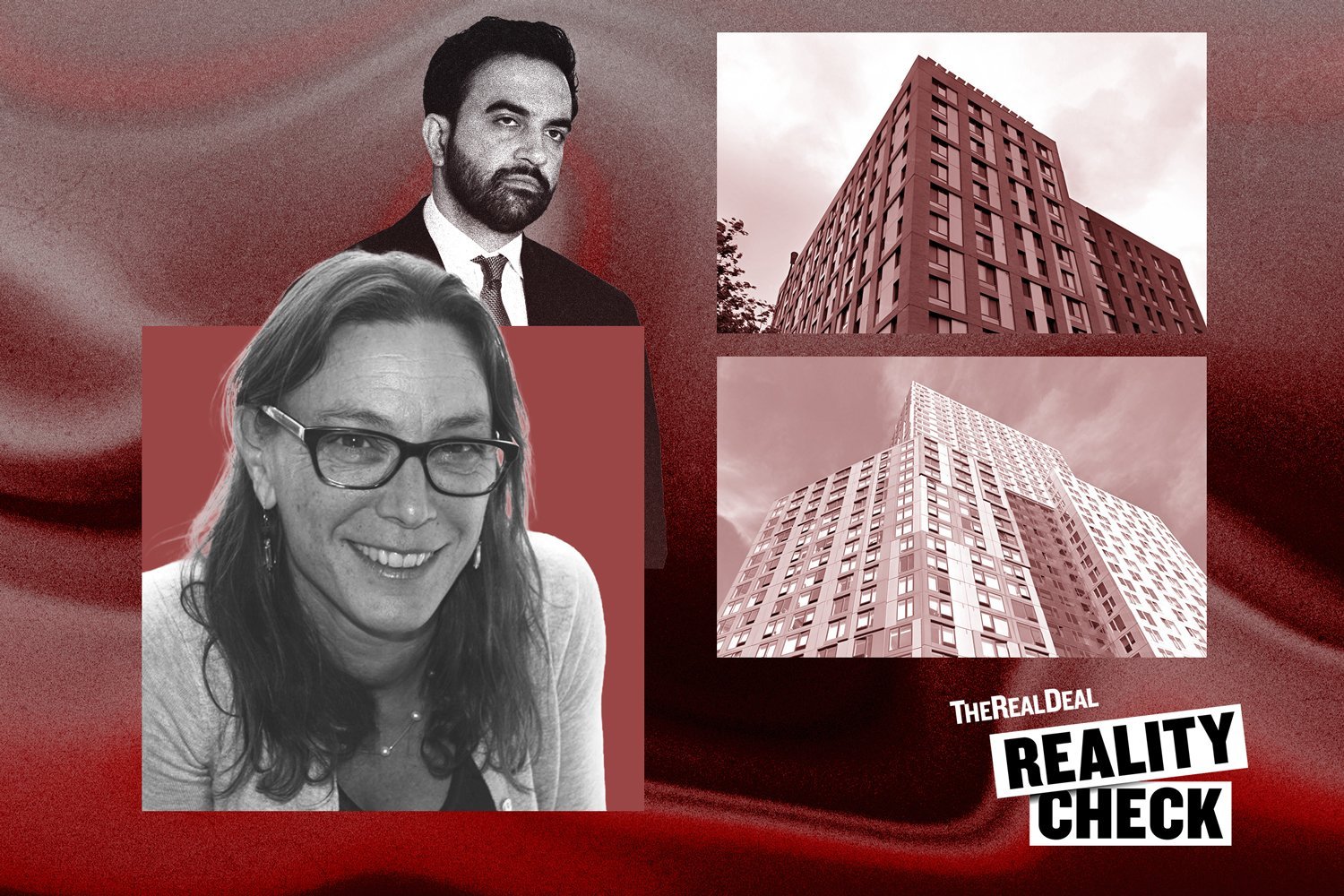
When Mayor Zohran Mamdani vilifies landlords, he’s not talking about Ismene Speliotis. In the mayor’s simplistic world of good and evil, she would be called a “high road” landlord.
She runs Mamdani’s favorite kind of business, an affordable housing nonprofit. She testified for one of his favorite bills, to mandate a “living wage” and benefits for construction workers. She is mission-driven, reaching out repeatedly to help nonpaying renters before filing to evict.
But 35 years into her housing career, even Speliotis is at her wits’ end.
Rent freezes, housing court dysfunction, troubled tenants and the crushing weight of the city’s local laws will do that.
“These unfunded mandates are absolutely killing me,” she said. “They’re killing me.”
Lead-paint laws, for example. In the mid-1990s, aided by city money, Speliotis’ Mutual Housing Association of New York gut-renovated an old building. “There were no walls,” she recalled in an interview. “It doesn’t matter. Any building before X date gets tested for lead — $150 to $200 per unit.”
MHANY’s low-scale buildings must have sprinklers, yet also central fire monitoring. Every year that’s $7,000 to $10,000 per building that Speliotis would rather put toward housing.
“When you burn toast, the Fire Department comes,” she said. “When you burn toast a second time, the Fire Department comes again. If they come three times, it’s a $1,000 fine. It’s not fightable.”
Some tenants, tired of the smoke detectors going off, simply remove them. That’s a violation — for the landlord. With a HUD inspection coming up, Speliotis just bought 500 more devices.
“I have 9 million smoke detectors,” she said, “and a fire escape.”
The sprinklers are likely more trouble than they’re worth. A tenant on the seventh floor recently hung laundry from one. Water shot out and didn’t stop. “Ruins the entire building,” Speliotis said. “Four hundred thousand dollars in damage.”
She filed an insurance claim. Her premiums were already soaring.
Renters refuse services
One of her pet peeves is when the city’s Human Resources Administration refers tenants to her supportive housing, but they reject any services.
“Even though you have an entire program funded to support them, they don’t have to answer their door,” Speliotis said. “I have people with enormous mental illnesses, and they’re in housing court. I call the service provider: ‘Why aren’t you helping Mrs. Smith?’ They say, ‘We can’t make her.’”
Speliotis is the forgiving type, but if it were up to her, supportive housing tenants would have to agree in writing to accept services as a condition of living there.
The rent freeze
Affordable housing rents begin at 30 percent of incoming tenants’ income, then rise with Rent Guidelines Board increases. As small as those increases have been, her tenants’ incomes often haven’t risen with them.
“We know exactly how much money every household makes every year,” she noted, because income certification is required for 15 years in units developed with Low Income Housing Tax Credits. “If you didn’t get a raise, you’ll be rent-burdened at your first lease renewal.”
But the rent freeze approved in June by Mamdani appointees is going to starve her properties of much-needed revenue.
Speliotis sees the freeze as a crude instrument that aims to give “breathing room” to residents paying 40 percent or 50 percent of their income in rent. By and large, those are not her tenants.
“We’re smart enough not to use the bludgeoning tool, but we do,” she said, referring to the political establishment. “All the affordable housing developers are harmed.”
Collection problems
Like many landlords, Speliotis has noticed that tenants no longer treat rent payments with urgency. They have learned that nonpayment can lead to positive outcomes, like a year or two of free housing or a one-shot deal to cover their arrears. Sometimes nonpayers even extract payouts from the landlord to vacate.
“People talk to each other … and say, ‘It’s okay [to not pay]. Do that, and you’ll get bailed out.’ That’s the word on the street, and it’s really sad.”
It used to be that the threat of eviction was real and being dragged into housing court was humiliating. “Something’s changed,” Speliotis said. “Maybe we don’t respect ourselves any more.”
Still, when MHANY tenants are rejected for one-shots, sometimes repeatedly, the organization urges them to keep applying. It knows which tenants truly cannot afford to pay, which ones can be persuaded to pay, and which ones could pay but simply don’t.
“We actually talk to our residents,” Speliotis said. “I actually think that makes a difference.”
It’s a requirement of her staff: No tenant gets taken to court without numerous attempts to offer assistance and find out why they haven’t paid.
Their reasons run the gamut. “If your mom died, and she wanted to get buried in Barbados, you’re going to bury her in Barbados,” Speliotis said. That costs $6,000 to $12,000, according to Google.
But some tenants behind on rent ignore texts, calls, knocks on the door and even their mail. “We have residents who have the marshall’s notice on the door, and they say, ‘This is the first notice I’ve gotten,’” Speliotis said.
“It’s so broken”
When Speliotis takes a nonpayer to court, she immediately cuts off electronic payment privileges — not to play hardball, but because of a cruel quirk in the system.
If the arrears have grown since the eviction filing, tenants can wipe out the case by paying the initial arrears even if they now owe much more. That would force Speliotis to start over.
“Judge, I tried to pay, and they wouldn’t take my money,” tenants will say.
“It’s so stupid,” Speliotis said of the system. “It’s so broken.”
She convened a meeting with Legal Aid of New York City, which represents tenants in housing court, and Enterprise Community Partners, a major affordable housing nonprofit with distress coursing through its New York portfolio.
Speliotis wanted to talk about resolving cases without going to court and getting tenants back on a sustainable path. The New York Apartment Association has proposed such a program, as has the New York Housing Conference. Nothing has come of them.
“The [housing court] process used to be one day, two days, three days before the judge and you’re done,” Speliotis said. “Now [it’s] 10 visits — one year, a year and a half, two years… You’re not collecting rent during this time.”
“I tell my residents all the time, ‘The only person getting rich here is the lawyer. We don’t want to be in court with you, but you cannot live for free.”
Read more

The Daily Dirt: Housing court horrors plague tenants, too

Can’t pay, won’t pay: NYC’s affordable operators get squeezed by slow collections

Fashion model’s unauthorized roommate fends off eviction again