There’s a 74% Chance SpaceX and Tesla Will Merge by May 2027, According to Kalshi — but 2 Negatives Don’t Make a Positive on Wall Street
Wall Street history was made seven weeks ago, with Elon Musk’s Space Exploration Technologies (SpaceX) (SPCX -3.32%) setting a new bar for initial public offerings. The $85.7 billion SpaceX raised, including the underwriters’ overallotment, practically tripled the previous recordholder, Saudi Aramco.
But history isn’t done being made, according to the bettors at prediction market Kalshi. As of July 25, there was 74% probability that SpaceX and Musk’s other trillion-dollar company, Tesla (TSLA -2.97%), would merge before May 1, 2027.
While combining these two companies would be nostalgic, two negatives won’t make a positive on Wall Street.
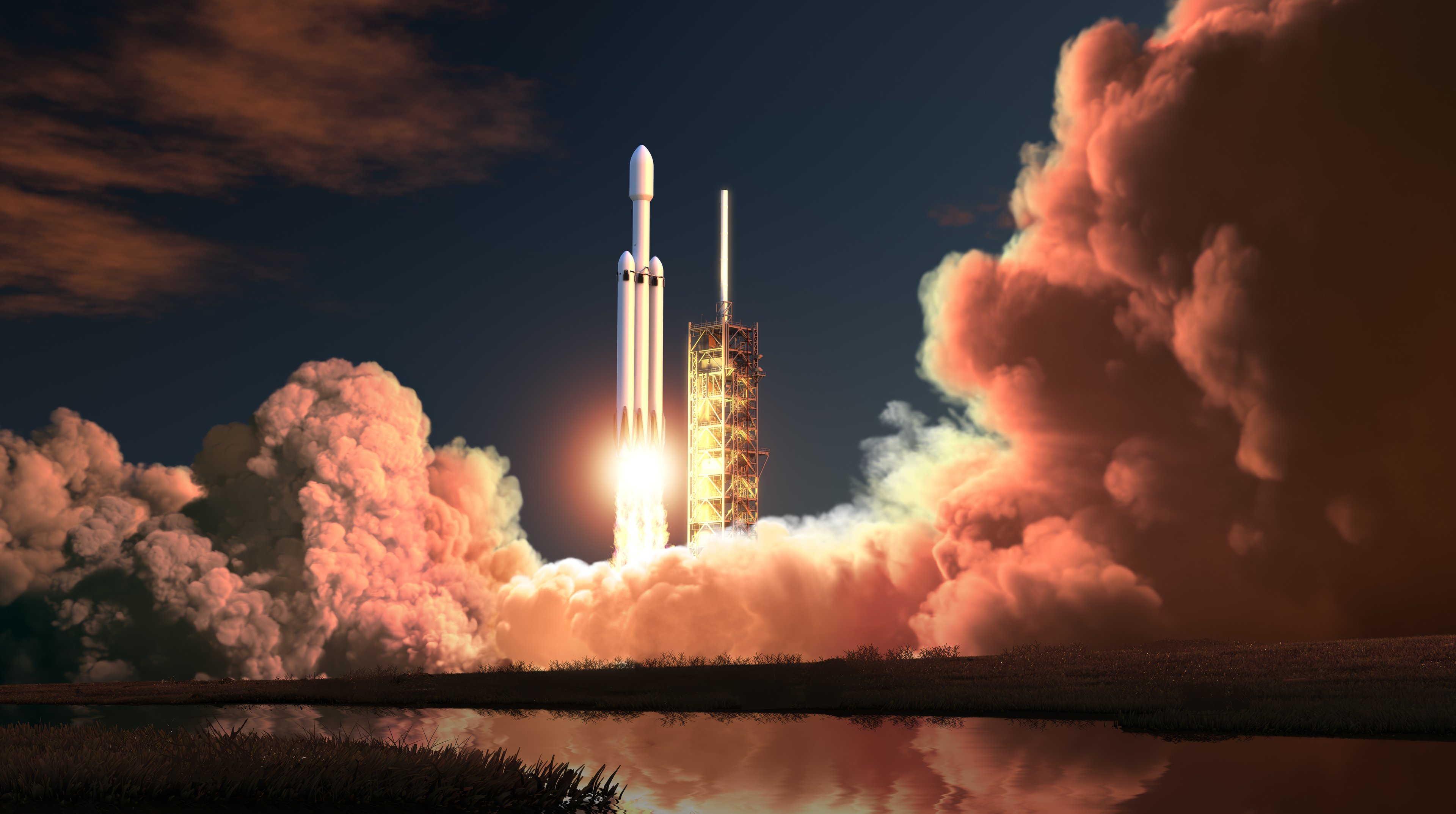
Image source: Getty Images.
Could SpaceX and Tesla merge?
The recent surge in merger speculation between Elon Musk’s trillion-dollar companies traces back to Tesla’s latest quarterly conference call. When asked by Wells Fargo analyst Colin Langan if SpaceX and Tesla would one day merge, he didn’t say no.
Although Musk didn’t offer any guarantees of a merger, either, he did note, “as you can tell from the many collaborations on so many fronts with SpaceX, there’s more and more overlap, especially with Terafab, that’s really going to be a gigantic project.”
BREAKING: Odds Tesla and SpaceX merge within the next year skyrocket to 74% — a record high. pic.twitter.com/hQNQdOYmjf
— Kalshi (@Kalshi) July 25, 2026
Terafab is a joint-venture semiconductor manufacturing project between Tesla, SpaceX, and artificial intelligence (AI) start-up xAI. It represents arguably the biggest connection between Tesla and SpaceX, but far from the only one. For instance, SpaceX’s satellite-based broadband service, Starlink, will be integrated directly into Tesla’s Cybercab.
From an investment standpoint, perhaps the biggest attraction of a SpaceX-Tesla merger is that it would bring everything under one roof for Elon Musk. Tesla’s stock has wavered amid concerns that Musk is distracted by other projects (and companies).
Given the otherworldly gains Musk has overseen at Tesla since it went public in June 2010, combining these two businesses could tug on investors’ heartstrings — at least initially.

Image source: Getty Images.
A negative times a negative only equals a positive in mathematics (not on Wall Street)
While a merger of equals run by the same boss would seem to make some sense on paper, there are several reasons to believe it would be a logistical nightmare for investors.
For example, even though Musk pointed to “more and more overlap” between his public companies during Tesla’s latest conference call, there isn’t much in the way of cost synergies. There’s a big difference between Tesla being a customer of SpaceX (or vice versa) and combining two aesthetically different businesses and expecting them to be more cost-efficient.
SpaceX in IPO filing: “We believe we have identified the largest actionable total addressable market in human history. We estimate that our quantifiable TAM is $28.5 trillion, consisting of $370 billion in Space from space-enabled solutions; $1.6 trillion in Connectivity across… https://t.co/CBTpfJECik pic.twitter.com/yh54mKFlQE
— Sawyer Merritt (@SawyerMerritt) May 20, 2026
Additionally, SpaceX is quite a ways away from proving it’s a sustainable business. Despite SpaceX claiming it has a $28.5 trillion addressable market, the business (outside of Starlink) isn’t profitable. It’s highly capital-intensive and prone to production delays. Tying that business to a recurringly profitable Tesla would be a drag on the latter.
However, Tesla’s profit isn’t all it’s cracked up to be, either. A significant chunk of Tesla’s pre-tax income has been driven by interest income and automotive regulatory credits (i.e., non-sustainable sources of income).
Combining SpaceX and Tesla would be messy and expose just how many of Elon Musk’s unfulfilled promises have been baked into the valuations of both companies.