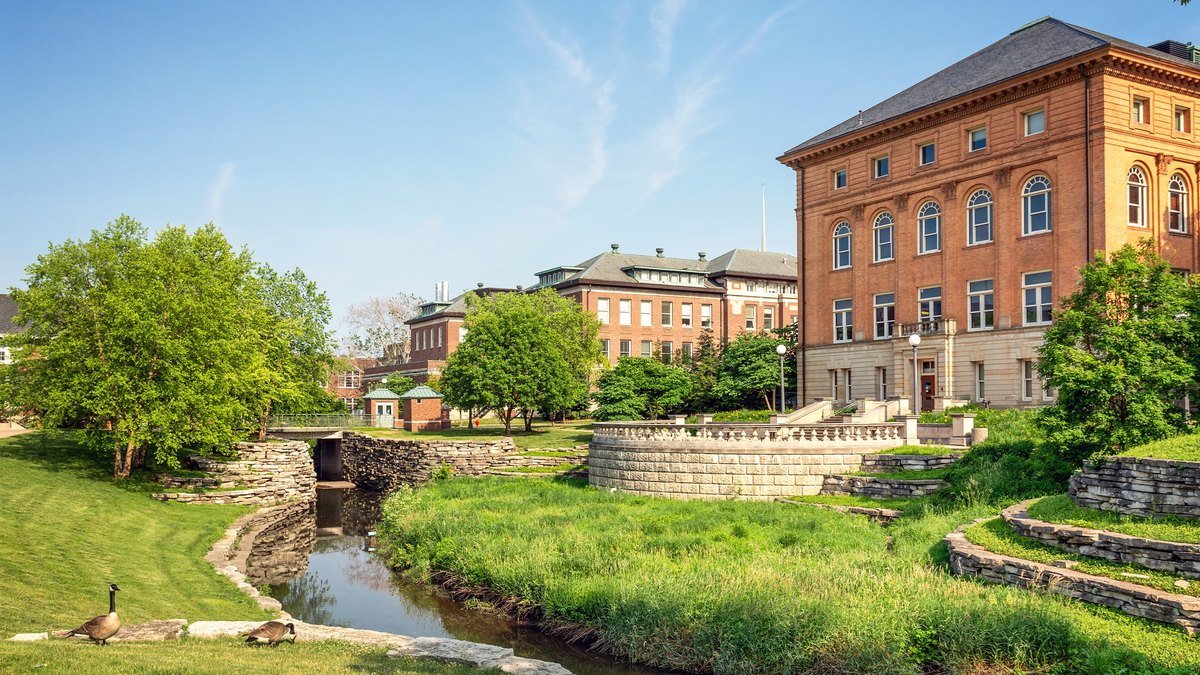
Heartland’s Affordable Innovation Oasis Emerges as a Real Estate Powerhouse
Best known as the home of a world-class public university, Champaign-Urbana, IL, is capturing national attention well beyond the halls of academia thanks to an unexpected housing market surge.
Located two hours south of Chicago and west of Indianapolis, IN, the twin cities of Champaign and Urbana, with a combined population of under 240,000, punch well above their weight in innovation and culture, driven by the formidable University of Illinois at Urbana-Champaign.
The Central Illinois metro has emerged as one of the standout entries in the Summer 2026 Wall Street Journal/Realtor.com® Housing Market Ranking, climbing from No. 42 to No. 11 on the list in a single year.
Champaign-Urbana’s meteoric rise is attributed to the local housing market’s dramatic home price appreciation that jumped just over 23% from summer 2025, the highest of any metro in the ranking this quarter.
The quarterly ranking evaluates the 200 most populous U.S. metros as measured by the U.S. Census Bureau, taking into account real estate demand, housing inventory, median days on the market, median price trends, property taxes, climate risks, unemployment rate, wages, regional price parities, amenities, and other factors that affect the cost of living and quality of life.
The goal of the ranking is to help aspiring homebuyers identify desirable markets to consider when purchasing a primary residence or an investment property.
Home prices surge
According to Realtor.com senior economist Hannah Jones, the main culprit behind Champaign-Urbana’s eye-popping price growth is inventory scarcity.
“Champaign-Urbana had just over 400 homes for sale in June, less than half the pre-pandemic norm, keeping persistent upward pressure on prices,” explains Jones.
In welcome news for homebuyers, however, the metro’s relative affordability helps cushion the impact of the recent price spike: The median asking price in June registered at $340,000, up $75,000 from a year ago.
While that increase is meaningful, and even high by local standards, Jones argues that it remains manageable. Crucially, the metro median is still $90,000 below the national median for June and far lower than in higher-cost metros experiencing similar price dynamics.
Beyond price, the Midwestern innovation hub’s underlying real estate profile has been quietly building for several quarters.
“Demand is strong, homes move quickly, and the market draws buyers with a cost of living running below the national baseline and among the lowest climate risk scores in the ranking,” says the economist.
Major economic engine
At the heart of the metro is the University of Illinois—a flagship research institution and top regional employer celebrated for its groundbreaking engineering and computer science programs. It’s renowned as the birthplace of the first graphical web browser, Mosaic, and modern LED technology.
The university’s Research Park is a major regional economic engine, serving as a startup hub for tech giants like Yahoo, John Deere, and Caterpillar.
“The combination of a University of Illinois anchor, a growing tech cluster in the Research Park, limited land for new construction, and very tight inventory creates conditions where even modest upticks in demand produce outsized price responses,” notes Jones.
Beyond its impressive education and tech bona fides, Champaign-Urbana boasts a diverse and well-regarded dining scene, top cultural institutions like the Krannert Center for the Performing Arts and Virginia Theatre, as well as Big Ten college athletics.
The metro is also the site of the annual Ebertfest film festival founded by the late Pulitzer Prize-winning film critic Roger Ebert.
Born in Urbana, Ebert remained deeply attached to his hometown, once famously describing the area as being “obviously the center of the universe.”
The usual suspects
The Northeast and Midwest continued dominating the rankings, with South Bend, IN, clinching the top spot for the third consecutive quarter thanks to a winning combination of tight inventory, strong demand, and relative affordability.
South Bend is one of 16 metros in the summer top 20 ranking that were also in the spring rankings, signaling their strong staying power and consistency. Among the other mainstays are Canton, OH, Springfield, MA, Akron, OH, Manchester, NH, Milwaukee, Rockford, IL, and Fort Wayne, IN.
“These are not markets reacting to the moment,” says Jones. “They are markets with structural advantages—affordable home prices relative to local incomes, tight inventory, low climate risk, and labor markets that have proved resilient—that continue to compound in their favor quarter after quarter.”
Milwaukee, the largest market in the summer top 20 with a population of 1.6 million, has now held a top-15 position for three consecutive ranking periods, landing at No. 12 this summer.
The secret to Milwaukee’s booming housing market is that it is very competitive for buyers because its supply of active listings sits more than 35% below pre-pandemic levels despite a 10.3% year-over-year surge.
Unsurprisingly, homes in the area are flying off the market, with the typical listing waiting for a buyer just 33 days, nearly three weeks less than the national norm. This reflects robust buyer demand, especially among shoppers in neighboring Chicago, where the median price per square foot reached $289 in June.
“Milwaukee continues to stand out as an affordable alternative compared to many larger metro areas, and that is definitely attracting out-of-state interest,” Justin Hoffmann, a real estate agent with Team Hoffmann Re/Max Lakeside, tells Realtor.com.
“Buyers from higher-cost markets are recognizing the value Milwaukee offers, from relatively lower home prices to a strong quality of life,” Hoffmann adds. “We are seeing increased activity from buyers relocating from places like Illinois and other more expensive regions, positioning Milwaukee as a practical and appealing option.”
One of their common denominators among the summer’s top-rated markets is housing attainability, with homes being priced more in line with local incomes compared to the national norm.
In five of the 20 markets highlighted by the report—Peoria, IL, Akron, Youngstown, OH, Canton, and Rockford—a household earning the area’s median income can afford to purchase a median-priced home, assuming a 20% down payment and keeping housing costs at 30% or lower. And there’s still money left over.
Who’s in, who’s out
Four metros that appeared on the spring 2026’s top 20 list fell out of that tier this summer. Flint, MI, dipped from No. 10 to No. 27 as its extraordinary price appreciation cooled from 27.6% to 16.3% year over year.
Lansing, MI, slid 20 spots, settling for No. 33, as price growth swung from positive to -7.2% compared with last year.
Hartford, CT, and Kalamazoo, MI, also experienced reversals, albeit less dramatic than Flint and Lansing.
That outgoing foursome was replaced by Champaign-Urbana, Harrisburg, PA, Youngstown, and York, PA, on the strength of their supply dynamics and price appreciation.